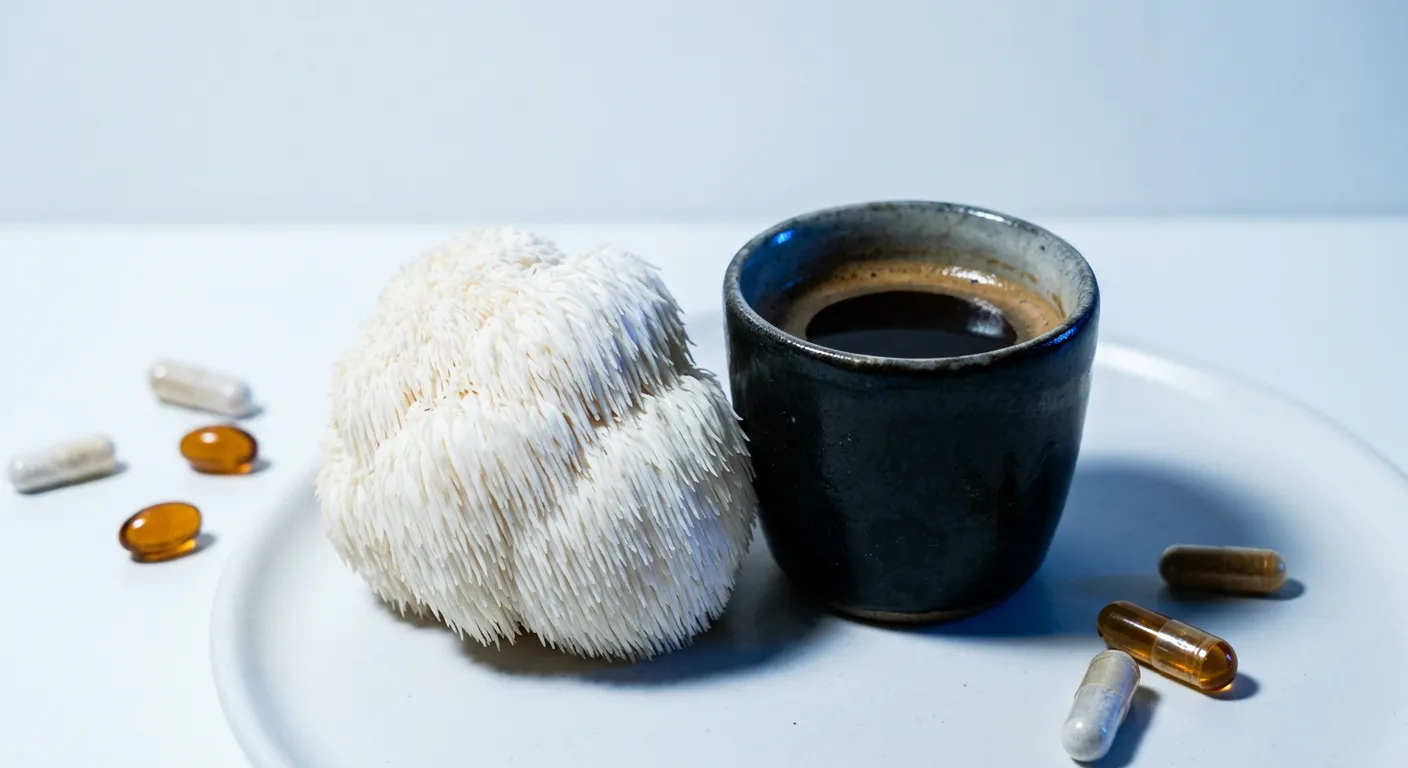
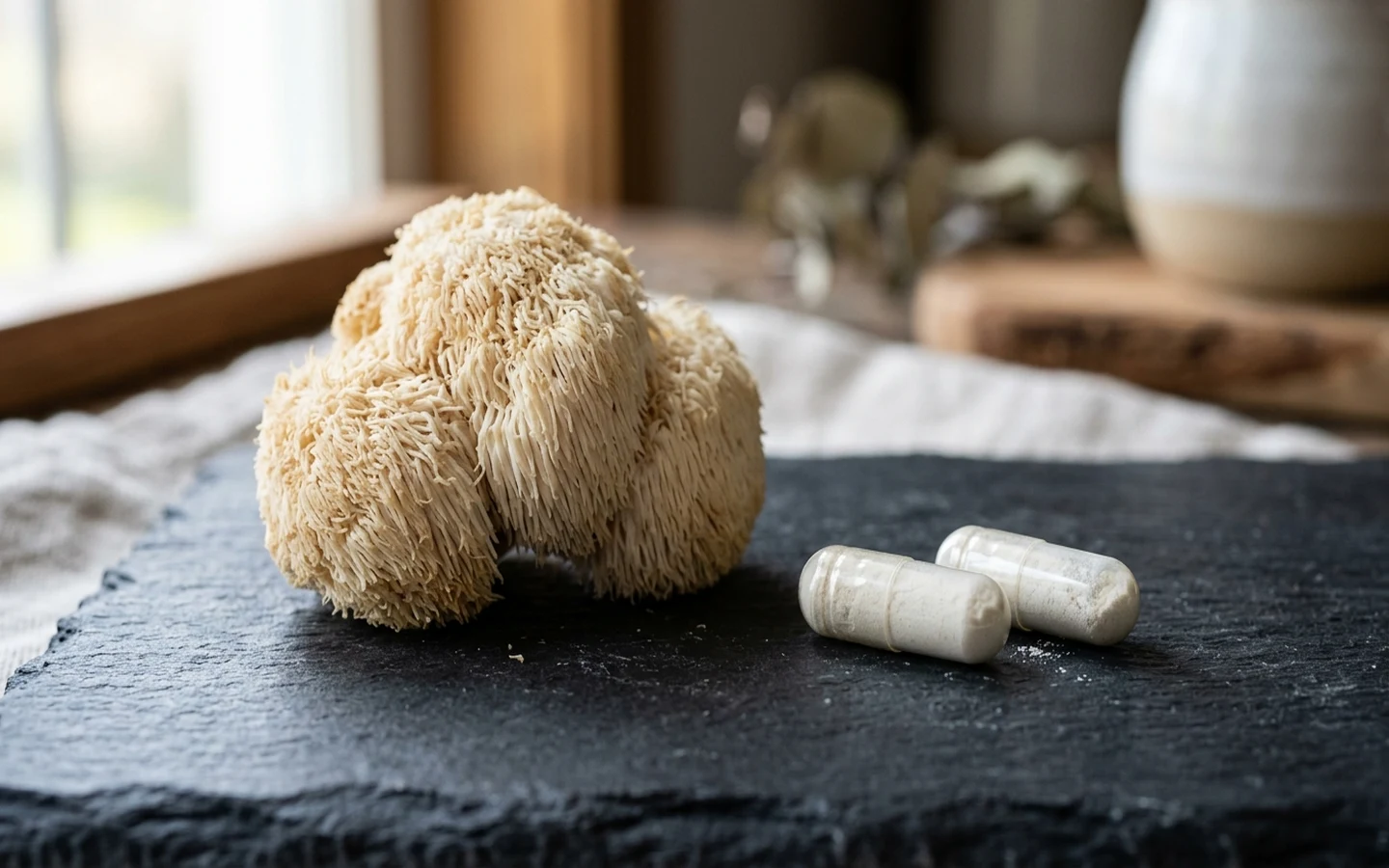
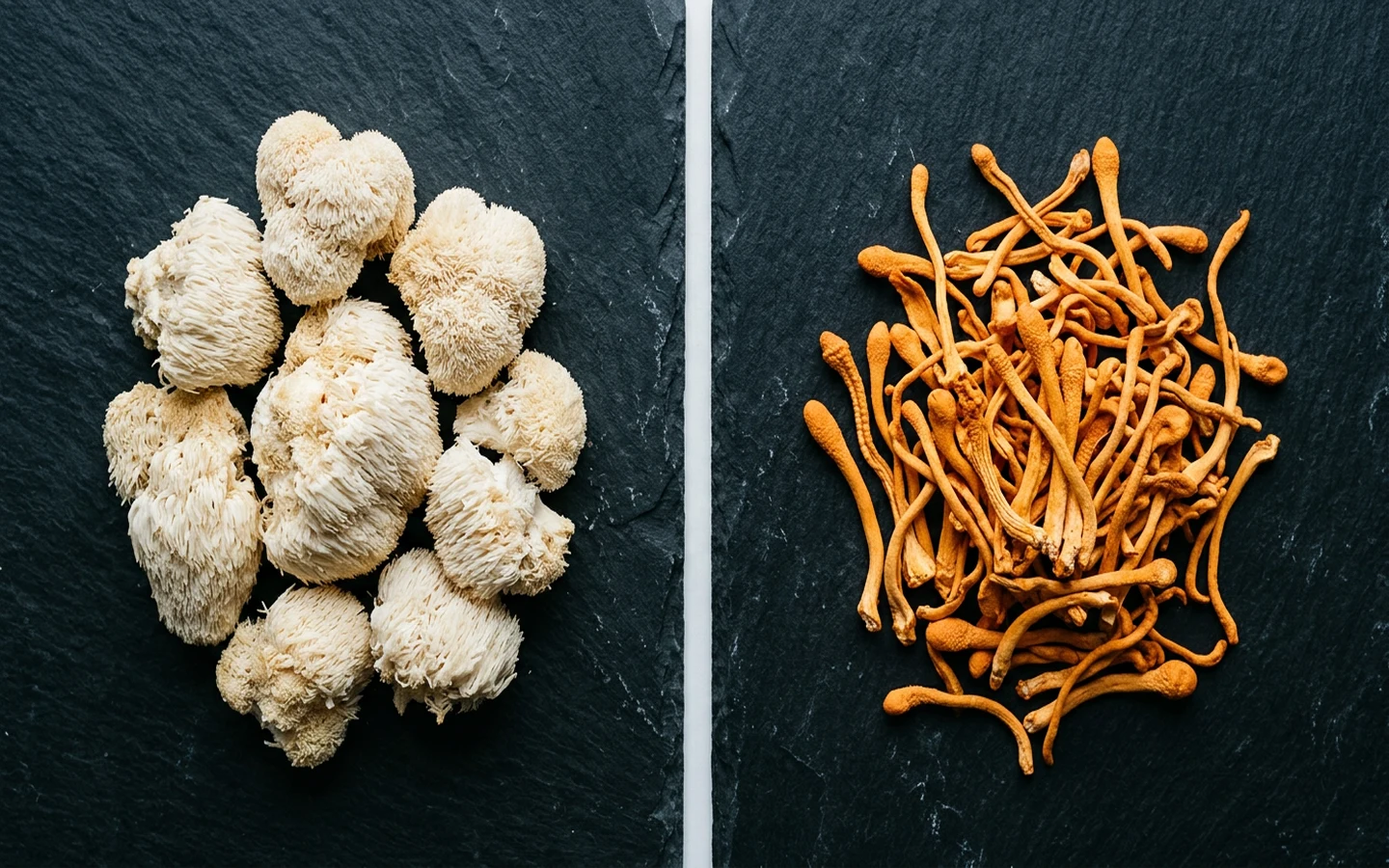
14 mushroom coffee blends reviewed. Most are mycelium grown on grain — oats, brown rice — not the fruiting body. Beta-glucan concentrations are 10–70x lower than the marketing suggests. One product disclosed its numbers publicly. It's the one that won. Updated July 2026.
The best mushroom coffee is one that uses fruiting body extract — not mycelium on grain — and discloses its beta-glucan percentage on the label. Mori et al. 2009 (PMID 18844328) is the landmark lion's mane RCT: n=30 adults with mild cognitive impairment, 3g/day dried fruiting body for 16 weeks, statistically significant improvement on cognitive scores versus placebo.
Most mushroom coffees fail on two counts: they use mycelium grown on grain substrate rather than fruiting body (10–70x lower beta-glucan concentration), and they provide 250–500mg per serve versus the 3g studied in the RCT. Dai et al. 2015 (PMID 25866155) confirmed immune-modulating activity in shiitake mushrooms — but only from daily consumption of the whole cooked mushroom at clinically meaningful amounts, not extract fractions at undisclosed concentrations.
A standalone fruiting body capsule at 3g/day is more cost-effective than most mushroom coffee blends for functional dosing. Mushroom coffee makes sense for the ritual if the product is correctly made; it does not replace a correctly dosed supplement for therapeutic outcomes.
Reviews

Roundup

Comparison

Guide

Guide

Guide

Guide

Comparison

Review
Buying Guide
Fruiting Body vs Mycelium
Most mushroom coffees use mycelium grown on oat or rice substrate — the fungal equivalent of a seedling, not the plant. Fruiting-body-only products have 10–70x higher beta-glucan concentrations. Always check the supplement facts panel for "fruiting body extract" and a stated beta-glucan percentage.
→ Minimum 25% beta-glucan for therapeutic doseExtraction Method
Water extraction pulls beta-glucans. Alcohol extraction pulls triterpenoids. Dual extraction captures both classes of compound. A product using only hot water processing in the extract will miss the terpene fraction. Most products don't disclose their extraction method — which is itself a signal.
→ Look for dual-extraction on the labelCertificate of Analysis
Third-party laboratory testing confirms identity, potency, and contaminant levels. Any brand that won't share lab results is hiding something. When we can't verify the claims on the label independently, the score reflects it.
→ Look for third-party lab results covering heavy metals, pesticides, and potencyThe Research
Every card is PubMed-verified. The Mori 2009 trial used fruiting body powder — not the mycelium extract found in most commercial products.
Phytotherapy Research
"Improving effects of the mushroom Yamabushitake (Hericium erinaceus) on mild cognitive impairment: a double-blind placebo-controlled clinical trial." Cognitive scores improved significantly in the lion's mane group and declined after cessation — supporting a direct, dose-dependent effect.
Journal of the American College of Nutrition
"Consuming Lentinula edodes (Shiitake) Mushrooms Daily Improves Human Immunity: A Randomized Dietary Intervention in Healthy Young Adults." Significant improvements in immune cell proliferation, NK cell activity, and secretory IgA production.
Frontiers in Aging Neuroscience
"Prevention of Early Alzheimer's Disease by Erinacine A-Enriched Hericium erinaceus Mycelia Pilot Double-Blind Placebo-Controlled Study." Significant improvements in mini-mental state examination and daily living activity scores. Safety profile was acceptable.
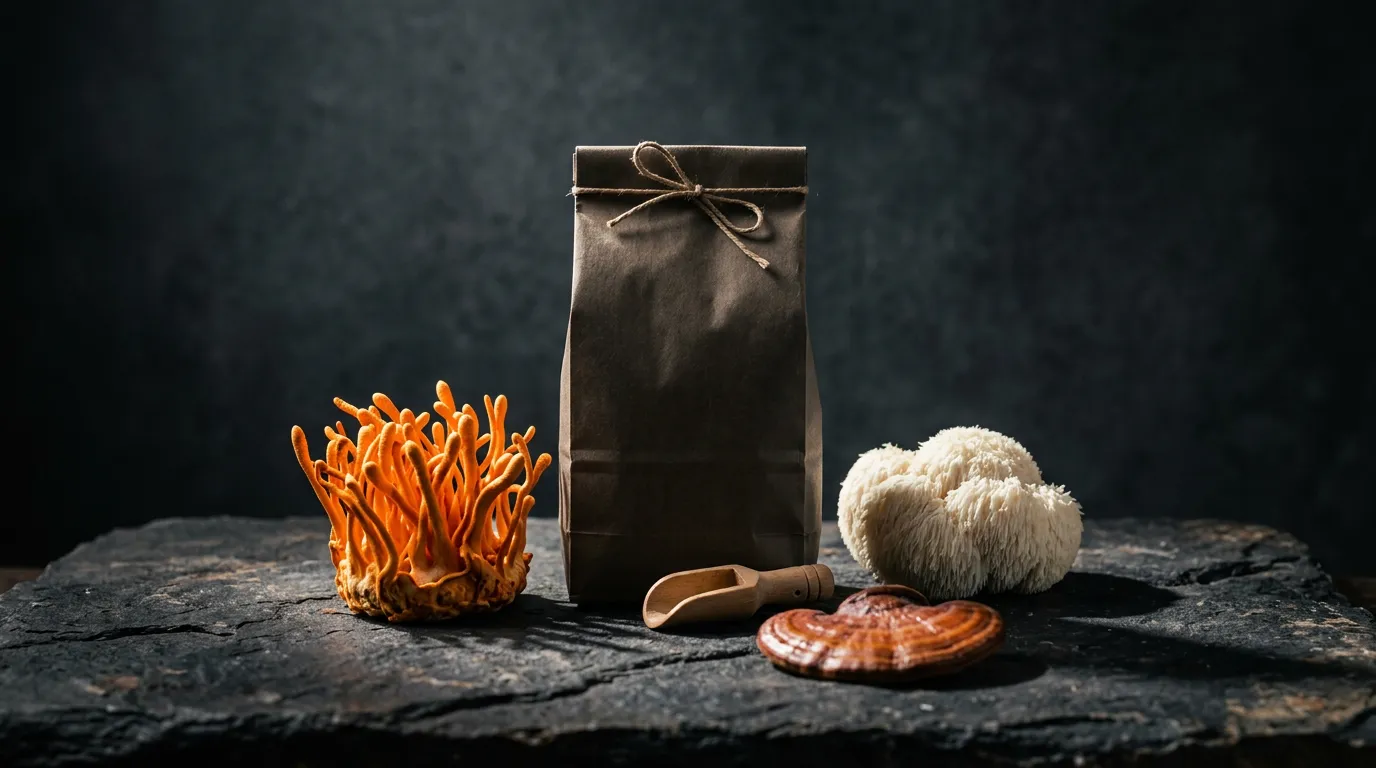
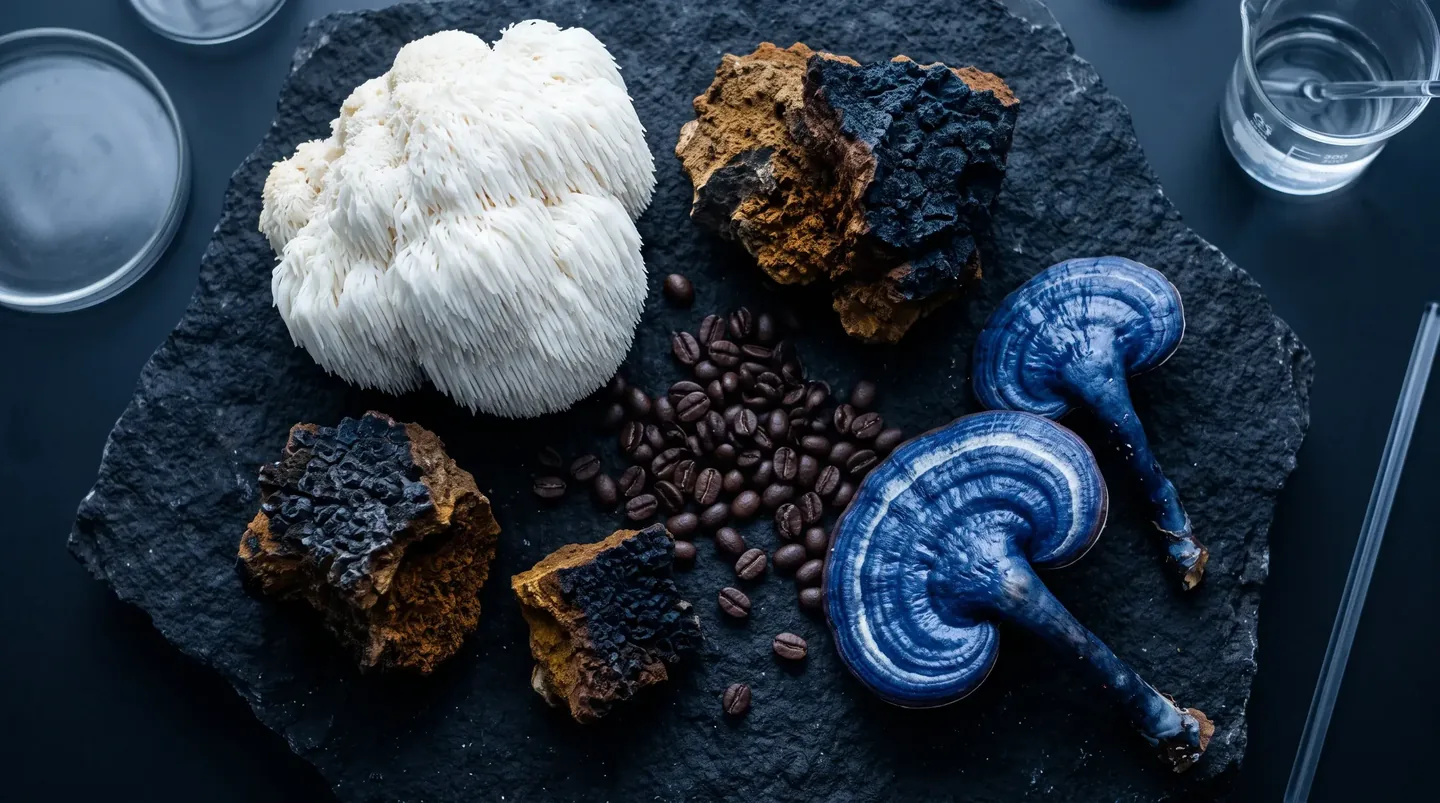
Mushroom coffee is coffee blended with dried functional mushroom extract — typically lion's mane (Hericium erinaceus), chaga, reishi, or cordyceps. The mushroom component is not psychoactive. It is brewed and consumed like regular coffee. The claimed benefits — cognitive support, immune modulation — are species-specific and dose-dependent. The coffee fraction provides caffeine; the mushroom fraction provides beta-glucans and triterpenes if the product is correctly made from fruiting body extract at therapeutic dose.
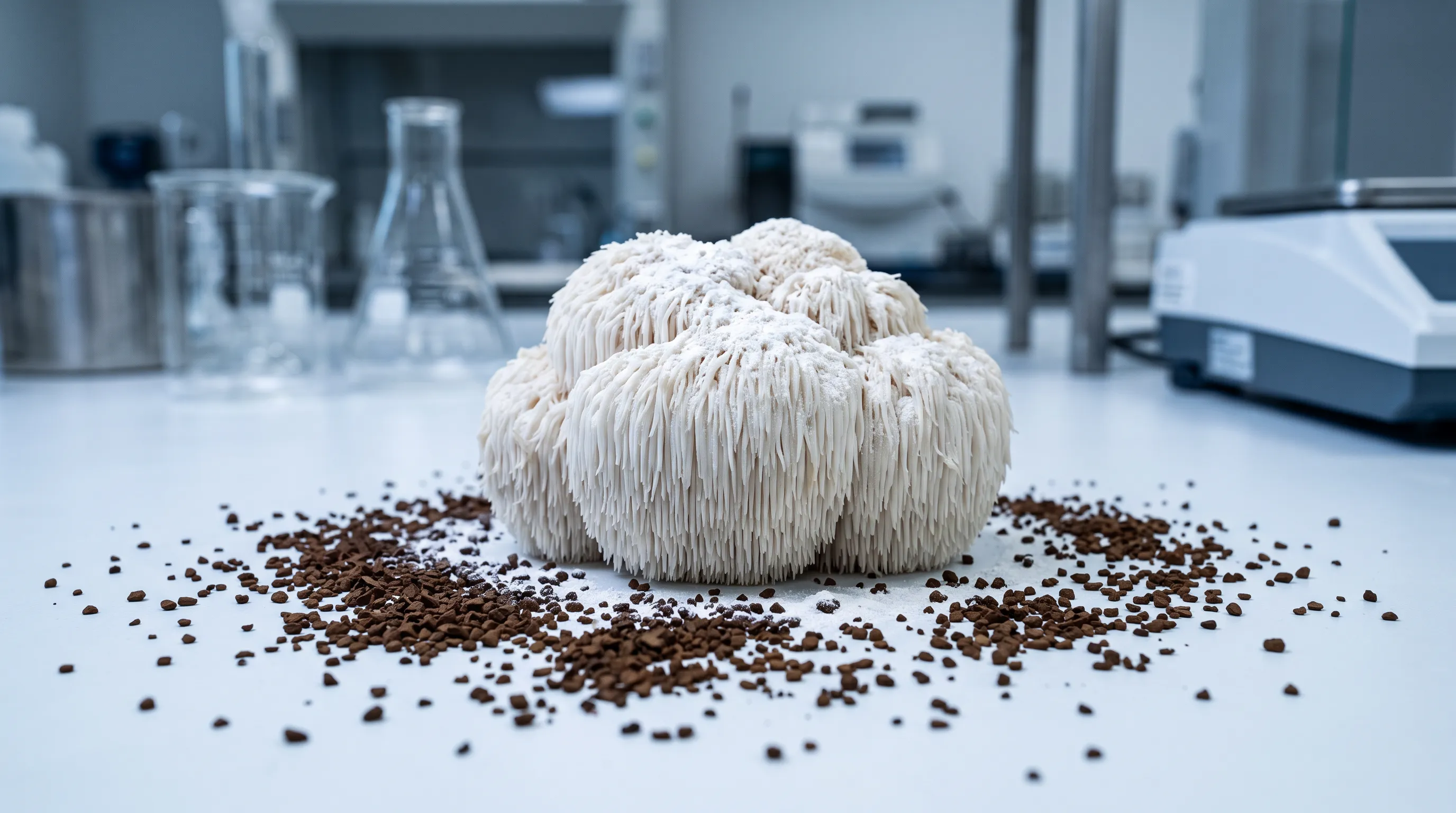
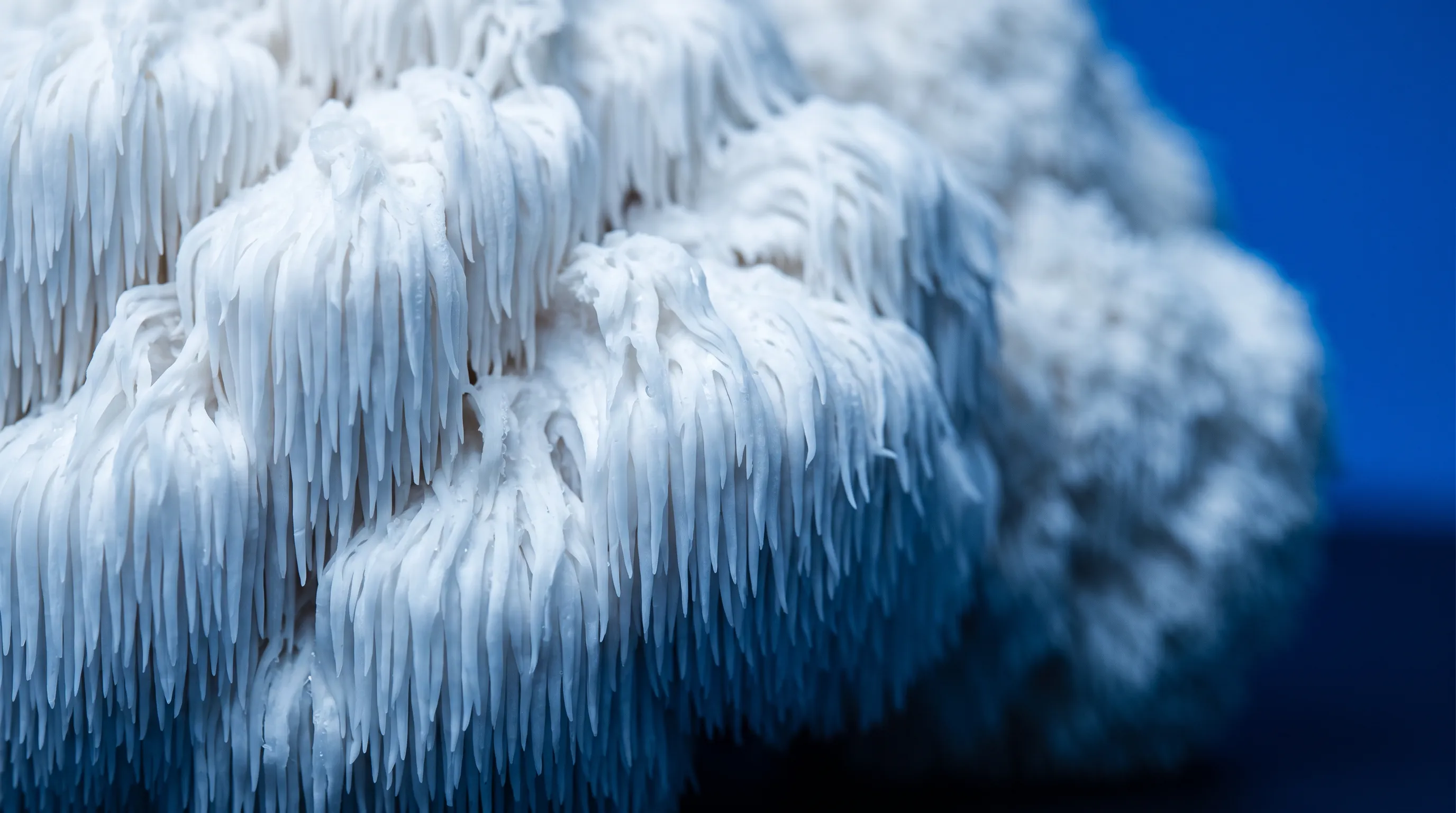
The fruiting body is the mature reproductive structure — the visible mushroom. Mycelium is the root-like network that precedes it. Fruiting body extracts have significantly higher beta-glucan concentrations than mycelium. Most commercial mushroom coffees use mycelium grown on grain substrate (oats, brown rice). The finished product contains significant grain starch alongside the fungal material. Certificate-of-analysis data shows beta-glucan concentrations in mycelium products are typically 10–70x lower than fruiting body equivalents.
The Mori et al. 2009 double-blind RCT (PMID 18844328) used 3g per day of dried Hericium erinaceus fruiting body powder over 16 weeks in adults with mild cognitive impairment. This is the most cited evidence base for lion's mane cognitive effects. Most mushroom coffees provide 250–500mg of mushroom extract per serve — well below the 3g fruiting body dose studied. A product stating "lion's mane mycelium blend" rather than "3g fruiting body extract" is not dosing at the researched threshold.
Yes, unless explicitly stated otherwise. Most mushroom coffees blend functional mushroom extract with standard ground or instant coffee — the caffeine comes from the coffee, not the mushroom. Caffeine content per serve is rarely disclosed on the label. Most products sit in the 50–150mg caffeine range per serve, comparable to a short black or instant coffee. If caffeine sensitivity is a concern, look for a half-caf or caffeine-disclosed product.
Reishi (Ganoderma lucidum) has a reasonable safety profile in studies of 12 weeks or less. It exhibits blood-thinning activity at higher doses — individuals on anticoagulant medications should consult a practitioner before use. There are rare case reports of hepatotoxicity with prolonged high-dose reishi supplementation, though causality has not been established. Standardised fruiting body extract at doses typical in mushroom coffees (under 500mg/serve) has not produced serious adverse events in controlled studies.
Chaga (Inonotus obliquus) grows on birch trees. Its primary bioactives are betulinic acid derivatives (sourced from the birch host), oxalate (high levels — contraindicated in kidney stone sufferers), and melanin complexes. Animal and in-vitro studies suggest antioxidant and immune-modulating effects. Human clinical evidence is very limited — there are no large-scale RCTs demonstrating cognitive or energy effects in humans at doses found in commercial products. Chaga is often marketed for immune support, but the human evidence base does not yet match the claims.
They are worth buying if the product uses fruiting body extract (not mycelium on grain), discloses a beta-glucan percentage on the label or certificate of analysis, and provides the mushroom fraction near the doses studied in clinical trials. Most Australian products fail one or more of these criteria. Of 14 products reviewed, one met all three. For functional mushroom supplementation at clinical doses, a separate standalone capsule is more cost-effective than most blended mushroom coffees.
Lion's mane has a very low reported interaction profile. No significant interactions have been documented with common supplements including ashwagandha, collagen, or B vitamins. It may potentiate blood-thinning medications at high doses — a precaution shared with most medicinal mushrooms. The Li et al. 2020 pilot RCT (PMID 32581767) used erinacine A-enriched lion's mane mycelia at 350mg/day in early Alzheimer's patients over 49 weeks without documented adverse interactions. Individuals on prescription medication should consult a practitioner before adding lion's mane.