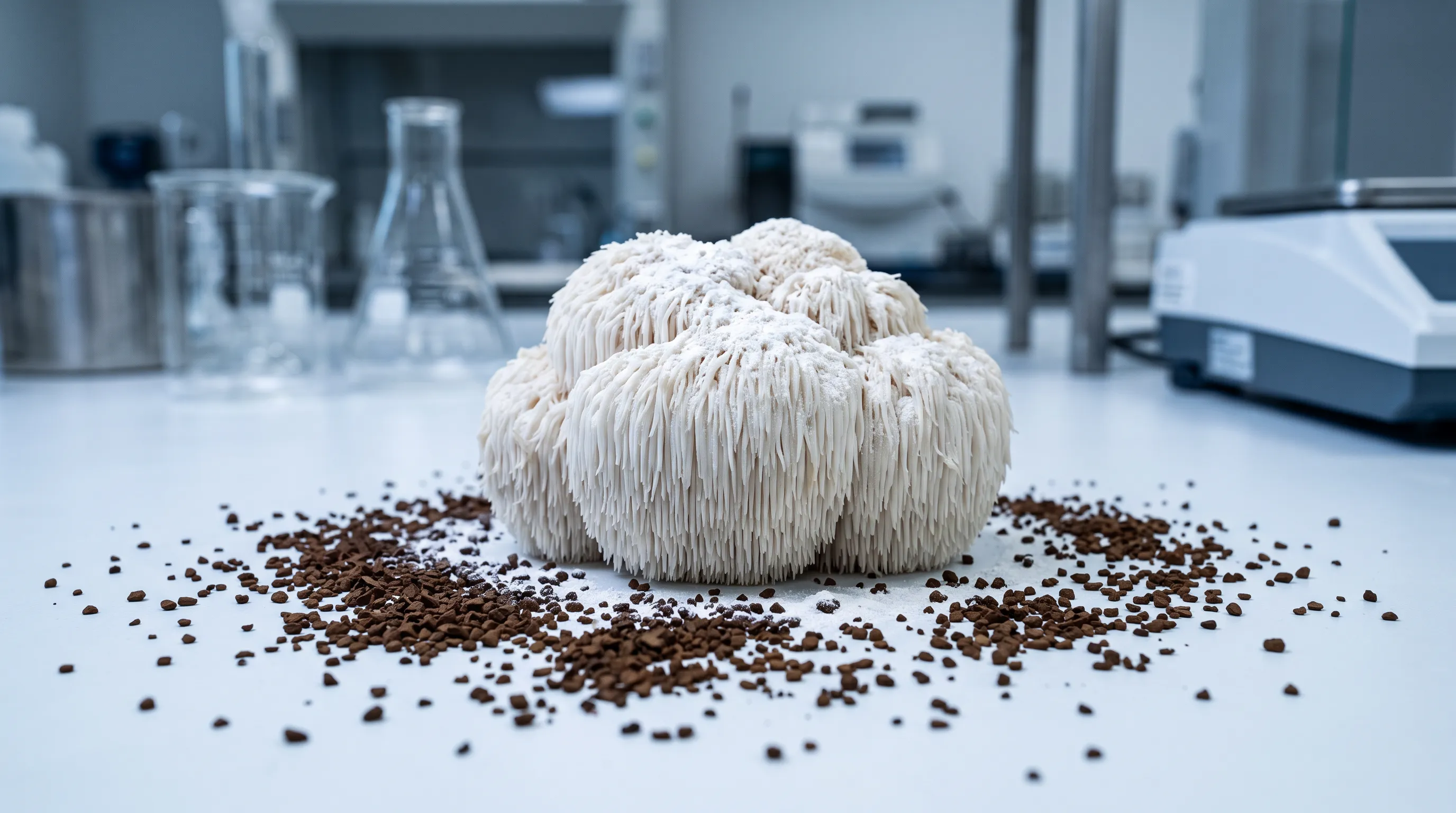
Wild Brew Organic Mushroom Coffee with Lion's Mane at $39.99 AUD is the best-value mushroom coffee available on Amazon AU. It combines organic ground coffee with lion's mane extract, delivering approximately 50–70mg of caffeine per serve — roughly half a standard drip coffee — alongside the cognitive support rationale behind lion's mane (Mori et al., 2009, identified Nerve Growth Factor stimulation in a double-blind trial). At approximately $1.82 per serve across 22 serves, it is the more practical daily purchase.
Four Sigmatic Chai Latte Mix with Turkey Tail and Reishi at $47.57 is the better choice for those wanting zero caffeine in a mushroom blend format. Turkey tail and reishi have immune-modulating properties supported by research, though the dose per serve is lower than clinical trial quantities. Neither product is appropriate for someone whose primary goal is maximum caffeine. Both deliver mushroom beta-glucans in a convenient format that requires no preparation beyond hot water or milk.
We research every product we recommend. Some links on this page are affiliate links. If you buy through them, we earn a small commission at no extra cost to you. This doesn't affect our recommendations.
Research-based analysis. This article is based on published research, verified AU product listings, and brand specifications. All product assessments use publicly available ingredient and extract data; no first-hand product analysis is implied.
Quick Picks
| Product | Price | Mushroom Type | Caffeine | Extract Form | Best For | Buy |
|---|---|---|---|---|---|---|
| Wild Brew Organic Mushroom Coffee Our Pick | $39.99 | Lion's Mane | ~50–70mg/serve | Mushroom extract | Best overall / value | |
| Four Sigmatic Chai Latte Mix | $47.57 | Turkey Tail + Reishi | 0mg (caffeine-free) | Mushroom extract blend | Caffeine-free / afternoon |
What to Look For in a Mushroom Coffee
Mushroom coffee is a broad category. The label "mushroom coffee" can mean anything from a full-strength coffee with a small addition of mushroom powder, to a caffeine-free herbal blend that contains no coffee at all. Understanding the key variables helps you buy the product that matches your actual goal rather than the marketing copy on the front of the bag.
There are five things worth checking before you buy: the extraction method used for the mushroom component, the species of mushroom included, whether the product uses fruiting body or mycelium, the caffeine content of the base, and the cost per serve over a realistic monthly supply. Each of these affects both the functional value and the daily economics of using mushroom coffee as a routine purchase.
The mushroom coffee category also carries a specific credibility problem: because "adaptogen" and "nootropic" claims are not regulated in Australia the way pharmaceutical claims are, products can imply significant effects while delivering doses well below those used in research. The best mushroom coffees acknowledge this honestly on the label. The worst rely on implied claims and vague language. Checking the actual species and labelled extract content is the fastest way to separate the two.
Evaluation Criteria
We assessed both products against four criteria relevant to a daily mushroom coffee purchase. These are the same variables that determine long-term value, not initial appeal.
Mushroom species
Species determines the research backing. Lion's mane has the strongest human evidence for cognitive support (Mori et al., 2009). Turkey tail and reishi have immune-modulating research, primarily in clinical settings. Chaga and cordyceps have thinner human trial bases. Species should be labelled clearly, not buried in a proprietary blend.
Prefer: single species with named researchExtraction quality
Fruiting body extracts deliver higher and more consistent beta-glucan concentrations than mycelium grown on grain substrate. Mycelium-on-grain products can contain significant starch from the growing medium, which dilutes active compounds. The label should specify "fruiting body" if that claim matters to you. "Whole mushroom" can mean either.
Prefer: fruiting body extract, beta-glucan % statedCaffeine content
Mushroom coffee sits across a wide range: from roughly 50mg per serve (about half a drip coffee) to 95mg or more if the base is full-strength ground coffee with mushroom extract added on top. If you are sensitive to caffeine or want an afternoon option, caffeine-free formulations exist. If caffeine is the point, a straight single-origin pour-over delivers more for less money.
Typical range: 0–95mg per serveCost per serve
This is the most honest metric for daily use products. A $49 bag sounds premium until you calculate serve count. Wild Brew at $39.99 for 22 serves works out to approximately $1.82 per serve. Four Sigmatic at $47.57 (verify serve count on current packaging) is meaningfully more expensive per serve. The cost per serve determines whether this is a daily habit or an occasional indulgence.
Target: under $2.50 per serve for daily useThe Best Mushroom Coffees in Australia 2026
Wild Brew is the more practical daily purchase of the two products in this comparison. At $39.99 for 22 serves, it sits at approximately $1.82 per serve — a price point that makes it realistic as a genuine coffee replacement rather than an occasional supplement curiosity. The base is organic ground coffee blended with lion's mane extract, which is the combination most grounded in human clinical research for the cognitive support angle that mushroom coffee typically markets toward.
The caffeine content is approximately 50–70mg per serve. This puts it at roughly half the caffeine of a standard drip coffee (around 95mg) and meaningfully below a double espresso (around 130mg). For someone who finds full-strength coffee too stimulating in the afternoon, or who is tapering caffeine consumption without eliminating it entirely, this reduction is genuinely useful. For someone who needs maximum caffeine to function in the morning, this is not that product.
The lion's mane inclusion is the most defensible mushroom species to add to a coffee format given the available research. The 2009 double-blind, placebo-controlled trial by Mori et al. (published in Phytotherapy Research) found that older adults consuming 3g of dried lion's mane daily for 16 weeks showed significant improvements on cognitive function scores compared to placebo. The caveat worth stating plainly: a single serve of mushroom coffee is unlikely to deliver 3g of dried lion's mane equivalent. The dose question is real, and no responsible mushroom coffee review should ignore it. Wild Brew includes the extract; the per-serve quantity is not prominently labelled, which is consistent with the category norm but not ideal for informed purchasing.
Preparation is straightforward. Wild Brew is ground coffee, so it works in a French press, drip machine, pour-over, or any standard brewer. You do not need a dedicated mushroom coffee protocol. The taste profile is coffee with a mildly earthy note — detectable if you are comparing it directly to a single-origin pour-over, but not intrusive in a daily-use context. Most people report that the mushroom note fades into the background after the first few serves.
Skip if: You want zero caffeine, or you drink three or more full-strength coffees before midday and rely on that caffeine load. Wild Brew's reduced caffeine is a feature for some people and a limitation for others. Know which applies to you before ordering.
Pros
- Lion's mane is the best-researched species for cognitive support claims
- Organic ground coffee base works in any standard brewer
- ~$1.82 per serve makes daily use economically sensible
- Reduced caffeine (~50–70mg) useful for those moderating intake
- USDA Organic certification on the coffee component
Cons
- Mg of lion's mane per serve not prominently disclosed on label
- Not suitable for caffeine-sensitive individuals or evening use
- Earthier taste than a standard single-origin coffee
- Fruiting body vs mycelium sourcing not clearly specified
Four Sigmatic is the most recognised brand in the mushroom supplement space globally, and this Chai Latte Mix represents a specific product niche: a zero-caffeine warm drink with mushroom extracts in a format that tastes like a spiced latte rather than coffee. If your goal is to replace a late-afternoon coffee with something that serves a ritual function without disturbing sleep, this is the clearest option available on Amazon AU.
The mushroom species used here are turkey tail (Trametes versicolor) and reishi (Ganoderma lucidum). Turkey tail is among the most studied medicinal mushrooms for immune modulation — a 2012 phase I trial published in the International Society for Integrative Oncology's journal found immune cell activity improvements in breast cancer survivors taking 9g of turkey tail mycelium daily. Reishi has a similarly long research history for immune and adaptogenic effects. Both caveats apply: dose per serve in a retail latte mix is substantially below clinical trial quantities, and neither species has the same cognitive-function research profile as lion's mane.
The chai latte format is a significant practical differentiator from Wild Brew. This is not a coffee. It is a spiced blend — ginger, cardamom, cinnamon, black pepper — with mushroom extract and a coconut milk base. It mixes with hot water or heated milk and produces a drink that tastes convincingly like a chai latte with a very mild mushroom background. For someone who has moved away from coffee entirely, or who is looking for an afternoon wind-down ritual, the format serves a different purpose than morning focus.
At $47.57, Four Sigmatic is meaningfully more expensive than Wild Brew on a per-serve basis. The exact serve count depends on current packaging, but across the typical unit size, the cost per serve is higher than Wild Brew's $1.82. For an everyday purchase in a high-volume household, this gap is material. For an occasional afternoon ritual, it is less relevant.
Skip if: You want morning caffeine and a genuine coffee taste. This is a caffeine-free chai latte, not a coffee replacement for energy. Also skip if you are primarily interested in lion's mane — this product does not contain it.
Pros
- Completely caffeine-free — genuinely usable in the afternoon or evening
- Turkey tail and reishi are among the best-studied immune-modulating mushrooms
- Four Sigmatic is the category's most transparent brand on extract sourcing
- Chai latte format is palatable for people who don't enjoy black coffee
- Mixes quickly with hot water or plant milk — no brewer required
Cons
- Higher price per serve than Wild Brew
- Not a coffee — does not replace caffeine-driven morning routine
- Contains no lion's mane — limited cognitive-focus research relevance
- Per-serve mushroom dose still well below clinical trial quantities
Wild Brew or Four Sigmatic?
The two products serve different purposes. Neither is universally better. Use this matrix to match your actual use case to the right pick.
| Situation | Best Pick | Why |
|---|---|---|
| Morning ritual with moderate caffeine | Wild Brew | Coffee base with lion's mane; ~50–70mg caffeine is enough to function without over-stimulating |
| Afternoon wind-down, no caffeine | Four Sigmatic | Zero caffeine, spiced latte format works as a ritual replacement for a late coffee that disrupts sleep |
| Budget-first, daily use | Wild Brew | ~$1.82 per serve makes it the more practical daily habit at scale |
| Taste-first, don't like black coffee | Four Sigmatic | Chai latte format is designed to be palatable without milk or sweetener adjustments |
| Cognitive focus as primary goal | Wild Brew | Lion's mane has the strongest human evidence for cognitive outcomes; turkey tail and reishi do not |
What About DIRTEA?
DIRTEA is a UK-based functional mushroom brand with credentials that meet our editorial standard. Their Coffee Super Blend (Lion's Mane, Chaga, Tremella, 1,000mg per serve) discloses greater than 40% beta-glucans and uses dual-extracted fruiting body — two criteria most AU brands fail to meet. DIRTEA also publishes third-party testing results, which is uncommon in the category.
The reason they do not rank in the main comparison: they have no Amazon AU listing. They ship internationally from the UK at a cost that puts them at approximately $55–70 AUD landed per 150g (60 serves), excluding delivery. For Australians who want best-in-class transparency and are willing to order direct, they are worth considering. For a frictionless Amazon AU purchase, the options above are the practical picks.
DIRTEA availability: Order direct at dirteaworld.com with international shipping to Australia. No Amazon AU listing at time of writing (July 2026). Not an affiliate link.
What Mushroom Coffee Won't Do
Mushroom coffee is not a nootropic miracle. The dose per serve is typically a fraction of what clinical trials used. Realistic expectations are part of making a sensible purchase decision.
The honest version of the mushroom coffee pitch is narrower than the marketing version. Here is what the evidence does and does not support for the products in this comparison.
Dose gap. The Mori 2009 lion's mane trial — the most cited study in mushroom coffee marketing — used 3,000mg of dried lion's mane daily, delivered across three serves, for 16 weeks. A single serve of mushroom coffee contains a fraction of that quantity. Wild Brew does not disclose the mg of lion's mane per serve, which is typical for the category but means you cannot calculate dose equivalence against the research. The beta-glucans in mushroom extract are the likely active compounds; some products list beta-glucan percentage, which allows a better comparison to studied doses. Neither product in this comparison lists this figure prominently.
Taste. Mushroom coffee tastes different from regular specialty coffee. The earthier, slightly umami note from the extract is detectable, particularly in the Wild Brew format where it mingles with ground coffee. It is not unpleasant, but it is not a neutral flavour addition. If you are attached to the precise taste profile of your current morning coffee, mushroom coffee is a different product, not a superior version of the same one.
What it can reasonably do. Both products deliver beta-glucans — the primary bioactive compounds in functional mushrooms — in a convenient, daily-use format. If your goal is to incorporate mushroom beta-glucans into a consistent routine without taking capsules, mushroom coffee is a sensible vehicle. At the doses delivered per serve, the effect is more likely to be incremental and cumulative than dramatic and immediate. Neither product is a replacement for sleep, exercise, or a coherent diet. Both are reasonable additions to a functional wellness routine once those foundations are in place.
Frequently Asked Questions
What is the best mushroom coffee in Australia?
Wild Brew Organic Mushroom Coffee with Lion's Mane at $39.99 AUD is the best-value option available on Amazon AU. It combines organic ground coffee with lion's mane extract at approximately 50–70mg caffeine per serve. Four Sigmatic's Chai Latte Mix at $47.57 is the better choice if you want zero caffeine in a mushroom blend format. Neither is ideal if your primary goal is maximum caffeine — a standard coffee covers that more efficiently.
Does mushroom coffee actually work?
The evidence is mixed and dose-dependent. Lion's mane has the strongest human research base for cognitive support: a 2009 double-blind trial by Mori et al. found significant improvements in cognitive function scores in older adults taking 3g of dried lion's mane daily for 16 weeks. Most mushroom coffee products deliver a fraction of that dose per serve. Turkey tail and reishi have immune-modulating research, primarily in clinical populations. The honest position is: functional mushrooms are not without evidence, but retail mushroom coffee doses are well below studied amounts.
How much caffeine is in mushroom coffee?
It depends on the product. Wild Brew Organic Mushroom Coffee contains approximately 50–70mg of caffeine per serve, roughly half the caffeine in a standard drip coffee. Four Sigmatic's Chai Latte Mix is caffeine-free. Some mushroom coffee products use a full-strength coffee base and add mushroom extract on top, in which case caffeine content is similar to regular coffee. Always check the label if caffeine sensitivity is relevant to you.
What mushroom is best for focus and energy?
Lion's mane (Hericium erinaceus) has the most direct human research supporting cognitive function, specifically through Nerve Growth Factor stimulation identified in the Mori 2009 research. It is the most relevant species for a focus-oriented mushroom coffee. Cordyceps is sometimes promoted for energy via ATP synthesis pathways, though human trial evidence at typical supplement doses is thinner. Reishi is more commonly studied for stress modulation and immune function than for energy or focus.
What is the difference between fruiting body and mycelium extract?
Fruiting body extract comes from the above-ground part of the mushroom. Mycelium is the root-like network it grows from. Fruiting body extracts typically deliver higher and more consistent beta-glucan concentrations. Mycelium products — particularly those grown on grain substrate — can contain significant starch from the growing medium, which dilutes active compounds without being mentioned on the label. Look for products that specify "fruiting body" if beta-glucan content is your primary concern.
Is mushroom coffee safe to drink every day?
For most healthy adults, yes. Medicinal mushrooms used in coffee blends — lion's mane, reishi, turkey tail, chaga — have long safety records in traditional use and no significant adverse effects reported in human clinical trials at typical supplement doses. Reishi can occasionally cause digestive discomfort in sensitive individuals. If you are pregnant, breastfeeding, or taking immunosuppressant medications, consult a healthcare provider before regular use, as some medicinal mushrooms have immune-modulating activity that may interact.
Can mushroom coffee replace regular coffee?
It depends on what you want from coffee. If caffeine is the priority, Wild Brew delivers roughly half the caffeine of a standard drip coffee — enough for many people, but not a full substitute for high-caffeine routines. If taste is the priority, mushroom coffee has a different profile: earthier, slightly bitter from the mushroom extract, and less acidic. It can replace the ritual of coffee more easily than it replaces the flavour or the caffeine hit. Four Sigmatic's chai format replaces the routine without any caffeine at all.
What does mushroom coffee taste like?
Mushroom coffee tastes like coffee with an earthy undertone. The mushroom extract adds a mild, slightly umami or woody note that varies by species. Lion's mane is relatively neutral. Reishi is more bitter. Most commercial mushroom coffees are formulated to minimise the mushroom taste, so the dominant flavour profile remains coffee. Four Sigmatic's chai latte format masks the mushroom flavour almost entirely with cinnamon, ginger, and cardamom spice notes. Neither product tastes strongly of mushroom.
How much mushroom extract is in each serve?
This varies significantly and is often not clearly labelled. Wild Brew lists lion's mane extract on the label but does not specify mg per serve on current packaging. Most mushroom coffee products contain somewhere between 100–500mg of mushroom extract per serve. For context, the Mori 2009 lion's mane trial used 3,000mg of dried mushroom equivalent daily. A single serve of mushroom coffee likely delivers a fraction of studied clinical doses — which is why realistic expectations matter when buying these products.