All products independently purchased No brand partnerships Affiliate links disclosed Updated July 2026
We earn a small commission if you buy via our links — at no extra cost to you. Full disclosure here. We purchased all products ourselves and were not paid by any brand.
Adaptogens · Stress & Cortisol

Most adaptogens are dosed too low to do anything.

The clinical dose of KSM-66 ashwagandha is 600mg/day of standardised root extract (PMID: 23439798). Most products on Australian shelves use root powder at 200mg — not the same thing, and not at the research dose. Most of what's sold here fails on dose. Updated July 2026.

3 Reviewed
100% Independent
Quick answer

KSM-66 ashwagandha at 300mg twice daily is the best-evidenced adaptogen for reducing perceived stress and serum cortisol in healthy adults. Chandrasekhar et al. 2012 (PMID 23439798) is the landmark trial: n=64, 60-day double-blind RCT, demonstrating a statistically significant 27.9% reduction in cortisol versus placebo.

Chandrasekhar et al. 2012 studied 64 adults with self-reported chronic stress. Dose: 300mg KSM-66 twice daily for 60 days. Cortisol fell 27.9% versus placebo; all Perceived Stress Scale subscores improved significantly. Salve et al. 2019 (PMID 32021735) replicated the stress reduction finding at 240mg daily in 60 healthy adults over 60 days. Neither body of evidence extends to root powder formulations or doses below the studied threshold.

KSM-66 at clinical dose is available in Australia via Amazon AU. Most retail products use root powder at 125–200mg — not the extract form or dose studied. TGA listing confirms identity; it does not certify clinical efficacy at the supplied dose.
Reviews

Everything we've reviewed in Adaptogens

Buying Guide

Three criteria for buying adaptogens that actually work.

⚗️

Standardised Extract vs Root Powder

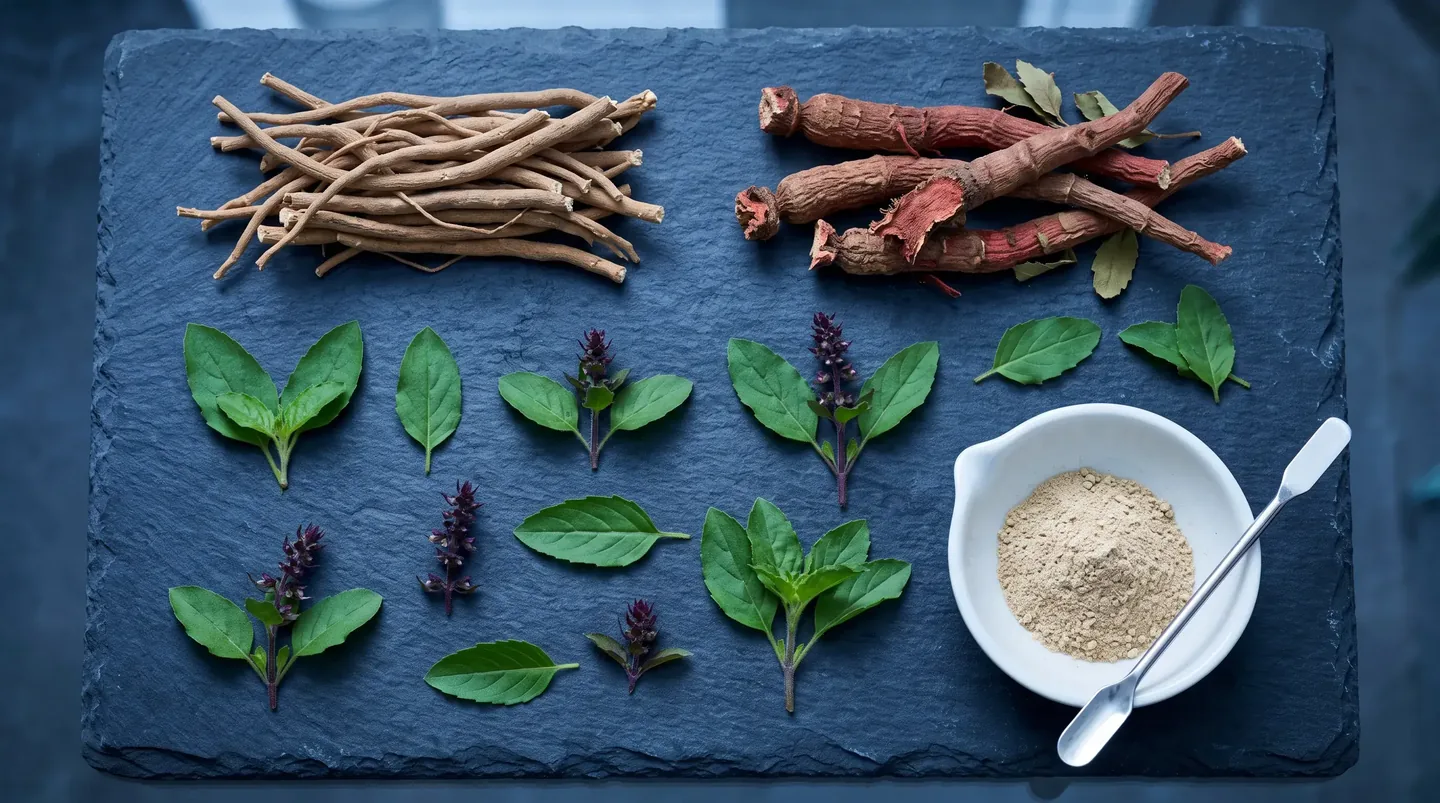
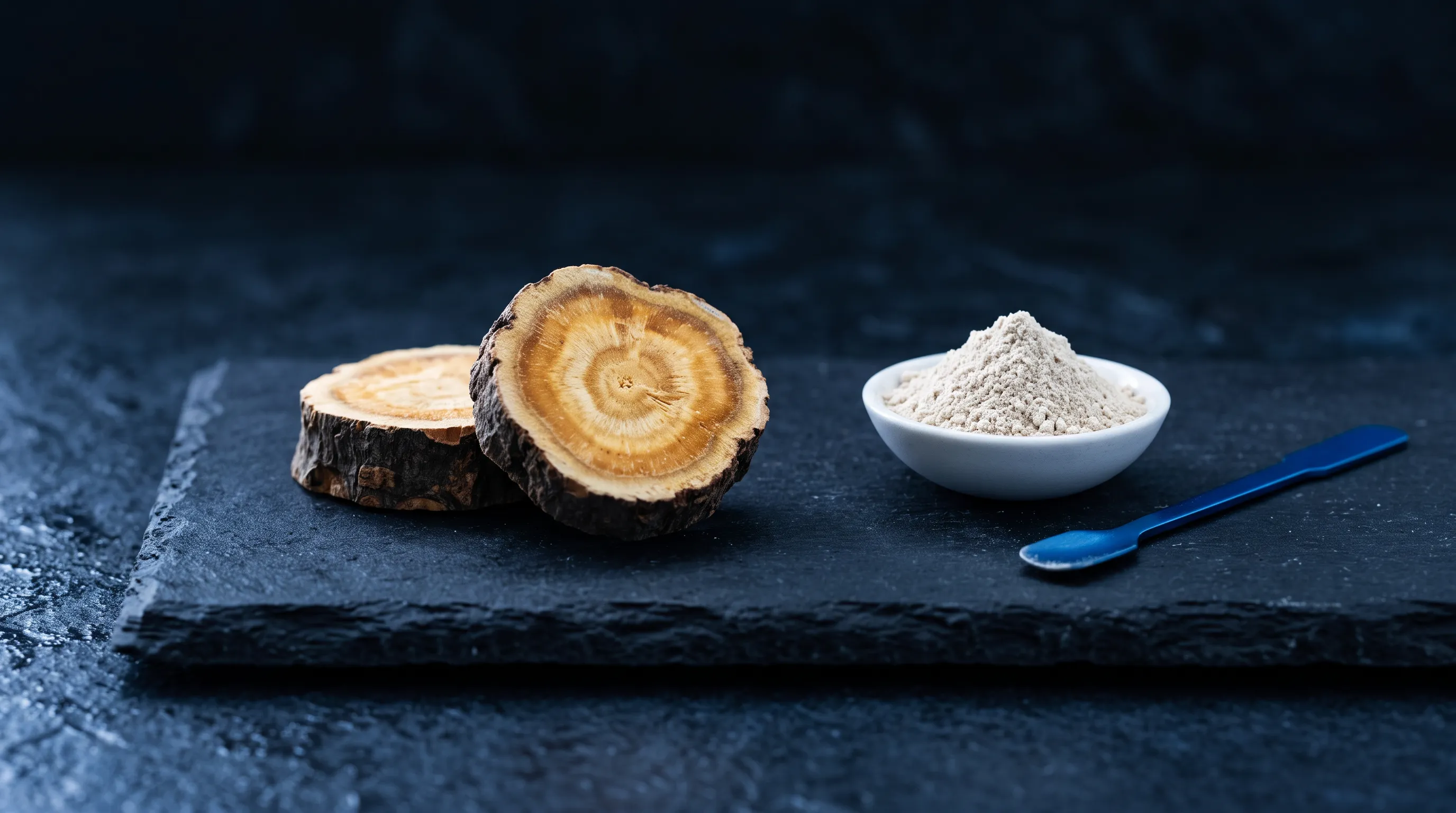
Root powder is the ground whole root. A standardised extract has been concentrated and tested to guarantee a specific percentage of actives. KSM-66 is standardised to 5% withanolides. A product listing "ashwagandha root powder 200mg" is not the same as "KSM-66 300mg" — the second contains roughly 10x the active concentration of the first.

→ Look for KSM-66 or Sensoril branding
📊

Clinical Dose

The cortisol-reduction benefit of ashwagandha has been demonstrated at 300–600mg/day of KSM-66. Below 200mg, there is no peer-reviewed evidence for effect. Many Australian products are dosed at 125–200mg and positioned as clinically equivalent. They are not. Check the dose on the label against the research dose — they often don't match.

→ 600mg/day KSM-66 = clinical dose
🛡️

TGA Listing

Australia's Therapeutic Goods Administration lists complementary medicines for identity and safety — not efficacy. A TGA-listed product has been assessed for ingredient identity and GMP manufacturing, which is the minimum standard for purity. A TGA-listed adaptogen does not guarantee clinical dose, but it does mean you're taking what the label says.

→ Check for a TGA listing number on the label

The Research

What the published trials actually show.

Every card is PubMed-verified. The Chandrasekhar 2012 and Salve 2019 trials used standardised root extract, not root powder — the distinction matters for dose equivalence.

2012

Chandrasekhar et al.

Indian Journal of Psychological Medicine

"A prospective, randomized double-blind, placebo-controlled study of safety and efficacy of a high-concentration full-spectrum extract of ashwagandha root in reducing stress and anxiety in adults." Serum cortisol fell 27.9% versus placebo; all PSS subscores improved significantly.

n=64 adults with self-reported chronic stress. KSM-66 300mg twice daily (600mg/day). 60 days. PMID 23439798 →
2019

Salve et al.

Cureus

"Adaptogenic and Anxiolytic Effects of Ashwagandha Root Extract in Healthy Adults: A Double-blind, Randomized, Placebo-controlled Clinical Study." Significant reduction in perceived stress and anxiety. Safety profile was good; no serious adverse events reported.

n=60 healthy adults. Ashwagandha root extract 240mg once daily. 60 days. PMID 32021735 →
2018

Anghelescu et al.

International Journal of Psychiatry in Clinical Practice

"Stress management and the role of Rhodiola rosea: a review." Across 36 studies reviewed, rhodiola demonstrated consistent, clinically meaningful effects on stress biomarkers, fatigue, and burnout. The standardised WS® 1375 extract was the most-studied commercial form.

Review of 36 studies. Rhodiola rosea standardised extract (WS® 1375). Multiple doses and durations. PMID 29325481 →

Frequently Asked Questions

8 questions
What are adaptogens?

Adaptogens are a pharmacological category of plant-derived substances that help the body modulate its stress response without producing dependency or significant sedation. The clinical definition requires three criteria: non-specific activity (broad stress response, not organ-specific), normalising effect (up-regulates under stress, down-regulates under excessive stimulation), and safety at therapeutic doses. Ashwagandha (Withania somnifera) and rhodiola rosea are the two best-evidenced adaptogens by controlled trial count.

What is the clinical dose of ashwagandha?

The dose used in the landmark cortisol trial (Chandrasekhar et al. 2012, PMID 23439798) was 300mg of KSM-66 standardised root extract taken twice daily — 600mg/day total. Most Australian products use root powder at 125–200mg per serve. Root powder and standardised extract are not equivalent: KSM-66 is standardised to 5% withanolides; root powder concentration is undisclosed and typically far lower. The 600mg KSM-66 dose produced a 27.9% reduction in serum cortisol versus placebo.

What is the difference between KSM-66 and Sensoril?

Both KSM-66 and Sensoril are branded, standardised ashwagandha extracts — unlike generic root powder, their withanolide content is third-party verified. KSM-66 is made exclusively from root (standardised to 5% withanolides) and has the strongest clinical trial base for stress and cortisol outcomes. Sensoril uses the whole plant (root plus leaves, standardised to 10% withanolides) at a lower dose (125mg versus 300mg). Both have peer-reviewed RCT support. KSM-66 has more published trials in adults with self-reported stress.

Does ashwagandha actually lower cortisol?

Yes — in the Chandrasekhar et al. 2012 double-blind RCT (n=64, 60 days), serum cortisol fell 27.9% in the KSM-66 group versus placebo. Perceived Stress Scale scores, anxiety scores, and general wellbeing all improved significantly. Salve et al. 2019 (PMID 32021735, n=60, 60 days) replicated the stress reduction finding with 240mg of ashwagandha root extract in healthy adults. Both studies used standardised extract, not root powder.

What does rhodiola rosea do?

Rhodiola rosea is an adaptogen with the strongest evidence for mental fatigue and burnout — distinct from ashwagandha's primary stress-and-cortisol profile. Anghelescu et al. 2018 (PMID 29325481) reviewed 36 studies and found consistent, clinically meaningful effects on stress biomarkers. The standardised rhodiola extract WS® 1375 is the most-studied commercial form. Evidence supports rhodiola for perceived fatigue under stress; it does not strongly support it for cortisol reduction, which is ashwagandha territory.

How long does ashwagandha take to work?

The Chandrasekhar et al. 2012 trial ran for 60 days and showed statistically significant cortisol reduction across that period, with assessments at day 30 and day 60 both showing meaningful change. Salve et al. 2019 also used a 60-day window. A fair trial of KSM-66 at clinical dose is 4–8 weeks minimum, with full effect at 60 days. Adaptogens are not fast-acting; effects are cumulative and depend on consistent daily dosing at the correct dose.

Can I take ashwagandha every day?

The RCT evidence is based on daily dosing across 60-day windows. Ashwagandha has a strong safety profile in healthy adults at clinical doses (300–600mg standardised extract daily). It is a member of the nightshade family — individuals with nightshade sensitivity should approach with caution. Ashwagandha is classified as a thyroid stimulant in some literature; individuals on thyroid medication should consult a healthcare practitioner before use. TGA AUST L listing confirms identity and GMP manufacturing but does not certify clinical efficacy at the supplied dose.
Is lion's mane an adaptogen?

Lion's mane (Hericium erinaceus) is a functional mushroom, not a classical adaptogen. Adaptogens are defined by a specific pharmacological mechanism involving HPA axis modulation. Lion's mane is studied for its neuroregenerative potential via nerve growth factor (NGF) stimulation — a different mechanism. It does not have strong clinical evidence for cortisol modulation. It belongs in the mushroom and cognitive function category, not the adaptogen category, and should not be compared directly with ashwagandha or rhodiola.

Best Rhodiola Rosea Australia
Roundup

Best Rhodiola Rosea Supplement Australia (2026)

3 products tested · Evidence-led

Read guide →