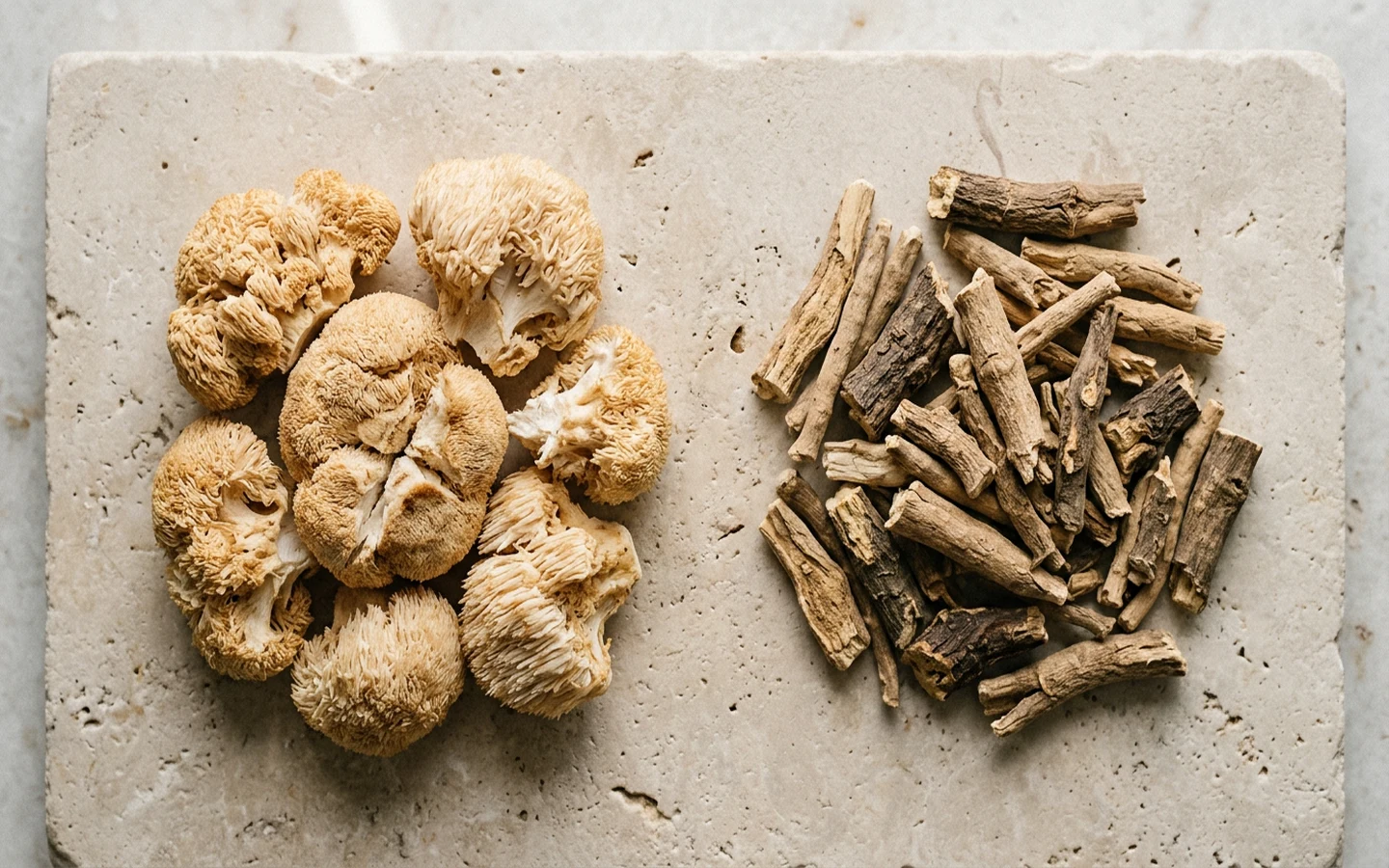
Lion's mane and ashwagandha address completely different systems — choosing between them depends entirely on your goal. Lion's mane targets cognitive function and nerve health through nerve growth factor stimulation; the primary human trial by Mori and colleagues found significant cognitive improvement at one thousand milligrams daily over sixteen weeks. Ashwagandha targets the stress response and cortisol regulation; Chandrasekhar and colleagues found significant reductions in cortisol and perceived stress at three hundred milligrams of root extract daily over sixty days in sixty-four adults. If your primary concern is memory, focus, or cognitive ageing, choose lion's mane. If your primary concern is stress, anxiety, sleep quality, or recovery from training load, choose ashwagandha. Both are safe to take together — they operate through independent mechanisms. The honest caveat is that both are slow-onset supplements requiring consistent daily use over four to eight weeks before effects emerge.
Alchemist Wellness participates in affiliate programmes including Amazon Associates. If you purchase through a link on this page, we may earn a commission at no extra cost to you. This does not influence our editorial recommendations. Full disclosure.
Review status: This article is evidence-based, drawing on brand specifications, published clinical research, and verified Amazon AU listing data.
Products Reviewed
Forest Super Foods Australian Grown Lions Mane Mushroom Capsules
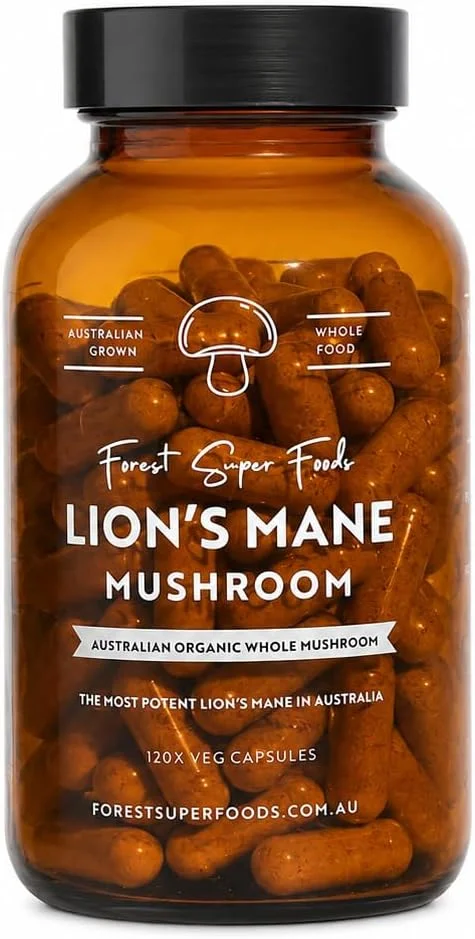
Forest Super Foods Australian Grown Lions Mane Mushroom Capsules
What it claims:
Lion's mane supports cognitive function and promotes nerve growth factor through Hericenone and Erinacine compounds in the fruiting body.
What the evidence says:
Mori K et al. (2009, Phytother Res) — 1,000mg/day, n=30, 16 weeks, significant MMSE improvement vs placebo. Nagano M et al. (2010, Biomed Res) — 2,000mg/day, n=30, 4 weeks, reduced anxiety in perimenopausal women. No cortisol or HPA-axis evidence for lion's mane.
scored
Australian-grown fruiting body lion's mane at the dose used in the primary cognitive trial.
Forest Super Foods Australian Grown Lions Mane Mushroom Capsules
- 120 capsules × 500mg = 60-day supply at 1,000mg/day
- Australian-grown fruiting body — not imported mycelium-on-grain
- 2 capsules = 1,000mg Mori et al. (2009) study dose
- No synthetic fillers or binders listed
- AUD $89 on Amazon AU
- Australian-grown fruiting body — highest beta-glucan density vs mycelium-on-grain imports
- 500mg per capsule makes hitting the study dose simple
- 60-day supply at 1,000mg/day — covers the minimum 8-week assessment window
- No synthetic additives listed
- Amazon AU Prime delivery
- $89 for 120 caps ($1.48/day) is higher per-serve than imported alternatives
- No published Certificate of Analysis for beta-glucan content
- Takes 4–8 weeks minimum — no acute effect
- Has no effect on cortisol, stress, or sleep — wrong supplement for those goals
We've researched this product using publicly available brand specifications, published research on its active ingredients, and verified Amazon AU listing data. Physical testing is in progress and scored criteria will follow.
Score pending · Research-based analysis.
Blackmores Ashwagandha+
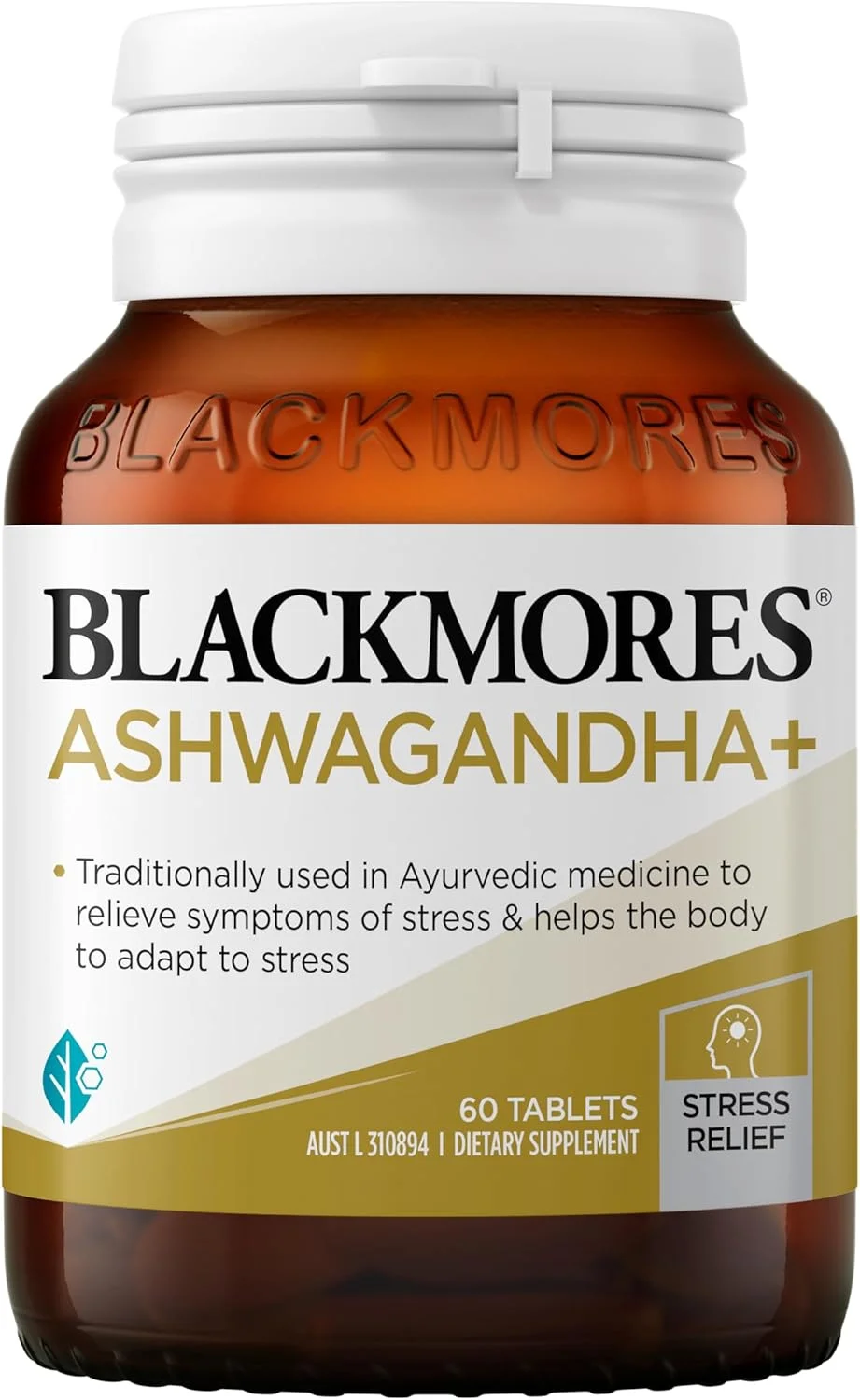
Blackmores Ashwagandha+
What it claims:
Ashwagandha supports stress resilience, reduces cortisol, improves sleep quality, and supports physical recovery through adaptogenic mechanisms.
What the evidence says:
Chandrasekhar K et al. (2012, Indian J Psychol Med) — 300mg KSM-66 root extract/day, n=64, 60 days, significant cortisol reduction and PSS improvement. Langade D et al. (2019, Cureus) — 300mg ashwagandha/day, n=58, 10 weeks, significant sleep quality improvement. Wankhede S et al. (2015, J Int Soc Sports Nutr) — 300mg twice daily, n=57, 8 weeks, significant muscle strength and recovery improvement in resistance training. No cognitive or NGF evidence for ashwagandha.
scored
The most trusted ashwagandha brand in Australia — TGA-listed, standardised extract, widely available at pharmacies and on Amazon AU.
Blackmores Ashwagandha+
- KSM-66 ashwagandha root extract — the most clinically studied ashwagandha form
- TGA-listed complementary medicine — meets Australian regulatory standards
- 60 tablets — 60-day supply at one tablet daily
- Standardised to 5% withanolides
- Available at Chemist Warehouse and Amazon AU
- TGA-listed — meets Australian regulatory quality and safety standards
- KSM-66 extract — used in multiple published human trials for stress and cortisol outcomes
- Blackmores is the most recognisable supplement brand in Australia — quality consistency is high
- 60-day supply at one tablet daily — covers the minimum trial window
- Available at pharmacies — no online-only purchase required
- Label dose may be lower than the 300–600mg used in best-powered cortisol trials — verify before purchasing
- Higher price per dose than unbranded ashwagandha imports
- Has no effect on nerve growth factor or cognitive function — wrong supplement for cognitive goals
- Not for use in pregnancy — consult GP before using if on thyroid medication
We've researched this product using publicly available brand specifications, published research on its active ingredients, and verified Amazon AU listing data. Physical testing is in progress and scored criteria will follow.
Score pending · Research-based analysis.
Healthy Care High Strength Ashwagandha 60 Tablets
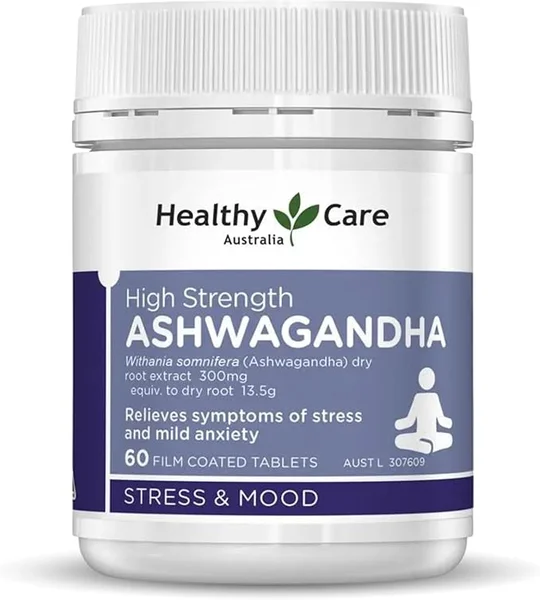
Healthy Care High Strength Ashwagandha 60 Tablets
What it claims:
High-strength ashwagandha supports stress management and general wellbeing.
What the evidence says:
Evidence depends on extract type and standardisation. KSM-66 and Sensoril are the most-studied ashwagandha extracts in published trials. Generic ashwagandha root powder without withanolide standardisation has weaker evidence for cortisol and stress outcomes.
scored
Budget-friendly TGA-listed ashwagandha at a higher label dose — good value for a sixty-day trial before committing to a premium brand.
Healthy Care High Strength Ashwagandha 60 Tablets
- 60 tablets — 60-day supply at one daily
- High-strength formulation at a lower price point than Blackmores
- TGA-listed complementary medicine
- Australian brand — Healthy Care is widely distributed through pharmacies
- Available on Amazon AU
- Lower price per dose than Blackmores — suitable for a long trial without high upfront cost
- TGA-listed — meets Australian quality standards
- 60-tablet supply covers the minimum 60-day trial window
- Available at Chemist Warehouse and on Amazon AU
- Extract type may not be KSM-66 — verify withanolide standardisation before purchasing
- Less clinical documentation compared to KSM-66 branded extracts
- Budget positioning means less certainty about extract quality and consistency
We've researched this product using publicly available brand specifications, published research on its active ingredients, and verified Amazon AU listing data. Physical testing is in progress and scored criteria will follow.
Score pending · Research-based analysis.
Swisse Calm+ Ashwagandha 90 Tablets
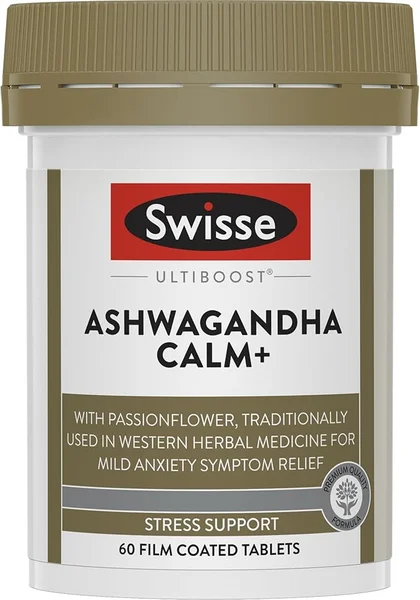
Swisse Calm+ Ashwagandha 90 Tablets
What it claims:
Swisse Calm+ ashwagandha supports stress management, mental calm, and relaxation.
What the evidence says:
Depends on extract type and dose. KSM-66 and Sensoril ashwagandha extracts have the most published human trial evidence. See Chandrasekhar et al. (2012) and Langade et al. (2019) for the primary cortisol and sleep trials.
scored
Swisse's stress-focused ashwagandha formula — ninety-tablet supply, well-known brand, widely available in AU pharmacies.
Swisse Calm+ Ashwagandha 90 Tablets
- 90 tablets — 90-day supply at one daily
- Swisse Calm+ formula targeting stress and anxiety
- TGA-listed complementary medicine
- Available at major AU pharmacies and on Amazon AU
- Ninety-day supply covers the full evidence window for ashwagandha stress trials
- 90-tablet pack covers three months — the longest single-purchase trial window of any option here
- Swisse is a major Australian brand with strong pharmacy availability
- TGA-listed — meets AU regulatory standards
- Calm+ positioning indicates stress-specific formula
- Verify extract type (KSM-66 or Sensoril preferred) and dose per tablet before purchasing
- Higher upfront cost than Healthy Care due to larger pack size
- No cognitive benefit — wrong supplement for lion's mane goals
We've researched this product using publicly available brand specifications, published research on its active ingredients, and verified Amazon AU listing data. Physical testing is in progress and scored criteria will follow.
Score pending · Research-based analysis.
| Factor | Lion's Mane | Ashwagandha |
|---|---|---|
| Primary target | Cognitive function — memory, focus, neural maintenance | Stress response — cortisol, anxiety, sleep, recovery |
| Mechanism | NGF stimulation via Hericenones and Erinacines | HPA axis modulation — reduces cortisol, balances stress hormones |
| Key human trial | Mori 2009 — 1,000mg/d, 16wk, n=30, MMSE ↑ | Chandrasekhar 2012 — 300mg KSM-66, 60 days, cortisol ↓, PSS ↓ |
| Study dose | 1,000–2,000mg/day fruiting body extract | 300–600mg/day standardised root extract (KSM-66) |
| Onset | 4–8 weeks minimum | 4–6 weeks for cortisol and stress outcomes |
| Sleep benefit? | No direct evidence | Yes — Langade 2019, significant sleep quality improvement |
| Exercise/recovery? | No evidence | Yes — Wankhede 2015, muscle strength and recovery |
| Safe to stack? | Yes — independent mechanisms, no interaction | Yes — independent mechanisms, no interaction |
| AU products | Forest Super Foods $89/120ct | Blackmores, Swisse, Healthy Care — pharmacies + Amazon AU |
Lion's Mane: The Cognitive Mechanism
Lion's mane works through two families of compounds unique to Hericium erinaceus: Hericenones from the fruiting body and Erinacines from the mycelium. Both have been shown to stimulate nerve growth factor synthesis. NGF is a protein that supports the growth, maintenance, and survival of neurons, particularly in the hippocampus — the brain region most associated with memory formation and spatial navigation. Kawagishi and Zhuang documented the NGF-stimulating activity of these compounds in their 2008 review in Chemistry Records.
The clinical translation is in Mori K et al. (2009, Phytother Res): thirty adults with mild cognitive impairment took one thousand milligrams of lion's mane daily for sixteen weeks. The treatment group showed statistically significant improvement on the Mini-Mental State Examination at weeks eight, twelve, and sixteen. Cognitive scores returned toward baseline within four weeks of stopping — confirming the effect requires ongoing supplementation and is not a one-time treatment.
Critically, lion's mane has no meaningful evidence for stress, cortisol, or anxiety in the general population. Nagano et al. (2010) found anxiety reduction in perimenopausal women specifically — a population with a particular hormonal context. Choosing lion's mane to manage work stress or generalised anxiety is not supported by the current evidence base.
Ashwagandha: The Stress Mechanism
Ashwagandha works through the hypothalamic-pituitary-adrenal axis — the hormonal cascade that regulates the stress response. Withanolides, the bioactive compounds in ashwagandha root, appear to modulate cortisol production and reduce HPA axis hyperactivity. The result in human trials is a measurable reduction in serum cortisol and corresponding improvements in self-reported stress, anxiety, and sleep quality.
Chandrasekhar K et al. (2012, Indian J Psychol Med) is the primary reference trial: sixty-four adults with chronic stress were randomised to three hundred milligrams of KSM-66 ashwagandha root extract or placebo for sixty days. The ashwagandha group showed statistically significant reductions in serum cortisol (28% lower than placebo at day sixty) and significantly lower scores on the Perceived Stress Scale and general wellbeing questionnaires. This is a well-designed trial with a clear-cut outcome.
Langade D et al. (2019, Cureus) specifically studied sleep: fifty-eight adults received three hundred milligrams of ashwagandha daily for ten weeks. The ashwagandha group showed significant improvement on the Pittsburgh Sleep Quality Index and actigraphy-measured sleep efficiency. The sleep benefit is distinct from sedation — ashwagandha improves sleep architecture rather than acting as a sleep drug.
Ashwagandha has no meaningful evidence for NGF stimulation or the cognitive processes lion's mane targets. Choosing ashwagandha for memory or cognitive performance is not supported by published trials.
Further Reading
Frequently Asked Questions
8 questionsShould I take lion's mane or ashwagandha?
It depends on your primary goal. Take lion's mane if your goal is cognitive function, memory, focus, or slowing cognitive ageing — the primary trial by Mori and colleagues found significant MMSE improvement at one thousand milligrams daily over sixteen weeks. Take ashwagandha if your goal is stress reduction, cortisol management, sleep quality, or training recovery — Chandrasekhar and colleagues found significant cortisol reduction and PSS improvement at three hundred milligrams of KSM-66 over sixty days. If you have both goals, both can be taken together safely.
Can you take lion's mane and ashwagandha together?
Yes. They operate through completely different mechanisms — lion's mane via NGF stimulation in the nervous system, ashwagandha via HPA axis modulation and cortisol regulation. There are no known pharmacological interactions. No human trial has tested the combination, but individual safety profiles are well established. Taking both with morning meals is the most common protocol. At recommended doses, the cost is approximately two to three dollars per day combined.
Does ashwagandha help with anxiety?
Yes, based on human trials. Chandrasekhar et al. (2012) found significant reductions on the General Health Questionnaire anxiety subscale in sixty-four adults taking three hundred milligrams of KSM-66 daily for sixty days. Langade et al. (2019) confirmed significant sleep quality improvement, which is closely related to anxiety outcomes. The mechanism is HPA axis modulation — reduced cortisol and a calmer stress response. It is not an acute anxiolytic; the effect builds over four to six weeks.
Is lion's mane or ashwagandha better for sleep?
Ashwagandha has stronger direct sleep evidence. Langade D et al. (2019) found significant sleep quality improvement on validated measures in fifty-eight adults taking three hundred milligrams of ashwagandha over ten weeks. Lion's mane has no direct sleep trial evidence. The distinction makes sense mechanistically: ashwagandha reduces cortisol, which is a primary driver of sleep disruption; lion's mane stimulates NGF, which does not directly affect sleep architecture.
What is the best ashwagandha supplement in Australia?
Blackmores Ashwagandha+ is the most trustworthy option for Australian buyers — TGA-listed, uses KSM-66 extract (the form used in the primary cortisol trials), and is available at pharmacies nationwide. Swisse Calm+ is a solid alternative with a larger ninety-tablet pack. Healthy Care High Strength is the budget option. All three are TGA-listed, which means they meet Australian regulatory standards for quality and safety. Verify the extract type and dose per tablet on the label before purchasing any brand.
How long before ashwagandha works for stress?
Four to six weeks for measurable cortisol and stress outcomes, based on Chandrasekhar et al. (2012), which measured significant PSS improvement at the sixty-day mark. Some participants report subjective improvements in stress resilience and sleep at two to three weeks. Like lion's mane, ashwagandha is not acute — it is an adaptogenic supplement that recalibrates the stress response over time. Consistency matters more than timing.
Is ashwagandha safe to take every day?
Yes, at standard doses for the trial periods studied. Chandrasekhar et al. (2012) ran sixty days; Wankhede et al. (2015) ran eight weeks; Langade et al. (2019) ran ten weeks — all without significant adverse events. Long-term safety beyond twelve weeks has not been formally studied in large trials. Ashwagandha may interact with thyroid medications and immunosuppressants. It is contraindicated in pregnancy. Consult a GP before using if you are on prescription medication or have an autoimmune condition.
Does lion's mane help with stress?
Weakly, in a specific population. Nagano M et al. (2010) found anxiety and depression reductions in perimenopausal women taking two thousand milligrams of lion's mane over four weeks. This was a specific hormonal context; the finding should not be generalised to stress or anxiety management in the broader population. For stress, cortisol management, or generalised anxiety, ashwagandha has a substantially stronger and more consistent evidence base.

Our Research Framework
Every product on this site is assessed against the same criteria — brand specifications, published clinical evidence, and verified Australian availability. We don't accept free products. Full methodology →