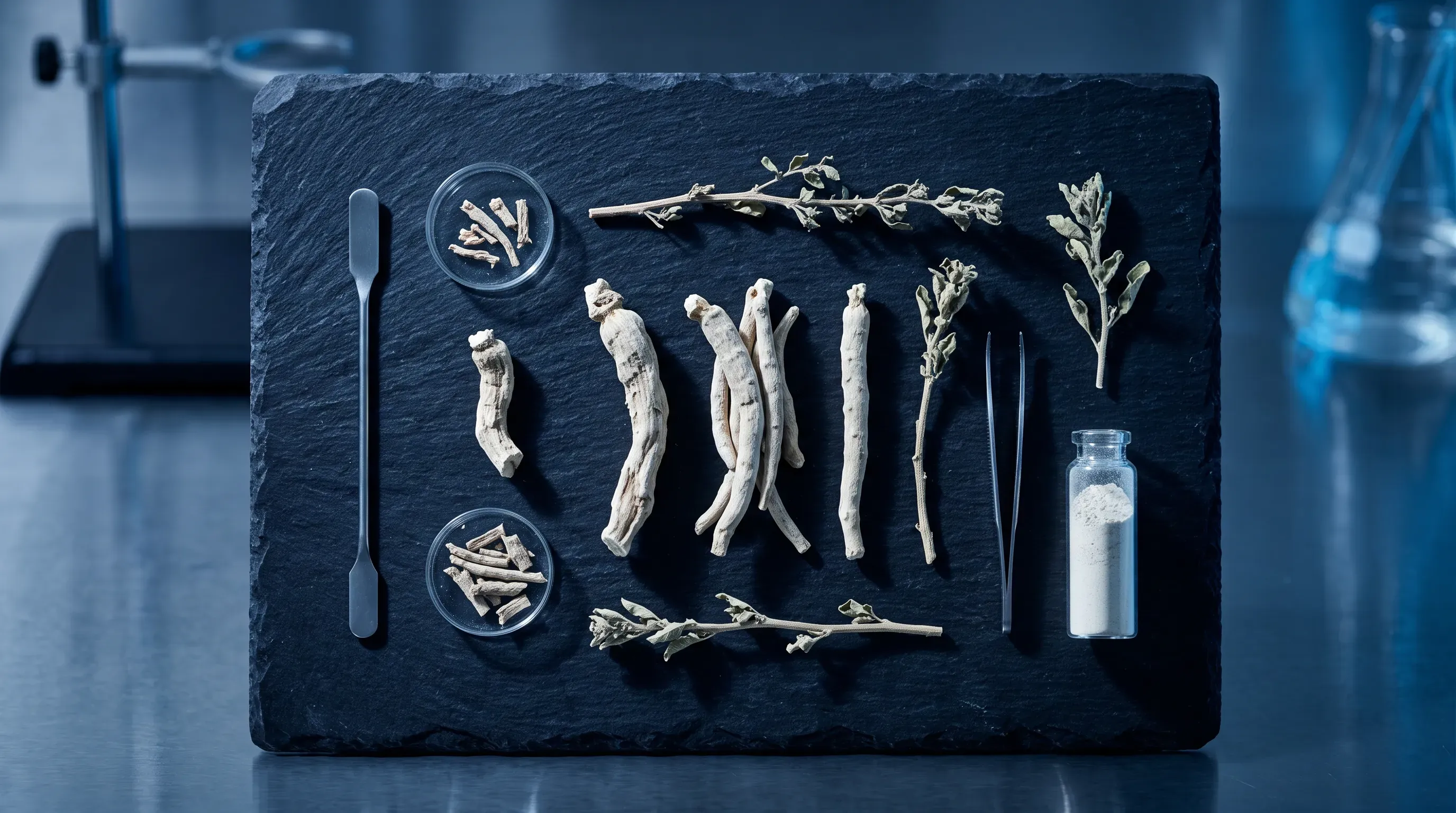
The strongest evidence supports ashwagandha's role in reducing cortisol and improving the physiological stress response. Chandrasekhar et al. (2012), an RCT published in the Indian Journal of Psychological Medicine, found that 240–600mg of KSM-66 ashwagandha daily reduced serum cortisol by 22.2% versus placebo in chronically stressed adults. Stress and anxiety scores also improved significantly. The study population was mixed-sex; female-only data were not reported separately.
Secondary benefits with clinical support include improved sleep quality (Langade et al., 2019, published in Cureus) and improvements in sexual function and satisfaction in women specifically (Dongre et al., 2015). Early research suggests ashwagandha may influence thyroid hormone levels, but this has not been confirmed in large-scale trials and should not be treated as an established benefit. Australian products using KSM-66 extract, dosed at 300–600mg daily, are the closest match to the trial evidence. Effects require 4–8 weeks of consistent use to become apparent.
Pregnancy and breastfeeding — do not take ashwagandha. Ashwagandha has been used in Ayurvedic tradition as a uterine stimulant. Animal studies have demonstrated abortifacient effects at high doses. There is insufficient human safety data in pregnant or breastfeeding women to permit use. If you are pregnant, breastfeeding, or actively trying to conceive, do not take ashwagandha. Discuss all supplements with your obstetrician or GP before use.
We research every product we recommend. Some links on this page are affiliate links. If you buy through them, we earn a small commission at no extra cost to you. This doesn't affect our recommendations.
Research-based analysis. This article is based on published research, peer-reviewed clinical studies, and brand specifications for products with verified AU availability. All claims are drawn from cited sources; no first-hand product analysis is implied.
What Is Ashwagandha?
Ashwagandha (Withania somnifera) is a small shrub native to India, the Middle East, and parts of Africa. It has been used in Ayurvedic medicine for more than 3,000 years, primarily as a rasayana — a category of tonics used to promote longevity and resilience. The word ashwagandha translates loosely from Sanskrit as "smell of horse," referring to the pungent odour of the root and the traditional belief that taking it would confer the strength of a horse.
In the modern supplement context, ashwagandha is classified as an adaptogen: a compound that is proposed to help the body maintain homeostasis under physical and psychological stress. The adaptogen concept is not tightly defined in pharmacological terms, but the practical meaning is straightforward — ashwagandha doesn't produce a stimulant effect or a sedative effect in isolation. Its benefits are regulatory: they appear when the system is under load.
The active compounds in ashwagandha are primarily withanolides, a class of naturally occurring steroidal lactones concentrated in the plant's root. Standardised extracts such as KSM-66 and Sensoril guarantee a minimum withanolide content — typically 5% or higher — which is why they outperform generic ashwagandha powder in clinical trials. Without standardisation, the withanolide content of a capsule can vary significantly between batches and manufacturers.
It's worth noting at the outset that while interest in ashwagandha has surged — driven substantially by women seeking alternatives to pharmaceutical interventions for stress and hormonal health — the clinical literature has historically underrepresented female-only cohorts. Most studies use mixed-sex populations and don't always disaggregate results by sex. Where female-specific data exist, we've noted it. Where they don't, we've said so.
Stress and Cortisol: The Core Benefit
The most robustly supported benefit of ashwagandha is its effect on cortisol and the stress response. This is where the clinical literature is thickest, and where the effect sizes are most meaningful.
The landmark study is Chandrasekhar et al. (2012), published in the Indian Journal of Psychological Medicine. This was a double-blind, randomised, placebo-controlled trial involving 64 adults with a history of chronic stress. Participants received either 300mg of KSM-66 ashwagandha root extract twice daily (600mg total) or placebo for 60 days. At the end of the trial, the ashwagandha group showed a statistically significant reduction in serum cortisol of 22.2% compared to the placebo group's 7.9% reduction. Scores on the Perceived Stress Scale, the General Health Questionnaire, and the Depression Anxiety Stress Scale all improved significantly in the treatment group.
The Chandrasekhar 2012 study used a mixed-sex population. Female-specific cortisol data were not reported separately. The 22.2% cortisol reduction figure applies to the group as a whole, not to women specifically. This is a meaningful gap in the literature — one that hasn't yet been filled by a female-only RCT at the same scale.
Pratte et al. (2014), published in the Journal of the International Society of Sports Nutrition, investigated ashwagandha in a different population: adults experiencing fatigue and non-restorative sleep. Over 60 days, the treatment group — receiving a different ashwagandha preparation — showed improvements in fatigue, anxiety, and cortisol measures compared to placebo, with an effect size broadly consistent with the Chandrasekhar findings. Again, the study population was mixed-sex, and the Pratte study used a different extract preparation, making direct dose comparison imprecise.
What these studies tell us, taken together, is that ashwagandha at doses of 300–600mg of standardised extract daily produces a measurable reduction in cortisol in chronically stressed adults over 60 days. The effect is real and reproducible. The gap is that the data don't allow a precise statement about the effect size specifically in women, because the trials haven't been designed to generate that data.
For women navigating high-cortisol states — whether from work stress, poor sleep, or physiological transitions like perimenopause — the cortisol-lowering mechanism is the most plausible pathway for benefit. Chronically elevated cortisol suppresses progesterone production, disrupts sleep architecture, and amplifies inflammatory responses. Reducing cortisol load doesn't require a hormone-specific pathway to produce meaningful downstream effects.
Hormonal Health: What the Research Actually Shows
Sexual function and reproductive health
This is one area where there is a female-specific clinical trial. Dongre et al. (2015) conducted a randomised, double-blind, placebo-controlled study involving 50 women experiencing sexual dysfunction. Participants received 300mg of KSM-66 ashwagandha root extract twice daily (600mg total) for 8 weeks. Women in the treatment group reported significant improvements in arousal, lubrication, orgasm, satisfaction, and overall sexual function scores compared to placebo. The improvements were statistically significant across multiple validated measures of female sexual function.
The mechanism proposed by the researchers was not direct hormonal modulation but rather a reduction in stress-related inhibition of sexual response — the same cortisol-lowering pathway. This is a distinction worth noting: ashwagandha doesn't appear to work as a direct aphrodisiac; it appears to work by reducing the physiological interference that chronic stress creates. The study was small (50 participants) and needs replication at scale, but it is the strongest female-specific trial in the ashwagandha literature.
Thyroid function: preliminary only
Ashwagandha is frequently marketed as a thyroid support supplement, particularly for women with subclinical hypothyroidism. The research behind this claim is real but early-stage. Sharma et al. (2018), published in the Journal of Alternative and Complementary Medicine, found that 600mg of ashwagandha root extract daily for 8 weeks produced statistically significant increases in T3 (triiodothyronine) and T4 (thyroxine) levels, and a reduction in TSH, in adults with subclinical hypothyroidism (n=50, randomised, double-blind, placebo-controlled). The changes brought thyroid hormone levels closer to normal range.
Important caution: Women with diagnosed thyroid conditions — including Hashimoto's thyroiditis, Graves' disease, or those on thyroid medication — should consult their doctor before taking ashwagandha. Ashwagandha's potential to increase thyroid hormone levels is not a benefit if your thyroid is already overactive, and it may interact with levothyroxine. Do not use ashwagandha as a substitute for thyroid medication.
For women with no diagnosed thyroid condition who experience the fatigue, weight shifts, and cold sensitivity associated with sluggish thyroid function, the preliminary data is interesting. But "preliminary" means exactly that: the evidence base is too thin to make definitive recommendations, and extrapolating from a small study to clinical advice is not justified. More trials are needed before thyroid support can be listed as a verified benefit of ashwagandha.
Sleep Quality
Langade et al. (2019), published in Cureus, provides the strongest evidence for ashwagandha's effect on sleep. This was a double-blind, randomised, placebo-controlled trial involving 60 adults with insomnia. Participants received either 300mg of ashwagandha root extract twice daily (600mg total) or placebo for 10 weeks. The ashwagandha group showed statistically significant improvements in sleep onset latency (time to fall asleep), total sleep time, sleep efficiency, and self-reported sleep quality at both 8 and 10 weeks.
The study population was mixed-sex — again, female-specific data were not disaggregated. The proposed mechanism involves both cortisol reduction and the activity of triethylene glycol, a compound found in ashwagandha leaves and root that has shown sleep-inducing properties in animal models. Most commercial products use root extract specifically, which still demonstrates sleep benefits in the Langade trial.
For women whose sleep disruption is stress-driven — whether from anxiety, perimenopause-related night waking, or high-cortisol patterns that prevent deep sleep — the ashwagandha sleep data is relevant. It doesn't produce sedation in the way that melatonin or pharmaceutical sleep aids do. The effect is more accurately described as facilitating better sleep architecture by reducing the physiological arousal that prevents it.
What Ashwagandha Won't Do
Setting accurate expectations matters as much as reporting benefits. Ashwagandha is frequently marketed with claims that overstate what the evidence supports. Here is what the current clinical literature does not demonstrate:
Clinical depression
Ashwagandha has not been tested as a treatment for clinical depression and should not be used as a substitute for prescribed antidepressants or professional mental health support. Improvements in stress scores and mood in trials reflect outcomes in non-clinical populations experiencing elevated stress, not clinical depression.
Not a pharmaceutical substituteThyroid medication
The evidence for ashwagandha's effect on thyroid hormones is preliminary and derived from small trials. It does not replace levothyroxine or other thyroid medications. Women with diagnosed hypothyroidism who stop their medication in favour of ashwagandha risk serious health consequences.
Supplement, not a replacementImmediate effects
Ashwagandha is not a stimulant and does not produce effects on first use. The cortisol and sleep benefits in clinical trials were measured at 8–12 weeks of consistent daily dosing. Assessing ashwagandha at 2 weeks and concluding it doesn't work is a common and mistaken approach.
Requires 8+ weeks to assessPregnancy
Ashwagandha has been used historically as a uterine stimulant and there is insufficient safety data in pregnant or breastfeeding women. It should not be taken during pregnancy. Women trying to conceive should discuss with their doctor, as the hormonal effects in this population are not well characterised.
Avoid during pregnancyThe honest summary: ashwagandha is a well-researched adaptogen with real, documented benefits in stress, anxiety, sleep, and sexual function in women. The effects are meaningful, reproducible, and backed by adequately powered trials. But it is a supplement that supports physiological regulation — not a pharmaceutical intervention, and not a quick fix. Companies that market it as either of those things are misrepresenting the evidence.
KSM-66 vs Sensoril vs Generic: Which Extract Form Matters
Not all ashwagandha supplements are equivalent. The extract form on the label is the single most important quality signal, and it correlates directly with whether the product matches the doses used in clinical trials.
| Extract | Source | Min. Withanolides | Clinical Evidence | What to Know | Buy |
|---|---|---|---|---|---|
| KSM-66 Preferred | Root only | ≥5% | Chandrasekhar 2012, Dongre 2015, multiple others | Most studied form; full-spectrum root extraction; used in the key female sexual function trial | |
| Sensoril | Root + leaf | ≥10% withanolide glycosides | Supported by independent trials | Higher withanolide content by percentage; different extraction profile; comparable evidence base | |
| Generic powder | Root or whole plant | Not standardised | No direct trial equivalence | Withanolide content varies batch to batch; no guarantee of matching clinical trial doses |
KSM-66 is the extract form with the most robust clinical trial backing, including the key female-specific Dongre 2015 study. When you see KSM-66 on an Australian product label, the extract has been produced to a defined standard and the dose on the label corresponds to what trial participants received. Sensoril is a legitimate alternative with its own supporting evidence base. Generic ashwagandha — sold as "ashwagandha root powder" or "ashwagandha extract" without a branded extract name — may be fine or may not be; you have no way to verify its withanolide content or whether it matches the trial formulations.
For Australian buyers, this distinction is practical: Swisse and Blackmores both use KSM-66 in their formulations. Healthy Care's product is more affordable but does not specify KSM-66 on the label — at its price point it is a reasonable entry option, but you are accepting more variability in the active compound profile.
3 Ashwagandha Supplements Available in Australia
The Swisse Ashwagandha Calm+ is our primary recommendation for most Australian women because it uses KSM-66 extract — the form with the strongest clinical trial backing — at a price that makes consistent 8–12 week supplementation genuinely accessible. At $16.24 for 60 tablets, this is a 60-day supply at one tablet per day, or a 30-day supply if you're matching the twice-daily dosing used in the Chandrasekhar 2012 trial.
Swisse is an Australian brand with robust quality control and wide pharmacy availability, which means you're not relying on an unfamiliar overseas supplier for a product you'll be taking daily for two to three months. The KSM-66 designation on the label is the critical quality marker: it means the withanolide content has been standardised to the same specification used in the key clinical studies, including the Dongre 2015 female sexual function trial.
At this price point relative to Blackmores, Swisse is the better value play for the same extract quality. If you're new to ashwagandha and want to test the response before committing to a more expensive product, start here.
Skip if: You have a thyroid condition or are on thyroid medication — consult your doctor first. Also skip if you are pregnant or breastfeeding.
Pros
- Uses KSM-66 extract — matches the clinical trial formulations
- Best price-per-day among the KSM-66 options available on Amazon AU
- Australian brand with established quality control and TGA-registered manufacturing
- 60 tablets provides a full 8-week trial at once-daily dosing
Cons
- Per-tablet dose may be lower than the 300mg twice-daily used in key trials — check label
- Not suitable during pregnancy or for women with thyroid conditions without medical clearance
- Tablet form (not capsule) — some people prefer capsule delivery
Blackmores is Australia's most recognised supplement brand, and their Ashwagandha+ formulation also uses KSM-66 extract. At $15.00 for 60 tablets, it's fractionally cheaper than the Swisse option at list price, though prices on Amazon AU fluctuate. The brand recognition and distribution mean you can buy it from pharmacies, Woolworths, and Coles if Amazon AU stock is low — a practical consideration for a supplement you'll be taking consistently for months.
The "+" in the name typically indicates an additional ingredient stack — check the current label for the full formulation. Some versions include magnesium or B vitamins alongside the ashwagandha, which may be a benefit if you're looking for a combined stress-support formula, or an unnecessary addition if you want pure ashwagandha. Read the label before buying if the combination matters to you.
For women who already trust Blackmores as a brand — and many Australian women do, given the decades of presence in the market — this is a sound choice. The KSM-66 designation provides the same quality assurance as the Swisse product. The difference between this and the Swisse pick at this price point is marginal; choose based on availability and any additional ingredients in the current formulation.
Pros
- KSM-66 extract — same clinical-grade standardisation as Swisse
- Blackmores brand available in pharmacies and supermarkets across Australia
- TGA-registered manufacturing with established quality standards
- Competitive pricing comparable to Swisse
Cons
- Combination formula may include additional ingredients beyond ashwagandha — verify current label
- Same contraindications as all ashwagandha: not for pregnancy, thyroid conditions without clearance
- Price can drift above the Swisse option on Amazon AU — compare at time of purchase
At $9.29 for 60 tablets, the Healthy Care Ashwagandha is the most affordable entry point on Amazon AU. It is labelled "High Strength," which typically refers to the total extract amount per tablet rather than a guaranteed withanolide percentage. This is the key distinction from the KSM-66 products above: without a branded standardised extract designation, you cannot verify that the withanolide content matches the amounts used in clinical trials.
That doesn't make this a bad product — Healthy Care is an Australian supplement brand with pharmacy distribution and an established track record. The root extract they use may well have a reasonable withanolide profile. But you are accepting more uncertainty than with a KSM-66-designated product, and that uncertainty is meaningful if you're supplementing specifically to replicate the trial conditions that produced the cortisol and sleep results.
The right use case for this product is someone who wants to try ashwagandha before committing to a more expensive option, or someone for whom the $6–7 price difference is a genuine factor. At $9.29, the cost of an 8-week trial is low enough that the investment risk is minimal. If you experience benefits, consider upgrading to a KSM-66 product for ongoing use.
Skip if: You want certainty that your dose matches the trial evidence. Spend the extra $7 for the Swisse KSM-66 if that precision matters to you.
Pros
- Lowest cost for an 8-week trial on Amazon AU
- Australian brand with pharmacy distribution
- Good option to test tolerance before committing to a more expensive product
Cons
- No KSM-66 or Sensoril designation — withanolide content not standardised to a verified minimum
- Cannot confirm clinical trial equivalence of dose and extract form
- Same pregnancy and thyroid contraindications apply
Frequently Asked Questions
What are the main benefits of ashwagandha for women?
The most robustly supported benefits are cortisol reduction and improved stress and anxiety response. Chandrasekhar et al. (2012) found that 300mg of KSM-66 ashwagandha twice daily reduced serum cortisol by 22.2% versus placebo in chronically stressed adults. Secondary benefits with supporting clinical evidence include improved sleep quality (Langade et al., 2019) and improvements in sexual function and satisfaction in women specifically (Dongre et al., 2015). Thyroid support is supported only by early-stage research and should not be treated as an established benefit.
How long does ashwagandha take to work for women?
Most clinical trials observe measurable effects at 8 weeks of consistent daily use. Some subjective improvements in stress and sleep may be noticed earlier, around 4 weeks, but the cortisol and anxiety reductions reported in the Chandrasekhar 2012 study were measured at 8 and 12 weeks. Do not evaluate ashwagandha at 2–3 weeks and conclude it is not working.
Is ashwagandha safe for women to take daily?
At standard doses of 300–600mg KSM-66 daily, ashwagandha is well-tolerated in clinical trials lasting up to 12 weeks. The most commonly reported side effects are mild gastrointestinal discomfort. Ashwagandha should not be taken during pregnancy, as it has been used traditionally as a uterine stimulant and safety data in pregnant women is insufficient. Women with autoimmune thyroid conditions (Hashimoto's, Graves') should consult a doctor before use, as ashwagandha may affect thyroid hormone levels.
Does ashwagandha affect hormones in women?
Ashwagandha's primary hormonal effect is on cortisol, which it reduces. For reproductive hormones, Dongre et al. (2015) found improvements in sexual function and arousal in women taking 300mg KSM-66 twice daily, though the mechanism was not fully characterised. For thyroid hormones, preliminary research suggests ashwagandha may raise T3 and T4 levels in subclinical hypothyroidism, but this has not been confirmed in large-scale trials. Women on thyroid medication should not take ashwagandha without consulting their doctor.
Can ashwagandha help with anxiety in women?
Yes, this is one of the strongest areas of evidence. The Chandrasekhar et al. (2012) RCT found significant reductions in scores on the General Health Questionnaire and the Depression Anxiety Stress Scale in the ashwagandha group versus placebo. The study population was chronically stressed adults (mixed sex). Ashwagandha is not a substitute for clinical treatment of anxiety disorders, but the evidence for its role in supporting a healthier stress response is among the most robust in the adaptogen category.
What dose of ashwagandha should women take?
Clinical trials have used 300mg to 600mg of standardised extract (KSM-66 or Sensoril) daily, typically split across two doses. The Chandrasekhar 2012 study used 300mg twice daily (600mg total). Starting at 300mg once daily and assessing tolerance before increasing is a reasonable approach. Higher doses have not shown proportionally stronger effects in the evidence base, and most Australian products are dosed at 300–600mg per serving.
What is KSM-66 ashwagandha and is it better than generic?
KSM-66 is a patented full-spectrum ashwagandha root extract standardised to at least 5% withanolides. It is the most studied form in clinical trials, including the Chandrasekhar 2012 and Dongre 2015 studies. Sensoril is another standardised extract, derived from both root and leaf and standardised to withanolide glycosides. Both have supporting clinical evidence. Generic ashwagandha powder with no standardisation has a variable withanolide content and no direct equivalence to the doses used in clinical trials. For predictable effects, choose a product specifying KSM-66 or Sensoril on the label.
Can ashwagandha help with sleep?
Yes. Langade et al. (2019), published in Cureus, found that 300mg of ashwagandha root extract taken twice daily for 10 weeks significantly improved sleep quality, sleep onset latency, and morning alertness compared to placebo in adults with insomnia. The study included both men and women. The sleep benefit is thought to be mediated partly by cortisol reduction and partly by the active compound triethylene glycol found in ashwagandha leaves. Most products use root extract, which also shows sleep benefits.
Should women avoid ashwagandha during pregnancy?
Yes. Ashwagandha should not be taken during pregnancy. It has been used in Ayurvedic tradition as a uterine stimulant, and there is insufficient safety data in pregnant women to recommend its use. Breastfeeding women should also avoid it until more data is available. If you are trying to conceive, discuss with your doctor before taking ashwagandha, particularly as the hormonal effects are not fully characterised in this population.
TGA Position and Practitioner Perspectives
TGA regulatory position: In Australia, ashwagandha supplements are classified by the Therapeutic Goods Administration (TGA) as listed complementary medicines (AUST L number). The TGA does not pre-approve claims for listed medicines; instead, manufacturers may only include indications from the TGA's permitted indications list. For ashwagandha, permitted indications under TGA guidelines include phrases such as "traditionally used in Ayurvedic medicine to maintain or support general health and wellbeing." The TGA's listing of a product confirms it meets basic manufacturing and safety standards — it does not constitute endorsement of any specific clinical efficacy claim beyond the permitted indications. Claims that ashwagandha "treats" anxiety, hormonal imbalance, or thyroid disorders are not TGA-permitted indications and should be viewed critically when they appear on Australian packaging.
Integrative GP perspective: Australian integrative practitioners who recommend ashwagandha generally do so for stress-related presentations — high cortisol patterns, HPA-axis dysregulation, and sleep disruption secondary to chronic psychological load — where the pharmacological evidence is strongest. The standard of care position is that ashwagandha is an adjunct, not a primary intervention. It is not appropriate as a substitute for antidepressants, antianxiety medications, or thyroid medication. GPs who are familiar with the adaptogen literature typically recommend KSM-66 at 300–600mg daily for a defined trial period (8–12 weeks), with reassessment. Women with autoimmune conditions, thyroid disorders, or who take multiple medications are advised to discuss with their doctor before use due to potential interactions.
Naturopathic perspective: Naturopaths with training in herbal medicine have used ashwagandha clinically for longer than the RCT evidence base reflects. Common applications include perimenopause support (where the stress-cortisol axis intersects with oestrogen decline), adrenal fatigue presentations, and cycle irregularity driven by high cortisol. The naturopathic position generally acknowledges the difference between traditional use evidence and RCT evidence — and is more likely to recommend ashwagandha for hormonal support than a conventional GP would, while similarly flagging pregnancy and thyroid contraindications as absolute contraindications.
Both perspectives agree on these absolute contraindications: Do not take ashwagandha if you are pregnant (ABSOLUTE contraindication — uterine stimulant, abortifacient risk in animal studies), breastfeeding (insufficient safety data), or if you have an autoimmune thyroid condition (Hashimoto's, Graves') without medical clearance. If you take levothyroxine or other thyroid medications, discuss with your prescribing doctor before adding ashwagandha, as it may affect thyroid hormone levels.