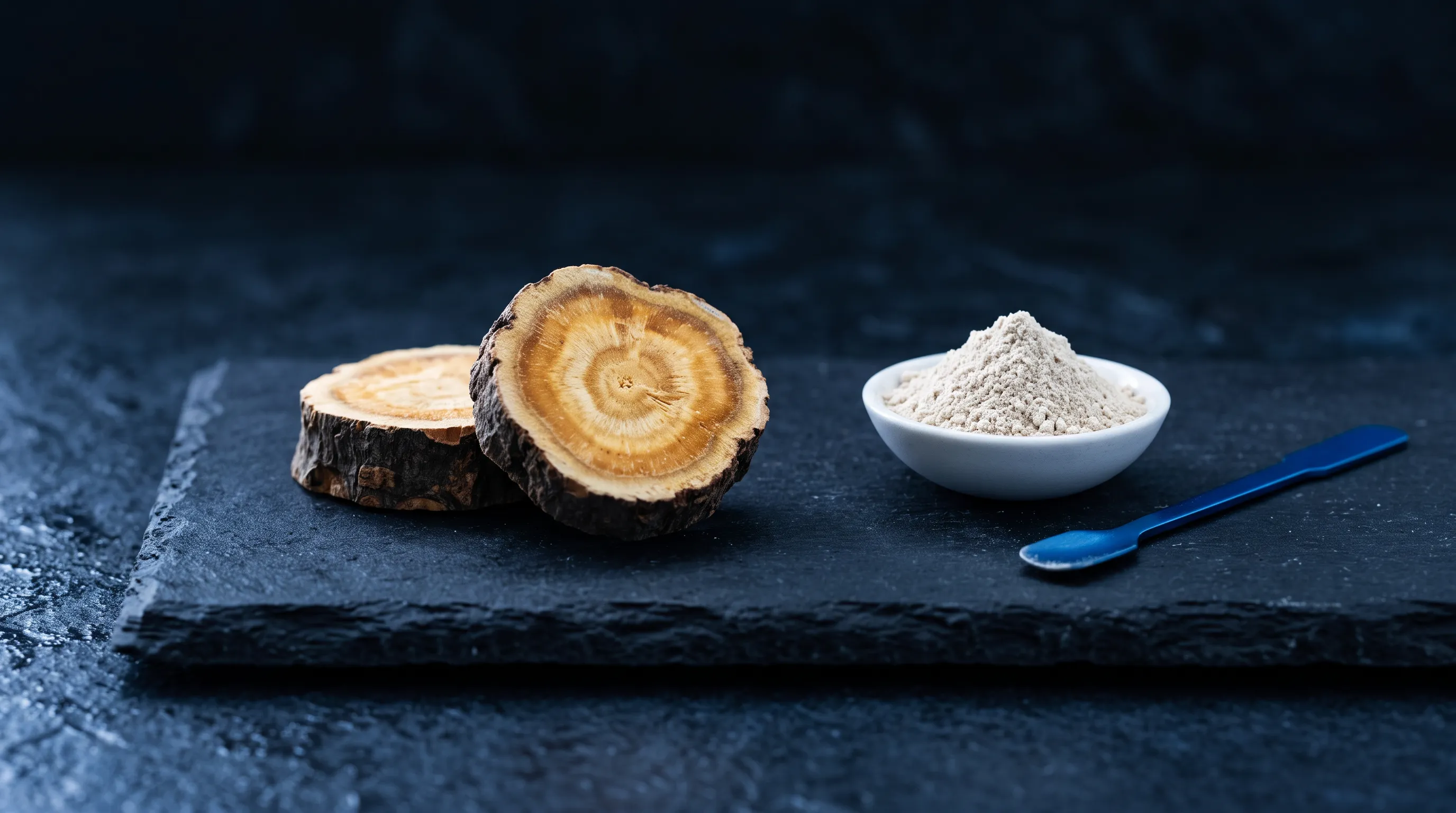
Blackmores Ashwagandha+ is the best ashwagandha supplement in Australia. It uses KSM-66, the extract form with the most published human clinical trial data, at 300mg per tablet. The key study: Chandrasekhar et al. (2012) found 300mg KSM-66 twice daily for 60 days reduced cortisol by 28% and self-reported anxiety by 44% in 64 adults under chronic stress. Blackmores is TGA-listed, meaning it meets Australian quality and manufacturing standards that imported products without listing do not guarantee. KSM-66 is standardised to a minimum 5% withanolides, the active compound measured across clinical trials. The honest caveat: this is assessed via brand specifications and published research; our analysis is based on published research and brand specifications. For budget buyers, Swisse Ultiboost Ashwagandha delivers the same KSM-66 extract at 250mg per tablet at a lower cost per serve.
We research every product we recommend. Some links on this page are affiliate links. If you buy through them, we earn a small commission at no extra cost to you. This doesn't affect our recommendations.
5 Best Ashwagandha Supplements in Australia
| Product | Extract Form | Dose/Cap | Count | TGA Listed | Best For | Buy |
|---|---|---|---|---|---|---|
| Blackmores Ashwagandha+ Our Pick | KSM-66 | 300mg | 60 tabs | Yes | Stress, cortisol, clinical dose | |
| Healthy Care Ashwagandha 10,000mg | Standardised extract | Equiv. 10,000mg herb | 60 caps | TBC | High-potency powder equivalent | |
| Swisse Ultiboost Ashwagandha Budget Pick | KSM-66 | 250mg | 90 tabs | Yes | Budget KSM-66, larger pack | |
| Natural Factors Ashwagandha Sensoril | Sensoril | 125mg | 60 caps | No | Sensoril extract, sleep + stress | |
| Nutricost KSM-66 Ashwagandha | KSM-66 + BioPerine | 600mg | 60 caps | No | Full clinical dose in one capsule |
Evaluation Criteria
Four variables determine whether an ashwagandha product is worth taking. We assessed all five against each.
Extract form — KSM-66 vs Sensoril vs root powder
KSM-66 is standardised to ≥5% withanolides using a full-spectrum root extract. Sensoril uses both root and leaf, standardised to ≥10% withanolides at a lower dose. Whole-root powder is unstandardised and typically 0.1–1% withanolides — far below clinical thresholds. Always verify the extract form on label before purchasing.
Prefer: named standardised extract (KSM-66 or Sensoril)Clinical dose alignment
Chandrasekhar et al. (2012) used 300mg KSM-66 extract twice daily (600mg total). Pratte et al. (2014) used 300mg twice daily of a different extract. Products below 250mg per tablet require two tablets per serving to approach the clinical range, which doubles the cost per day. Verify milligrams of extract — not herb equivalent weight.
Clinical threshold: 300mg KSM-66 twice dailyTGA listing status
Australian-listed medicines meet TGA Good Manufacturing Practice (GMP) requirements for quality and safety. Imported products without TGA listing have not been assessed against Australian standards. Blackmores and Swisse are both TGA-listed, which provides a quality floor that unregistered imports do not. TGA listing does not verify efficacy claims.
Prefer: ARTG-listed productCost per day at clinical dose
At 600mg KSM-66 daily (two 300mg tablets), Blackmores 60-tablet pack provides 30 days of supplementation. Swisse 90-tablet pack at 250mg provides 45 days at the same 600mg target (using three tablets). Calculating daily cost at the actual clinical dose, not retail price, is the relevant comparison metric.
Target: under $2.00/day at 600mg/dayAshwagandha Products Reviewed
Blackmores Ashwagandha+ is the standout choice for Australian buyers because it combines the most clinically validated extract form (KSM-66) with TGA listing and domestic brand accountability. Most ashwagandha products in Australian pharmacy and online channels use non-standardised root powder or an unspecified extract — the label will say "ashwagandha root" without a withanolide percentage. Blackmores specifies KSM-66 at 300mg, which is directly comparable to the clinical trial design used by Chandrasekhar et al. (2012).
The Chandrasekhar study is the most-cited ashwagandha trial in the stress literature: 64 adults with chronic stress, double-blind placebo-controlled, 60 days, 300mg KSM-66 twice daily (morning and evening). The results — cortisol reduction of 28% and a 44% reduction in self-reported anxiety on the DASS scale — are clinically meaningful numbers. The dose used in that trial (600mg KSM-66 per day) is achieved with two Blackmores tablets daily. This is important to calculate before purchasing: a 60-tablet pack at two tablets per day provides 30 days of supplementation at the clinical dose, not 60.
TGA listing provides an important quality floor for Australian buyers. An ARTG-listed product must be manufactured according to GMP standards and the ingredients must be listed on the label accurately. This doesn't verify the marketing claims, but it does verify that what's on the label is in the bottle — a standard that many imported ashwagandha supplements cannot be held to.
Pros
- KSM-66 extract — matches the Chandrasekhar 2012 clinical trial design exactly
- TGA-listed — meets Australian GMP quality standards
- Blackmores brand accountability and AU regulatory footprint
- 300mg per tablet — clear dose transparency
- Widely available on Amazon AU and in AU pharmacies
Cons
- 60-tablet pack = 30 days at clinical dose (2 tablets/day) — may feel short value
- Higher per-serve cost than Swisse's larger KSM-66 pack
- No black pepper (piperine) to enhance absorption — competing products include it
What it claims
What the evidence says
Healthy Care Ashwagandha is an Australian brand product marketed at 10,000mg herb equivalent per capsule. This is a common labelling approach that converts a standardised extract back to its herb equivalent weight — a 5:1 extract at 2,000mg actual extract would list as 10,000mg equivalent. The problem is this number is not what clinical trials use, making it hard to compare directly to the 300mg KSM-66 benchmark without knowing the actual extract amount and withanolide standardisation. At time of research, the Amazon AU listing did not clearly specify whether the extract is KSM-66, Sensoril, or another form. This is a legitimate product but buyers should verify the extract specification directly with the manufacturer before purchasing for stress or anxiety outcomes.
Pros
- Australian brand with domestic regulatory accountability
- High herb-equivalent dosing per capsule
- 60-capsule count provides a solid supply period
Cons
- Extract form not clearly specified as KSM-66 or Sensoril on AU listing
- Herb-equivalent milligrams not directly comparable to clinical trial doses
- Withanolide standardisation percentage not confirmed from AU listing
What it claims
What the evidence says
Swisse Ultiboost Ashwagandha is the best value KSM-66 ashwagandha product in Australia. It uses the same KSM-66 extract as Blackmores at a lower dose per tablet (250mg vs 300mg), but a larger pack count (90 tablets) and typically a lower retail price. The 90-tablet pack provides 45 days of supplementation at two tablets daily (500mg KSM-66), which is close to but slightly below the 600mg clinical trial dose. At three tablets per day, you reach the clinical dose (750mg) — which gives 30 days from the pack. The black pepper (piperine) addition is a common formulation choice that may modestly improve bioavailability, though the evidence specific to withanolide absorption is not robust.
Pros
- KSM-66 extract — validated extract form matching clinical research
- TGA-listed — Australian quality standard met
- 90 tablets — larger pack than Blackmores at similar or lower price
- Includes black pepper extract for potentially enhanced absorption
Cons
- 250mg per tablet means 2 tablets reaches only 500mg — below the 600mg clinical dose
- Piperine evidence for ashwagandha absorption specifically is limited
- Swisse brand has had historical regulatory attention on some product claims
What it claims
What the evidence says
Natural Factors Sensoril is the only Sensoril-form option in this roundup. Sensoril is derived from both root and leaf of Withania somnifera, giving a higher withanolide density (≥10%) compared to KSM-66's ≥5%. Clinical studies on Sensoril used 125–250mg doses, making the 125mg per capsule formulation appropriate for a starting dose. The key limitation is that Sensoril research uses different dose protocols to KSM-66 research — if your goal is to match the Chandrasekhar 2012 stress trial exactly, you need KSM-66. If you want a different extract form or are specifically chasing sleep improvement data, Sensoril is a clinically supported alternative. Not TGA-listed at time of research — an important consideration for Australian buyers who prioritise regulatory oversight.
Pros
- Sensoril extract — clinically studied alternative to KSM-66 with its own RCT base
- Higher withanolide standardisation (≥10%) than KSM-66 (≥5%)
- Root and leaf combined — broader phytochemical profile
- Established brand (Natural Factors) with transparent labelling
Cons
- Not TGA-listed — Australian regulatory oversight not confirmed
- Sensoril studies are less numerous than KSM-66 trials; slightly smaller evidence base
- Cannot directly cross-compare doses with KSM-66 products — different extract methodology
What it claims
What the evidence says
Nutricost KSM-66 delivers the full 600mg clinical trial dose in a single capsule — the only product in this roundup to do so. This is a meaningful compliance advantage: one capsule at any time of day versus splitting two capsules morning and evening. The KSM-66 extract is certified by Ixoreal Biomed, the same licensor used by Blackmores. The main limitation is regulatory: Nutricost is a US brand and this product is not TGA-listed, so Australian buyers are purchasing an imported supplement without local regulatory oversight. The product is available on Amazon AU, but buyers with health conditions or on medications should consult a healthcare professional before using any non-TGA-listed ashwagandha product.
Pros
- Full 600mg KSM-66 clinical dose in one capsule — highest per-capsule dose in this roundup
- KSM-66 extract — identical extract form to Blackmores, certified by Ixoreal Biomed
- Includes 5mg BioPerine — validated dose for piperine-enhanced absorption
- Simple one-capsule-per-day protocol for better compliance
Cons
- Not TGA-listed — no Australian regulatory oversight; imported US brand
- 60 capsules = 60 days supply at 1/day — shorter than Swisse 90-tablet pack
- US brand may have inconsistent availability on Amazon AU
What it claims
What the evidence says
Which Ashwagandha Is Right for You?
| Your situation | Best pick | Why |
|---|---|---|
| Stress and cortisol reduction as primary goal | Blackmores Ashwagandha+ | KSM-66 at 300mg/tablet — directly matches Chandrasekhar 2012 protocol at 2 tablets/day |
| Budget-conscious, willing to take 3 tablets/day | Swisse Ultiboost | KSM-66 at 250mg, 90-tab pack, lower per-serve cost. 3 tabs/day = 750mg KSM-66 |
| Wants TGA-listed product from a major AU brand | Blackmores or Swisse | Both are TGA-listed with AU regulatory accountability. Blackmores has higher per-tablet dose |
| Needs confirmed extract form on label | Blackmores or Swisse | Both specify KSM-66 extract. Healthy Care extract form not confirmed at time of research |
| Testosterone support and exercise recovery | Blackmores Ashwagandha+ | Wankhede 2015 used 300mg KSM-66 twice daily — matches Blackmores 2-tablet protocol exactly |
| Wants absorption-enhancing formula | Swisse Ultiboost | Includes black pepper (piperine) alongside KSM-66; Blackmores and Healthy Care do not |
| Largest pack size for ongoing use | Swisse Ultiboost | 90 tablets vs Blackmores 60 tablets and Healthy Care 60 capsules |
| Anxiety reduction evidence-first | Blackmores Ashwagandha+ | Chandrasekhar 2012 (cortisol, anxiety) and Pratte 2014 (GAD-7) both used ~300mg KSM-66 twice daily |
| Wants Sensoril extract (root + leaf) instead of KSM-66 | Natural Factors Sensoril | Only Sensoril-form product in this roundup — ≥10% withanolides, clinically studied for stress and sleep at 125–250mg doses |
| Full clinical dose in one capsule, maximum convenience | Nutricost KSM-66 600mg | 600mg KSM-66 per capsule matches the full Chandrasekhar 2012 daily dose without splitting tablets — best compliance option |
5-Year Cost of Supplementation
At 600mg KSM-66 daily (clinical dose), cost per day varies across the five products reviewed. Calculated at retail price only — no subscription discounts assumed. Natural Factors and Nutricost use different dose protocols; pack duration calculated at label serving size.
Best Overall Value
Blackmores Ashwagandha+ (600mg/day)
~30 days/pack
60 tabs ÷ 2 per day = 30 days. Higher per-serve cost, most clinical dose-matched.
Assumption: 2 × 300mg KSM-66 tablets daily. Retail price only.
Budget KSM-66
Swisse Ultiboost (500mg/day @ 2 tabs)
~45 days/pack
90 tabs ÷ 2 per day = 45 days at 500mg. 3 tabs/day = 30 days at 750mg.
Assumption: 2 tablets/day at 250mg each. Adjust to 3 tabs/day for full clinical dose.
Herb-Equivalent Dosing
Healthy Care 10,000mg
~60 days/pack
60 caps at 1/day based on label serving. Clinical dose comparability unclear without extract mg specification.
Extract form not confirmed as KSM-66. Dose comparability to published trials unclear.
Frequently Asked Questions
What is the best ashwagandha supplement in Australia?
Blackmores Ashwagandha+ is the best ashwagandha supplement in Australia for most people. It uses KSM-66, the most clinically validated ashwagandha extract form, at 300mg per tablet, and is TGA-listed. For a budget alternative with the same KSM-66 extract, Swisse Ultiboost Ashwagandha delivers 250mg KSM-66 per tablet at a lower cost per serve in a 90-tablet pack.
What is the difference between KSM-66 and Sensoril ashwagandha?
KSM-66 and Sensoril are both standardised ashwagandha extracts. KSM-66 is standardised to ≥5% withanolides from root only, with more published human clinical trials — including Chandrasekhar et al. (2012) which found cortisol reduced 28% and anxiety reduced 44% at 300mg twice daily. Sensoril is a full-spectrum root and leaf extract standardised to ≥10% withanolides at a lower per-capsule dose, typically studied at 125–250mg for stress and sleep. Both have clinical backing; KSM-66 has a broader and deeper research base.
What dose of ashwagandha should I take for stress and anxiety?
The Chandrasekhar et al. (2012) trial used 300mg KSM-66 twice daily (600mg total per day) for 60 days in 64 adults under chronic stress. Cortisol fell 28% and self-reported anxiety fell 44% versus placebo. If you are using a 300mg KSM-66 product like Blackmores Ashwagandha+, two tablets per day (one morning, one evening) matches the clinical trial design. Do not exceed the manufacturer's recommended dose without medical advice.
How long does ashwagandha take to work?
The Chandrasekhar et al. (2012) trial ran for 60 days before measuring outcomes. Most stress and cortisol studies use 8–12 week windows. For testosterone and exercise recovery (Wankhede et al., 2015), significant differences appeared at 8 weeks. A reasonable expectation is 4–8 weeks of consistent daily use before assessing outcomes. Single-dose or very short-term effects are not well-documented in the clinical literature.
Is ashwagandha safe to take daily?
Human clinical trials have found KSM-66 ashwagandha safe at 300–600mg per day for periods of up to 60–90 days without significant adverse effects. Ashwagandha is a nightshade family plant — avoid if you have nightshade sensitivity. There are isolated case reports of hepatotoxicity associated with ashwagandha, though causality is not established. People with thyroid conditions, autoimmune disorders, or who are pregnant or breastfeeding should consult a healthcare provider before supplementing.
Is ashwagandha TGA approved in Australia?
Ashwagandha (Withania somnifera) is listed on the Australian Register of Therapeutic Goods (ARTG) as a listed medicine. TGA listing means the product has been assessed for quality and safety, but not efficacy — the TGA does not verify advertising claims. Blackmores Ashwagandha+ and Swisse Ultiboost Ashwagandha are both TGA-listed, meeting Australian GMP manufacturing standards. Imported products without TGA listing have not been assessed against these standards.
Can ashwagandha help with testosterone levels?
Wankhede et al. (2015) found ashwagandha supplementation (300mg KSM-66 twice daily for 8 weeks) in 57 healthy male subjects produced significantly higher testosterone levels and improved muscle strength versus placebo. The study was industry-funded, which is a caveat worth noting. Ashwagandha's effect on testosterone appears real but modest in healthy young men. If low testosterone is a clinical concern, this should be assessed by a GP rather than managed with supplementation alone.
What does withanolide percentage mean in ashwagandha supplements?
Withanolides are the active steroidal lactones in ashwagandha believed responsible for its adaptogenic effects. Standardised extracts guarantee a minimum withanolide percentage per dose, making the product more clinically consistent than whole-root powder. KSM-66 is standardised to ≥5% withanolides — a 300mg tablet contains at least 15mg of withanolides. Whole-root ashwagandha powder without standardisation typically contains 0.1–1% withanolides, far below clinical thresholds.
Can women take ashwagandha in Australia?
Yes. The Chandrasekhar et al. (2012) study included both men and women and found significant cortisol and anxiety reductions. Ashwagandha is not contraindicated for women in general, but it should not be taken during pregnancy due to its traditional use as an abortifacient and lack of safety data in pregnant women. Women with thyroid conditions should consult their healthcare provider first, as ashwagandha may influence thyroid hormone levels.
Related Guides
Explore more adaptogens in the Adaptogens hub. Read about how we evaluate supplements and our editorial process. For mushroom-based adaptogens, see our mushroom coffee guide.