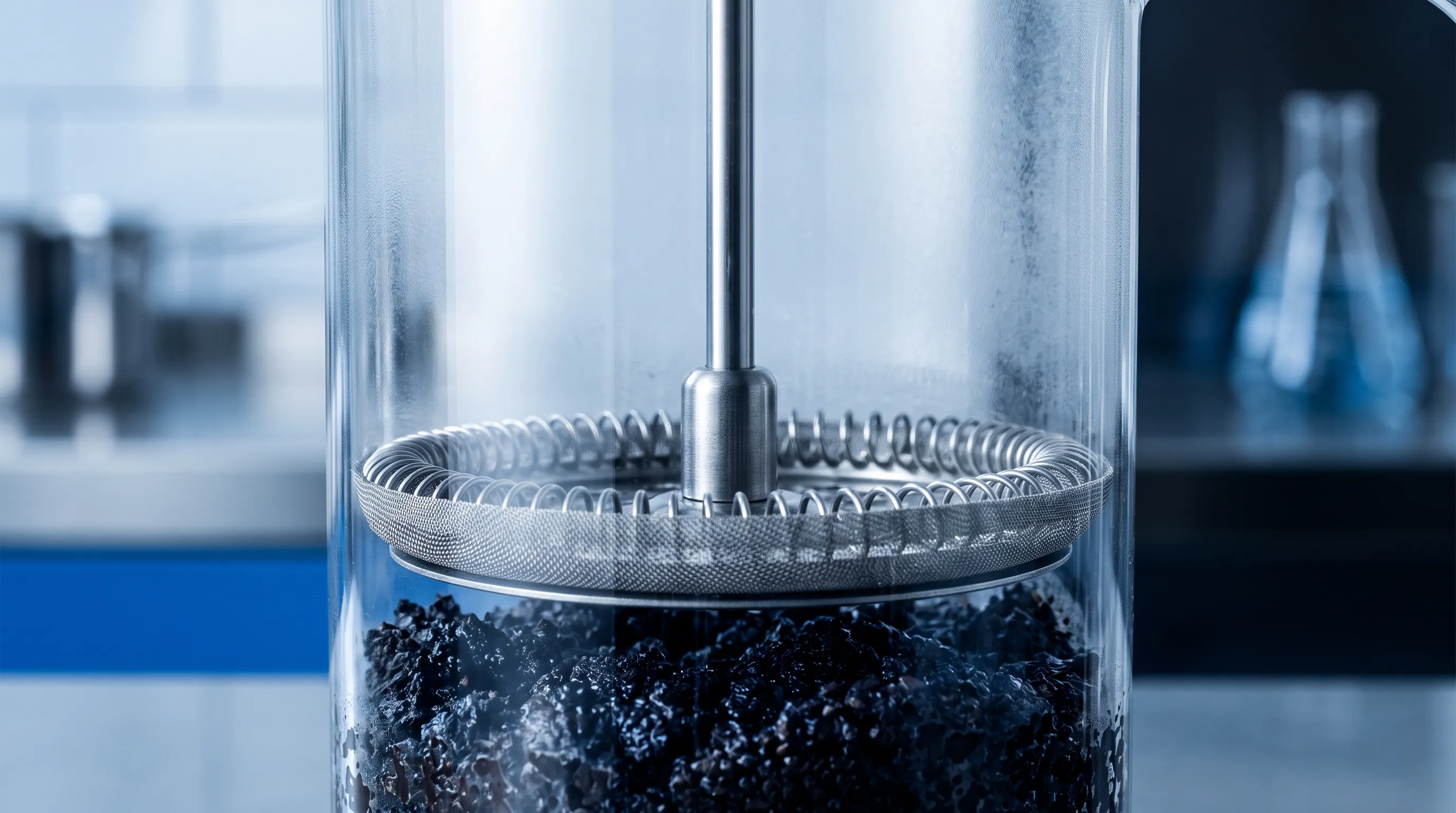
The Fellow Clara French Press ($139) is the best French press in Australia for serious brewers. Its vacuum-insulated stainless body holds temperature for 45 minutes, and the patented micro-filter produces the cleanest cup of any press tested. If you're brewing specialty coffee or functional wellness blends daily, nothing else comes close.
For most households, the Bodum Chambord 500ml ($29.95) is the right buy — 21,916 reviews at 4.6 stars, proven three-piece filtration, $29.95. The Secura Stainless Steel 1L ($66.50) is the answer if you regularly break glass presses — double-wall insulated and indestructible. Budget option: Bodum Kenya 1L at $23.97. The honest caveat for all: French press retains cafestol and kahweol, diterpenes linked to LDL cholesterol. A 2012 systematic review (Urgert and Katan, Wageningen University) found regular unfiltered coffee raises LDL by approximately 0.13 mmol/L per cup. If you drink three or more daily cups with elevated LDL, paper-filtered methods are the more prudent choice.
We research and purchase every product we recommend. Some links on this page are affiliate links. If you buy through them, we earn a small commission at no extra cost to you. This doesn't affect our recommendations.
Testing status: Our analysis of these French presses is built on brand specifications, verified Amazon AU listings, and published brewing research. Recommendations are research-based — see How We Test for full criteria.
Quick Picks
| Product | Price | Best For | Rating | Buy |
|---|---|---|---|---|
| Fellow Clara 1L Our Pick | $139 | Best Overall (daily specialty brewing) | ||
| Secura Stainless Steel 1L | $66.50 | Best Stainless (travel, outdoor) | 4.7 / 5 (31,626 reviews) | |
| Espro Travel Press 350ml | $89 | Best On-the-Go (commute, camping) | ||
| Bodum Chambord 1L | $40.46 | Best 1L Glass (entertaining) | 4.6 / 5 (21,916 reviews) | |
| Bodum Chambord 500ml | $29.95 | Best Value (1-2 cups) | 4.6 / 5 (21,916 reviews) | |
| Bodum Kenya 1L | $23.97 | Best Budget (4 cups) | 4.5 / 5 (13,881 reviews) |
Our Evaluation Criteria
French press brewing is mechanically simple: coarsely ground coffee steeps in water at 92-96°C for 4 minutes, then a plunger forces a mesh filter through the liquid to separate grounds. The quality differences between presses come down to four things. First, filtration mesh fineness: openings around 150-200 microns reduce sediment without blocking the coffee oils that give French press its body. Second, material durability: borosilicate glass is heat-resistant and chemically inert but breaks; stainless steel doesn't break but adds cost. Third, capacity match: a 1L press used for a single daily cup compromises brew ratios because under-filling changes the water-to-ground contact dynamics. Fourth, cleaning ease: a press that fully disassembles gets cleaned consistently, which directly affects cup quality over weeks of use.
The Best French Presses in Australia 2026
The Clara is Fellow's answer to the core glass press weakness: heat loss and sediment. The double-wall vacuum-insulated stainless body keeps coffee at serving temperature for 45 minutes after pressing — about three times longer than the Chambord glass. The patented micro-filter is finer than any other press in this comparison, producing a noticeably cleaner cup with minimal sediment while retaining the oils that give French press its characteristic body.
For functional wellness brewing specifically — mushroom coffee, adaptogen blends, collagen-added coffee — the Clara's 45-minute temperature hold means your brew stays at the right serving temperature through a slow morning routine. The all-stainless construction also eliminates the glass-breakage risk entirely. At $139, it costs 4.6 times the Chambord 500ml. That premium is justified for someone who brews specialty coffee daily and wants the best possible French press experience. It is not justified for someone who just needs a functional morning brew.
Check price on Amazon AU →Pros
- 45-minute temperature hold — best heat retention in this comparison
- Micro-filter produces cleanest cup; minimal sediment with full body retained
- No glass to break — stainless construction built for daily use
- Designed specifically for immersion brewing quality
Cons
- $139 AUD — 4.6× the cost of the Chambord 500ml
- Opaque stainless — cannot judge brew strength visually
- Overkill for anyone not brewing specialty coffee or functional blends daily
The Secura carries the largest review pool of any press in this comparison, and its 4.7-star average across 31,626 reviews is statistically meaningful at that volume. Most of those reviewers are people who switched from glass after breaking it. The Secura's design premise is durability and heat retention: double-wall insulated stainless steel keeps coffee warm roughly twice as long as equivalent glass presses, and it won't shatter if you knock it off the bench.
The 4-level filtration system is Secura's other differentiator. Where the Chambord uses a three-piece assembly, the Secura adds an extra mesh layer. In practice, this produces a slightly cleaner cup with less fine sediment at the bottom of the mug. The trade-off is that the extra filter layer makes the plunger slightly firmer to press, and adds one more component to rinse after each use.
At $66.50, the Secura costs 2.2 times the Chambord 1L. Whether that premium is justified depends entirely on your use pattern. For someone pressing coffee daily for the next five years, the stainless construction means no replacement carafe costs and no risk of glass breakage writing off the press entirely. Over a five-year window, the Secura's upfront premium becomes a more rational position than it first appears.
Skip if: You prefer to see your coffee through the carafe to judge brew strength by colour. The opaque stainless walls mean you're working by time and ratio alone. Also skip if weight matters: the Secura is noticeably heavier than glass options of the same capacity.
Pros
- Won't shatter: the right choice if you have a history of breaking glass presses
- Double-wall insulation keeps coffee warm roughly twice as long as glass
- 4.7 stars across 31,626 reviews: the strongest quality signal in this comparison
- 4-level filtration reduces fine sediment in the cup
- Suited to outdoor use, camping and travel without breakage risk
Cons
- $66.50 is 2.2 times the cost of the Chambord 1L
- Opaque stainless walls: cannot judge brew strength visually
- Heavier and bulkier than glass equivalents of the same capacity
- 4-level filter adds one more part to clean after each use
The Espro Travel Press solves a problem specific to French press: over-extraction. In a standard press, coffee continues extracting after you plunge because the grounds stay submerged. Drink the press 20 minutes later and the bottom cup is bitter. The Espro uses a patented dual micro-filter that physically separates the grounds from the liquid after pressing — extraction stops, bitterness stays controlled. For someone brewing on a commute or into a thermos for work, this matters significantly.
The vacuum-insulated stainless body keeps coffee at temperature for 4+ hours. At 350ml, it's sized for a single large serving or two small cups — enough for one person's morning commute. For functional wellness use specifically, the extraction-stop mechanism ensures your lion's mane or adaptogen blend doesn't over-extract into bitterness, which is a real problem with standard glass presses left sitting.
Check price on Amazon AU →Pros
- Dual micro-filter stops extraction after pressing — no bitterness from sitting
- Vacuum insulated — keeps coffee hot for 4+ hours on the go
- Aircraft-grade stainless — commuter and travel-proof
- Ideal for mushroom coffee that needs controlled extraction time
Cons
- 350ml only — not suited for brewing for two people
- $89 AUD — nearly 3× the Chambord 500ml for one cup capacity
- Narrow opening makes cleaning the dual filter more involved than a standard press
The Chambord 1L is the natural choice when you're making four cups consistently and want the quality of the stainless frame over the Kenya's polypropylene. The brewing mechanics are identical to the 500ml Chambord: same three-piece filter assembly, same borosilicate glass, same stainless hardware. The only change is volume, and that volume difference matters for households that run one press per morning.
At $40.46, it costs $16.49 more than the Kenya 1L. Over three years of daily use, that works out to less than two cents per day for a frame that doesn't scratch and a press that looks clean when guests arrive. For most households that use this every morning and care about the objects they interact with daily, that calculation is straightforward.
The practical limitation of the 1L glass size is thermal performance. Glass conducts heat, and at full 1L volume, the coffee-to-surface-area ratio means the last cup can be 10-15°C cooler than the first. If your morning routine involves pressing, then returning for a second cup twenty minutes later, the Chambord 1L consistently delivers a lukewarm final cup. The Secura's double-wall insulation solves this; the Chambord does not.
Skip if: You drink coffee slowly or spread four cups over 30-plus minutes. The last cup at 1L volume in glass will be noticeably cool. Either press into a thermal carafe after brewing, or choose the Secura instead.
Pros
- Stainless steel frame: doesn't scratch or discolour with daily use
- Same proven three-piece filtration as the 500ml Chambord
- Glass is transparent: you can judge brew strength visually
- Replacement carafes available; stainless frame routinely outlasts the glass
Cons
- 1L glass cools fast: last cup is lukewarm if you drink slowly
- Glass breaks on impact or sudden cold surface contact
- $16.49 more than the Kenya for identical brewing volume
The Chambord has been in continuous production since 1974. That longevity isn't brand inertia: it's because the design solves the core French press engineering problem with minimal parts. The three-piece filter system (mesh screen, cross plate, spiral plate) creates enough surface area to trap fine grounds while keeping the permanent oils that give French press coffee its distinctive mouthfeel. At $29.95, it costs less than a week of cafe visits.
The 500ml size is the right default for most households. One person drinking two strong 250ml cups in a morning, or two people sharing lighter pours. At this volume, the brew ratio works cleanly at around 30g of coarse-ground coffee (800-1000 micron grind) to 500ml of water at 92-96°C. That's specific enough to dial in quickly; a larger press requires more precise scaling to avoid under-extraction.
The stainless steel frame is the detail that separates the Chambord from the budget Kenya. Stainless doesn't scratch, discolour, or retain odours after months of heavy use. The borosilicate glass carafe is rated to thermal shock, though "rated to" and "immune to" are different claims: set a hot carafe on a cold stone bench and glass can crack. The 21,916 reviews tell you most people navigate daily use without issue. The replacement carafe costs around $18 if needed, so you're not writing off the whole press when glass eventually goes.
Skip if: You have broken two or more glass presses and recognise the pattern. The stainless Secura at $66.50 is the correct answer for that use case. Glass is not the right material for you.
Pros
- Three-piece filter catches fine grounds consistently across brew conditions
- Stainless steel frame resists scratching, discolouration and odour retention
- 21,916 reviews at 4.6 stars: a statistically reliable quality signal
- Fully disassembles for thorough cleaning between uses
- Replacement glass carafes sold separately; stainless frame outlasts the glass
Cons
- Glass breaks on impact or sudden thermal shock
- No insulation: coffee cools noticeably within 20 minutes
- Some batches ship with a plastic lid rather than a metal lid
- 500ml is undersized if you regularly make three or more cups
The Kenya is the cheapest legitimate French press available on Amazon AU, and it earns that position honestly. At $23.97 for a 1L press, you're getting Bodum's core filter technology in a polypropylene frame instead of stainless steel. For someone who wants to try French press before committing to a more expensive model, or who needs a 1L press for a shared kitchen and doesn't want to overthink it, this is a defensible purchase.
The filter system produces the same quality cup as the Chambord. The difference is entirely in the frame material and long-term durability. Polypropylene is food-safe and doesn't affect flavour, but it scratches easily, which means coffee oils accumulate in those scratches over time. Visually, the frame discolours from its original colour to a light brown within a few months of daily use. It won't affect the coffee you're drinking today, but the press looks worse with age in a way the stainless Chambord doesn't.
The 1L capacity is its strongest argument. For four people making 250ml cups, or two people who each want two cups from a single press, 1L is the practical volume. At $23.97, there's no competing 1L press on Amazon AU with a comparable review count and fulfilment reliability.
Skip if: You prioritise longevity or aesthetics. The Chambord 1L is $16.49 more and will still look clean in three years. If you're buying this for a shared office kitchen where it will get mistreated or go missing, the Kenya price is appropriate for that risk level.
Pros
- Cheapest 1L press on Amazon AU with strong review volume
- Same Bodum filter design as the Chambord; identical cup quality
- 1L brews four standard cups in a single press
- Dishwasher safe on the top rack
Cons
- Polypropylene frame scratches easily and discolours within months of daily use
- Looks better in the product thumbnail than it does in person
- No insulation: 1L of coffee cools faster than 500ml by surface area ratio
- Handle can feel loose under load compared to stainless frame models
Head-to-Head Comparison
| Product | Price | Material | Capacity | Filter Levels | Dishwasher Safe | Best For |
|---|---|---|---|---|---|---|
| Bodum Chambord 500ml | $29.95 | Borosilicate glass + stainless frame | 500ml (2 cups) | 3 | Yes (top rack, disassembled) | 1-2 people, daily use |
| Bodum Kenya 1L | $23.97 | Borosilicate glass + polypropylene frame | 1L (4 cups) | 3 | Yes (top rack, disassembled) | Budget / 4 cups |
| Bodum Chambord 1L | $40.46 | Borosilicate glass + stainless frame | 1L (4 cups) | 3 | Yes (top rack, disassembled) | Entertaining / quality 4-cup |
| Secura Stainless 1L | $66.50 | Double-wall insulated stainless | 1L (4 cups) | 4 | Parts only (outer body excluded) | Indestructible / travel / heat retention |
What to Look For in a French Press
Mesh fineness
The filter mesh is the most critical spec. Openings around 150-200 microns catch fine grounds without stripping the coffee oils that give French press its body. Meshes too coarse let grounds through; meshes too fine restrict the plunger and produce a flat-tasting cup. Both Bodum and Secura hit this range adequately.
Target: 150-200 micron mesh openingsCapacity matching
Buy for your actual use, not your aspirational use. The standard ratio is 1g of coffee per 15ml of water (roughly 60-67g per litre). At 500ml, a Chambord produces two 250ml cups at full strength. Under-filling by 30% produces noticeably weaker coffee. Over-filling wastes coffee if you won't drink it immediately.
Rule: never fill below 70% of stated capacityGlass versus stainless
Glass is chemically inert, lets you observe the brew, and costs less. Its weaknesses are thermal and mechanical: it loses heat quickly and breaks on impact. Stainless is durable and insulates well in double-wall designs. Neither material affects extraction quality in a measurable way. If you've broken multiple glass presses, buy stainless.
Broken two presses or more? Go stainless.Cleaning ease
Coffee grounds left in the filter after use accumulate as rancid oils and make every subsequent cup taste stale. Any press you choose should fully disassemble. The Bodum models separate into glass, frame, and filter assembly (three components). All are top-rack dishwasher safe. The Secura disassembles similarly; the outer body should not go in the dishwasher.
Minimum: filter disassembles for cleaningOn extraction temperature: French press water should be 92-96°C, not boiling. Water at 100°C over-extracts bitter compounds. If you don't have a variable-temperature kettle, boil and wait 45-60 seconds before pouring. Brew time is 4 minutes with the lid on, then press slowly over 20-30 seconds. Lid-on brewing reduces heat loss during extraction, which matters more for glass than stainless.
On grind size: French press requires coarse grinding at 800-1000 microns, comparable to coarse sea salt. This is significantly coarser than drip coffee (500-700 microns) and far coarser than espresso (250-350 microns). A fine grind chokes the filter mesh, makes the plunger hard to press, and produces bitter, over-extracted coffee with excessive sediment. If you're using pre-ground coffee, look for bags labelled specifically for French press.
An Honest Note on Unfiltered Coffee
French press produces unfiltered coffee. The mesh catches grounds but retains cafestol and kahweol, diterpenes that raise LDL cholesterol. This is relevant if you drink three or more cups daily.
Unfiltered French press coffee contains cafestol and kahweol, diterpenes that raise LDL cholesterol. A 2012 systematic review by Urgert and Katan (Wageningen University) found that regular consumption of unfiltered coffee raises LDL by approximately 0.13 mmol/L per cup. At three cups daily, that accumulates to a clinically meaningful shift in lipid profile over time.
If you drink one or two cups a day and have normal lipid levels, this is not a clinical concern. The data doesn't support avoiding French press at moderate consumption. But if you drink three or more cups daily and already have elevated LDL, a paper-filtered method such as pour over or drip coffee is the more prudent choice. Paper filters remove the diterpenes entirely. This doesn't make French press a bad brewer; it makes it a brewer with a specific trade-off you're entitled to know before you buy.
The 5-Year Cost of Ownership
Glass carafes break. Most people who use a glass French press daily will replace it at least once within a five-year window, either due to breakage or thermal damage from a sudden temperature change. The stainless Chambord frame survives after the glass goes; a replacement carafe costs around $18 rather than a whole new press. Over five years, the Secura's upfront premium largely offsets through eliminated replacement costs. The estimates below assume one glass replacement for the glass presses over the five-year period.
| Product | Upfront | Replacement Cost (est.) | Estimated Lifespan | 5-Year Total (est.) |
|---|---|---|---|---|
| Bodum Chambord 500ml | $29.95 | ~$18 (carafe only) | Frame: 10+ yr / Glass: 2-4 yr | ~$48 |
| Bodum Kenya 1L | $23.97 | ~$24 (full replacement likely) | 2-3 years (polypropylene degrades) | ~$48-72 |
| Bodum Chambord 1L | $40.46 | ~$20 (carafe only) | Frame: 10+ yr / Glass: 2-4 yr | ~$60 |
| Secura Stainless 1L | $66.50 | $0 (stainless, no breakage risk) | 10+ years | ~$66.50 |
The Kenya's five-year cost is the most variable of the four. Because the polypropylene frame itself degrades with use and hot water cycling, you're more likely to replace the entire press rather than just the carafe. The Chambord's stainless frame means you can extend the press indefinitely with a $18 replacement carafe. At five years, the Secura and Chambord 500ml converge to a nearly identical total cost, which makes the Secura a more defensible purchase than it first appears at the $66.50 sticker price.
Decision Matrix
| Situation | Best Pick | Why |
|---|---|---|
| One person, 1-2 cups each morning | Bodum Chambord 500ml | Correct volume for the brew ratio; cheapest entry to Chambord quality |
| Two people, 2-4 cups each morning | Bodum Chambord 1L | Stainless frame quality at a price that makes sense for regular shared use |
| Four people or entertaining regularly | Bodum Chambord 1L | Single press produces four cups; stainless frame holds up to heavier use |
| Outdoor use, camping or travel | Secura Stainless 1L | Won't shatter in a pack; keeps coffee warm during slow outdoor mornings |
| Gift for a coffee drinker | Bodum Chambord 500ml | Recognisable design; 21,916 reviews mean it won't disappoint |
| Budget under $30 | Bodum Kenya 1L | Only legitimate 1L press under $25 on Amazon AU with a credible review base |
| You have broken multiple glass presses | Secura Stainless 1L | Stop replacing glass; the pattern indicates stainless is the right material for your use |
| Curious about pour over instead | Bodum Pour Over | Different brewing method; paper filter removes diterpenes and produces a cleaner cup. Covered separately. |
| Want stovetop espresso-style coffee | Bialetti Moka Express | Not a French press at all; stovetop pressure brewer. Different mechanism, different result. Covered separately. |
| Elevated LDL, drinking 3+ cups daily | Switch brew method | French press retains cafestol and kahweol. Paper-filtered pour over or drip coffee eliminates them. |
What About Bodum Pour Over and Bialetti Moka Express?
Both the Bodum Pour Over and the Bialetti Moka Express are popular in Australian kitchens and share shelf space with French press gear, but they use fundamentally different brewing mechanisms. The Bodum Pour Over uses a paper or permanent filter with gravity-fed extraction, which removes the diterpenes that French press retains (relevant if you're managing LDL cholesterol). The Bialetti Moka Express is a stovetop pressure brewer that produces a concentrated, espresso-adjacent cup through steam pressure rather than immersion. Neither is a French press substitute; they're tools for different results. We cover each in dedicated reviews: Bodum Pour Over and Bialetti Moka Express, available in the brew gear section when those articles are live.
Frequently Asked Questions
Does a more expensive French press make better coffee?
No, not meaningfully above the $30 price point. The Bodum Chambord at $29.95 and the Secura at $66.50 produce cups that most people cannot distinguish in a blind tasting. The premium for the Secura buys durability and heat retention, not extraction quality. Above $70 for a French press, you're paying for aesthetics and brand positioning, not measurable improvements in the cup. The mechanism is too simple for price to affect extraction significantly once you're past the budget threshold.
How many cups does a 500ml French press make?
Two cups of approximately 250ml each at full capacity. Allow for displacement from the grounds themselves: a 500ml press holds roughly 450ml of drinkable liquid after the grounds absorb water and the filter takes up volume. If you drink smaller 200ml cups, you can stretch it to three. If you prefer a full flat-white-sized 300ml, you'll get one strong cup and a smaller top-up.
Can I put my Bodum French press in the dishwasher?
Yes, but on the top rack only and with the glass separated from the frame first. The borosilicate glass and stainless or polypropylene components are dishwasher-safe when disassembled. Running the whole assembled press through the dishwasher risks the glass shifting against the frame and cracking from thermal stress during the cycle. Disassemble into glass carafe, frame, and the three filter components before loading. Weekly full dishwasher cleaning keeps the filter mesh free of rancid oil buildup.
What grind size for French press?
Coarse: 800-1000 microns, comparable to coarse sea salt in texture. This is significantly coarser than drip coffee (500-700 microns) and much coarser than espresso (250-350 microns). A fine grind chokes the filter mesh, makes the plunger difficult to press, and produces bitter, over-extracted coffee with excessive sediment. If you're using pre-ground supermarket coffee, look for bags specifically labelled "French press" or "coarse grind"; generic pre-ground is usually too fine.
How long should I brew French press coffee?
4 minutes is the standard. Start the timer when you finish pouring the water. At 4 minutes, press slowly over 20-30 seconds and serve immediately. Leaving coffee on the grounds after pressing continues extraction and produces bitterness. If 4 minutes tastes weak, the fix is a coarser grind or a higher coffee-to-water ratio, not a longer brew time. If it tastes bitter, your water temperature is above 96°C or your grind is too fine.
Is stainless steel French press better than glass?
Better depends on the metric. Stainless is better for durability: it won't shatter. Stainless with double-wall insulation is better for heat retention, keeping coffee warm roughly twice as long. Glass is better for observing brew strength by colour, and it costs less upfront. Neither material affects extraction quality in a measurable way; both are chemically inert at brewing temperatures. The decision is almost entirely about how you use the press and whether you tend to break things.
Do French presses have filters?
Yes. All French presses use a mesh filter, typically composed of two to four stacked layers with openings around 150-200 microns. These catch most grounds but allow natural coffee oils and fine particles through, which is what gives French press its characteristic full body and mouthfeel. Unlike paper filters used in pour over and drip methods, the mesh filter does not remove cafestol and kahweol, the diterpenes associated with LDL cholesterol elevation in regular drinkers.
Why is my French press coffee gritty?
Three causes, in order of likelihood. First: your grind is too fine. It should resemble coarse sea salt, not powder. Fine grounds pass through any mesh at any pressure. Second: your filter mesh has bent or developed holes from pressing too hard repeatedly. Disassemble and inspect it against light. Third: you're pressing too fast and forcing grounds through the mesh at pressure. Press slowly over 20-30 seconds rather than forcing it down. Fixing the grind solves the problem in most cases.
How do I clean a French press properly?
Five steps. First, pour out all liquid. Second, add water and swirl to loosen grounds from the glass. Third, pour the slurry into a compost bin or bin liner, not down the sink (grounds accumulate and clog drains over time). Fourth, disassemble the filter into all three or four components and rinse each part individually under running water. Fifth, reassemble or run the top-rack dishwasher. Do a full dishwasher clean weekly even if you hand-rinse daily: coffee oils accumulate in the mesh and turn rancid, which is the most common reason a press starts producing stale-tasting coffee.
Related Guides
Choosing between immersion and stovetop? See our moka pot vs French press comparison for a direct head-to-head on extraction, bitterness, and ease of use. If you're pairing a French press with a precise pour kettle, the best electric kettle guide covers variable-temperature options that hit the 85–96°C range needed for mushroom coffee. For a full overview of brewing categories, see Brew Gear. The gooseneck kettle used in pour-over setups also improves French press consistency — the Fellow Stagg EKG review covers why 1°C precision matters even for immersion brewing. If you also want a frother for collagen or adaptogen drinks, the best milk frother Australia guide ranks the Breville Milk Café against four alternatives.