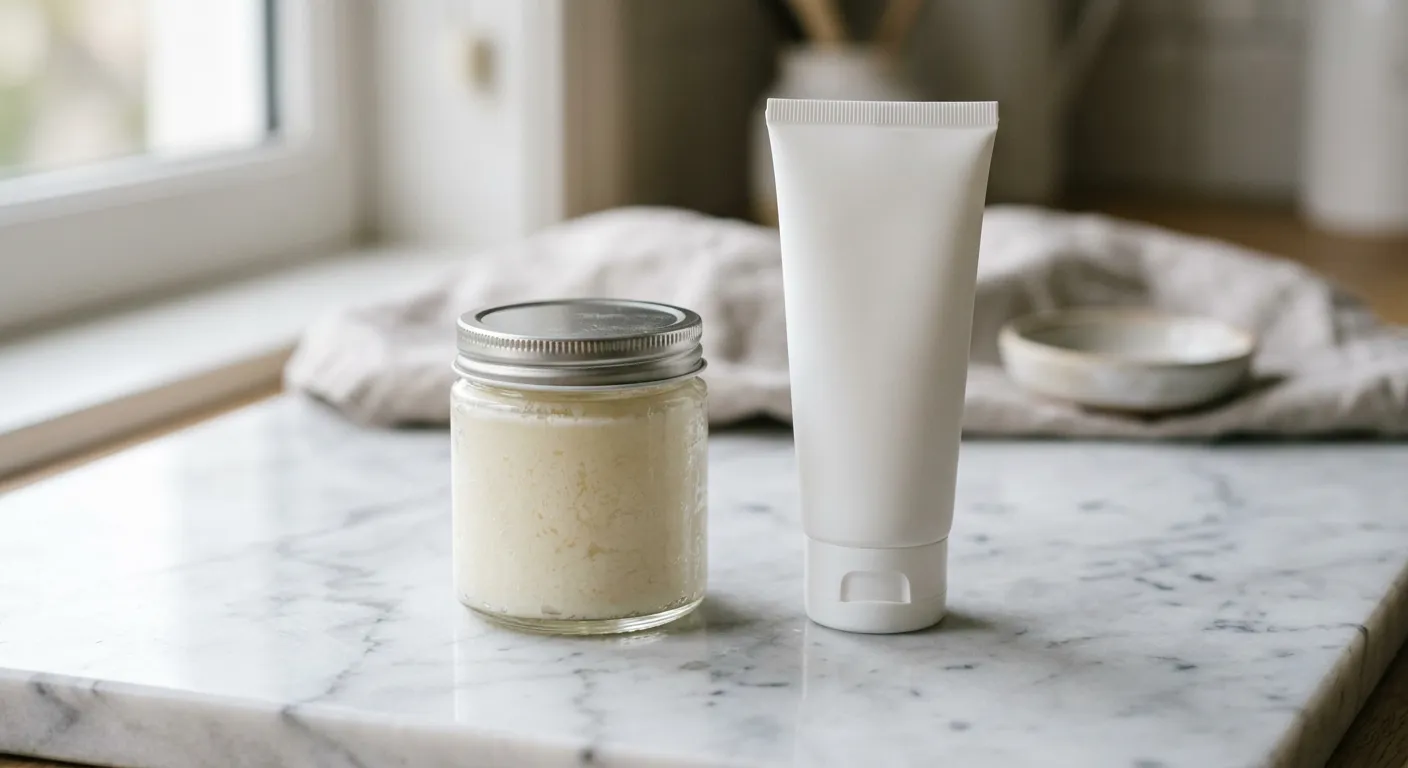
Quick answer
Grass-fed beef tallow is an effective skin barrier moisturiser because its fatty acid profile — oleic acid (~44%), palmitic (~26%), stearic (~14%) — closely mirrors human sebum. Commercial moisturisers achieve similar occlusion through synthetic emulsifiers, humectants (glycerin, hyaluronic acid), and petrolatum. Both work; the mechanisms differ.
The skin barrier functions as a gradient of ceramides, cholesterol, and free fatty acids in the stratum corneum. Tallow's fatty acids match those native to this matrix — they integrate rather than sit on top. Commercial moisturisers with PEGs, parabens, and fragrance can disrupt tight junctions and the microbiome in sensitive skin. The trade-off: tallow is moderately comedogenic; non-comedogenic commercial products suit acne-prone skin better.
The verdict: for dry, sensitive, or reactive skin — tallow wins on ingredient simplicity and skin-native fatty acids. For oily or acne-prone skin — a non-comedogenic commercial moisturiser is safer.
This article contains affiliate links. We earn a commission if you purchase through our links, at no extra cost to you. Our analysis is never influenced by commissions. Full disclosure →
How skin barrier moisturisers actually work
Transepidermal water loss (TEWL) is the passive diffusion of water from inside the body through the epidermis and into the surrounding atmosphere. The stratum corneum — the outermost layer of skin — is the primary barrier against TEWL. When it is compromised by dryness, environmental exposure, or disrupted lipid structure, TEWL increases and the skin feels tight, flaky, and reactive.
Moisturisers work through three distinct mechanisms, and most products combine them:
Occlusives
Form a physical film on the skin surface that slows TEWL by reducing water vapour permeability. Petrolatum is the gold standard occlusive — nearly 100% effective. Tallow functions as a lighter occlusive, forming a semi-permeable lipid film. Silicones (dimethicone) in commercial products serve the same role.
Tallow role: moderate occlusionEmollients
Fill gaps between desquamating corneocytes, smoothing skin texture and reducing roughness. Fatty acids are the primary emollient agents. Tallow's oleic and palmitic acids are directly emollient — they integrate into the intercellular lipid matrix of the SC rather than sitting on the surface.
Tallow role: primary emollientHumectants
Draw water from the dermis (and atmosphere in humid conditions) into the stratum corneum. Common humectants: glycerin, hyaluronic acid, urea, propylene glycol. Tallow contains none — it is not a humectant. Commercial moisturisers typically include humectants to create the immediate plumping sensation tallow lacks.
Tallow role: noneTallow's combined mechanism
Tallow functions simultaneously as an occlusive and an emollient. The longer-chain saturated fats (palmitic, stearic) form the occlusive film while oleic acid penetrates and integrates into the SC lipid matrix. This dual function is the structural argument for tallow's efficacy — and why it absorbs rather than sitting on the surface.
Occlusive + emollient combinedThe immediate "skin feels hydrated" sensation from commercial moisturisers is largely humectant-driven — a fast, perceptible effect. Tallow's action is slower and primarily occlusive-emollient: it reduces water loss over time rather than drawing water in immediately. Neither is superior; they operate through different timescales.
Fatty acid comparison
The fatty acid profile of a moisturiser determines how it interacts with the skin's own lipid matrix. Tallow's profile is distinctive — not because it is exotic, but because it closely matches what the skin already uses.
Oleic Acid (C18:1)
Tallow ~44% vs commercial moisturiser ~varies (often 0–5% in synthetic formulas, higher in plant oil-based products). Found in human sebum; promotes skin penetration and integrates into the SC lipid matrix. Effective emollient and penetration enhancer. Note: can feed Malassezia yeast in oily or acne-prone skin.
Primary emollient fatty acidPalmitic Acid (C16:0)
Tallow ~26% vs commercial ~low (present in cetyl alcohol derivatives, rarely as free fatty acid). Structural component of stratum corneum ceramides. Provides both emollient and occlusive properties. Non-comedogenic at typical use concentrations. One of the primary fatty acids in the skin's own ceramide-forming pathway.
Structural SC fatty acidStearic Acid (C18:0)
Tallow ~14% vs commercial ~low (used as a thickener in some formulations). Non-comedogenic, softening, and helps restore barrier function after damage. Also present in human sebum. Stearic acid in tallow contributes to its firm texture at room temperature and its stability against oxidation.
Barrier-restoring, non-comedogenicSynthetic Emulsifiers
Tallow = none vs commercial = PEG-100 stearate, cetearyl alcohol, polysorbates, carbomers. These allow water-in-oil (or oil-in-water) emulsions, creating the spreadable lotion texture. Functional and widely safe, but some evidence suggests repeated application of PEG-based emulsifiers disrupts the skin microbiome and may increase long-term TEWL in sensitive skin.
Absent in tallow; ubiquitous in lotionsThe structural argument for tallow is that its three primary fatty acids — oleic, palmitic, and stearic — are the same fatty acids the skin uses natively. Commercial moisturisers replicate barrier function through different chemistry (humectants, synthetic emollients, petrolatum) without necessarily matching the skin's own lipid composition. Both approaches reduce TEWL; the integration mechanism differs.
Grass-Fed Tallow vs Commercial Moisturiser: Full Comparison
| Factor | Grass-Fed Tallow | Commercial Moisturiser |
|---|---|---|
| Ingredients | 1 (rendered beef fat) | 15–30+ (emulsifiers, humectants, preservatives) |
| Oleic acid (C18:1) | ~44% | 0–5% (synthetic formulas) |
| Fatty acid match to human sebum | High (oleic, palmitic, stearic all present) | Low–moderate (synthetic analogues) |
| Synthetic emulsifiers | None | PEG compounds, polysorbates, carbomers |
| Preservatives | None required (anhydrous) | Parabens, phenoxyethanol, or alternatives |
| Cost per serve (AUD) | ~$0.40–$0.80 (100g jar, ~90 uses) | ~$0.20–$1.50 (varies widely) |
| Texture | Solid at room temp, melts on contact | Cream or lotion, spreadable directly |
| Best for | Dry/sensitive/eczema-prone skin, minimal-ingredient preference | Convenience, combination skin, SPF-containing formulas |
What commercial moisturisers actually contain
Commercial moisturisers vary enormously in formulation quality. Grouping them into two broad categories clarifies where tallow fits:
Dermatologist-recommended (CeraVe, QV, Cetaphil): These products are formulated around ceramides, glycerin, and simple humectants with minimal fragrance. CeraVe specifically contains ceramide 1, 3, and 6-II — the three ceramides found in the SC — along with hyaluronic acid and petrolatum. They are non-comedogenic and well-tolerated by most skin types including acne-prone. The ingredient lists are longer than tallow, but each ingredient has a functional role. These are the commercial moisturisers most comparable to tallow in terms of skin barrier science.
Luxury and "clean beauty" moisturisers: Often contain significant marketing spend dressed as actives. Fragrance, silicones, and film-forming polymers dominate many formulations. Some include genuine actives (niacinamide, retinol, vitamin C) that go beyond barrier maintenance. Fragrance — even in "natural" forms — is the leading cause of cosmetic contact dermatitis in sensitive skin. A moisturiser priced at $120 is not necessarily more effective at reducing TEWL than one at $12.
The meaningful distinction is not tallow vs commercial — it is minimal, functional formulations vs complex, fragrance-forward ones. CeraVe's ceramide moisturiser and grass-fed tallow are both rational choices for dry skin. They operate through different mechanisms and suit different skin types and preferences. A luxury moisturiser with parfum and 30 ingredients is a different category of product entirely.
If your existing commercial moisturiser works well for your skin, there is no mechanistic reason to switch to tallow. The switch makes most sense for those reacting to preservatives, fragrance, or emulsifiers in conventional products — or those who prefer a one-ingredient label.
Who should use tallow vs commercial moisturiser
The right choice depends on skin type, existing sensitivities, and ingredient preferences. This is not a case where one option is categorically better.
Choose tallow if you have:
Dry or very dry skin that is under-moisturised by lotions. Sensitive or reactive skin that flares from synthetic preservatives, fragrance, or emulsifiers. Eczema-prone skin that reacts to multiple commercial products. A preference for single-ingredient, minimalist skincare. Mature skin that benefits from richer occlusive coverage. You are testing for synthetic ingredient sensitivities.
Dry, sensitive, mature, reactive skinChoose commercial if you have:
Oily or acne-prone skin — tallow's oleic acid content is comedogenic for these skin types. A preference for lighter textures that absorb instantly. Vegan or plant-based skincare requirements. A need for actives (SPF, niacinamide, retinol) in your moisturiser. Fungal acne or seborrheic dermatitis — both are exacerbated by oil-rich products.
Oily, acne-prone, vegan, active-seekingBoth tallow and well-formulated commercial moisturisers (ceramide-based, fragrance-free) are legitimate skin barrier tools. The optimal choice is individual. A common approach for reactive skin types: trial tallow for 4–6 weeks, assess barrier improvement and any congestion, then decide. The simplicity of the ingredient list makes it easier to identify whether tallow specifically is helping or not — which is harder to determine with multi-ingredient formulas.
Our Pick — Verified Grass-Fed Tallow Balm
If you are moving to tallow after reading this comparison, rendering quality is the single variable that determines whether the product is worth using. One product on Amazon AU meets the standard.
Our Pick — Best grass-fed tallow balm AustraliaRICHGRAND Grass-Fed Beef Tallow Balm 60ml Our Pick
Skip if: you have oily or acne-prone skin (oleic acid content is comedogenic for these types), fungal acne, seborrheic dermatitis, or a known beef or animal fat sensitivity.
RICHGRAND sources from Australian grass-fed cattle and renders to a smooth, pale ivory consistency with no added fragrance, no seed oil fillers, and a single-ingredient label. These three characteristics are the practical requirements for a tallow moisturiser worth using — rendering quality (odourless = properly rendered), grass-fed sourcing (higher CLA and fat-soluble vitamins), and no adulterants diluting the fatty acid profile.
This is the same product reviewed in depth in our Best Tallow Moisturiser Australia guide, where we cover rendering quality, scent, texture, and value in detail. The short version: at 60ml, it provides approximately 60–80 face applications at a pea-sized dose — competitive cost-per-use against moisturisers in the AU$30–50 bracket.
Available on Amazon AU · Affiliate link · Price may vary
What works
- Single ingredient — fatty acid profile uncompromised
- AU grass-fed sourcing, fresher supply chain
- Well-rendered — minimal scent, smooth texture
- No synthetic preservatives, emulsifiers, or fragrance
- Absorbent finish — not heavy or greasy
Limitations
- Not suitable for oily or acne-prone skin
- No humectant effect — no instant "plumping"
- 60ml jar is small for full-body use
- Softens in Australian summer heat — store in a cool cupboard
Further Reading
Frequently asked questions
Is beef tallow better than commercial moisturiser?
For dry, sensitive, and reactive skin — tallow is often the better choice due to its skin-compatible fatty acid profile and minimal ingredient list. Well-formulated commercial moisturisers (ceramide-based, fragrance-free) are equally effective for most skin types and better suited to oily and acne-prone skin. Neither is categorically superior; the right choice depends on skin type, ingredient sensitivities, and texture preferences.
Does tallow clog pores?
Tallow is considered moderately comedogenic, primarily because of its oleic acid content (~44%). Oleic acid can disrupt the linoleic-to-oleic ratio in skin sebum in individuals who overproduce sebum, potentially worsening congestion. For dry or normal skin, this is rarely an issue. For oily or acne-prone skin, applying tallow to the face carries a meaningful comedogenic risk — a non-comedogenic commercial moisturiser is a safer choice for this skin type.
Can I use tallow on my face instead of my regular moisturiser?
Yes, for dry, normal, and sensitive skin types. A pea-sized amount on a clean, slightly damp face provides meaningful occlusive-emollient coverage. For oily or acne-prone skin, tallow is not recommended as a face moisturiser. If switching, do so gradually: patch test on the jawline for one to two weeks before applying to the full face, especially if you have a reactive skin type. Tallow pairs well as the final step in a routine, applied after any water-based serums or actives.
Is grass-fed tallow different to regular tallow for skin?
Yes, modestly. Grass-fed tallow contains approximately 2–3 times more conjugated linoleic acid (CLA) than grain-fed, along with higher concentrations of fat-soluble vitamins A, D, E, and K2. CLA has demonstrated anti-inflammatory properties in laboratory settings, though evidence for topical skin benefit specifically is limited. The more practically significant advantage is consistency: well-managed grass-fed operations produce cleaner, better-rendered fat with less residual protein — directly affecting scent quality and shelf stability.
Does tallow have scientific evidence for skin benefits?
The mechanistic case for tallow is sound — its fatty acid profile closely mirrors the lipid matrix of the human stratum corneum, which supports skin barrier function. However, there are no randomised controlled trials comparing tallow directly to commercial moisturisers for clinical outcomes. The evidence is mechanistic and observational. Tallow is a legitimate moisturiser with a rational biological basis; claims that it treats eczema, psoriasis, or other conditions are not supported by clinical research.
What does tallow feel like on skin compared to a lotion?
Well-rendered tallow initially feels waxy or solid on contact, warms from body heat, and absorbs within 30–60 seconds, leaving a dry-touch finish rather than a greasy residue. Commercial lotions feel immediately lighter and more spreadable because of their water content and emulsifiers. Tallow requires less product per application — a pea-sized amount covers the full face, whereas most people use significantly more lotion for equivalent coverage. The texture difference is most noticeable in cooler conditions when tallow is firmer.
Can I use tallow with my existing skincare routine?
Yes. Tallow works best as the final step — applied after any water-based serums, actives, or treatments, where it acts as an occlusive seal to reduce transepidermal water loss. Avoid layering tallow over retinoids without consulting a dermatologist, as occlusion can increase percutaneous absorption of active ingredients. Tallow does not need to be combined with other moisturisers; for most dry-skin users, it replaces them rather than supplements them.
Is beef tallow safe for sensitive or eczema-prone skin?
Tallow is used by many individuals with sensitive and eczema-prone skin because its minimal ingredient list avoids the synthetic emulsifiers, preservatives, and fragrances that commonly trigger reactions in these skin types. There are no clinical trials evaluating tallow for eczema management specifically. It should be treated as a complementary option — not a clinically validated treatment. Anyone with active eczema should discuss changes to their skin barrier routine with a dermatologist. Always patch test on a small area first.