KSM-66 ashwagandha root extract at 300mg twice daily improved Pittsburgh Sleep Quality Index scores by 72% compared to 29% in the placebo group over a 10-week double-blind crossover trial in 60 healthy adults reporting sleep difficulties (Langade D et al., 2019, Medicine). A follow-up 2021 trial by the same team in 150 clinically diagnosed insomnia patients found sleep onset latency dropped 9.38 minutes versus 3.69 minutes for placebo over 8 weeks. The plausible mechanism is triethylene glycol, a fraction of ashwagandha leaf that appears to induce NREM sleep via GABA-A receptor activity in animal models. Both trials used KSM-66 specifically — results cannot be extrapolated to unstandardised ashwagandha powders. Important caveat: persistent insomnia warrants medical investigation. Ashwagandha is an adjunct to sound sleep hygiene, not a replacement. A 10-week trial at the studied dose is the minimum meaningful test.
Alchemist Wellness participates in affiliate programmes including Amazon Associates. If you purchase through a link on this page, we may earn a commission at no extra cost to you. This does not influence our editorial recommendations. Full disclosure.
Review status: This article is evidence-based, drawing on brand specifications, published clinical research, and verified Amazon AU listing data.
Products Reviewed
Blackmores Ashwagandha+ 60 Tablets
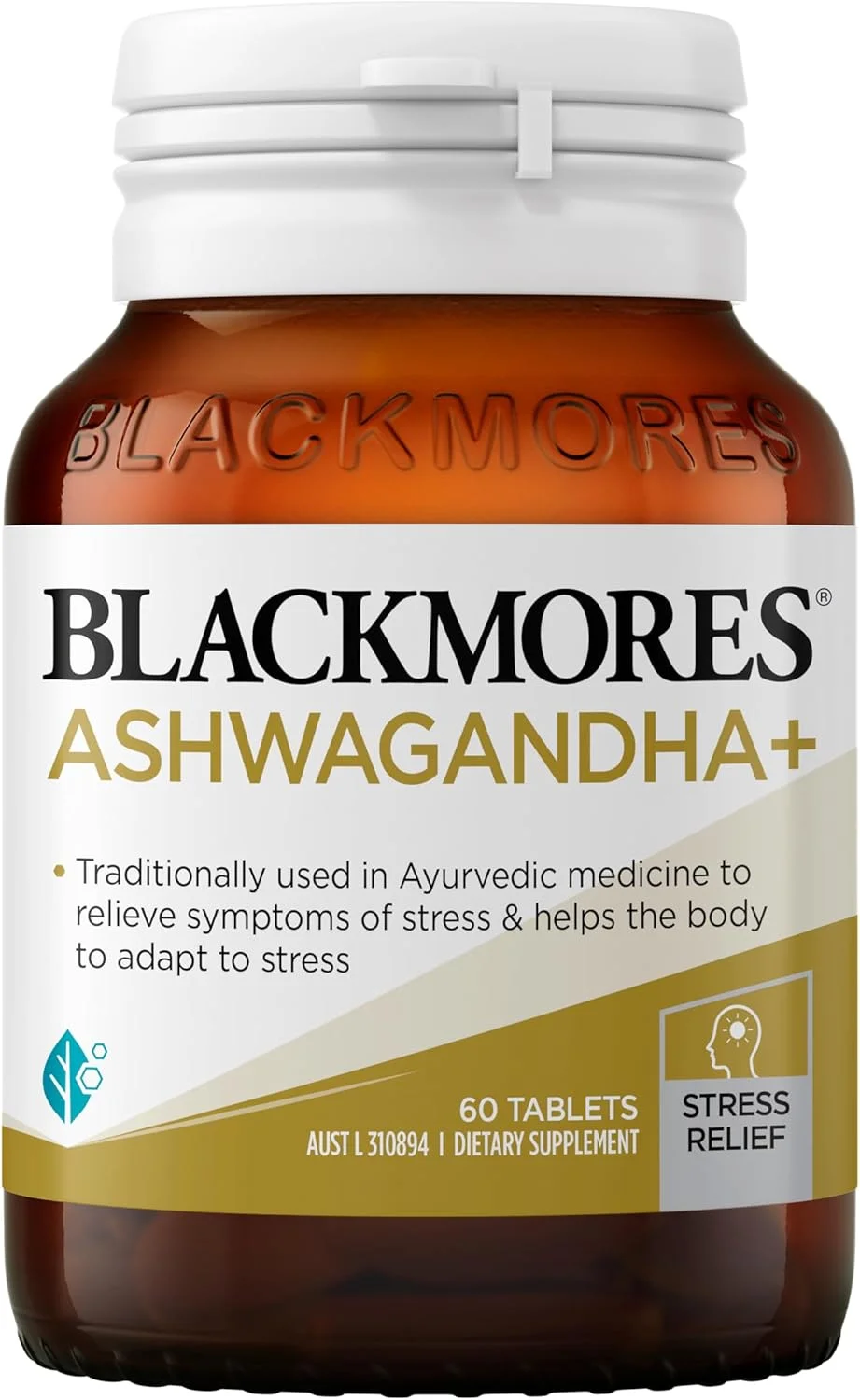
Blackmores Ashwagandha+ 60 Tablets
What it claims:
Supports stress relief and relaxation. Ashwagandha is a traditional Ayurvedic adaptogen used to support the body's response to stress.
What the evidence says:
Langade D et al. (2019, Medicine) — KSM-66 300mg BID, n=60, 10 weeks, double-blind crossover, healthy adults with sleep issues. PSQI improved 72% (treatment) vs 29% (placebo). Sleep efficiency and morning alertness improved. Hamilton Anxiety Scale reduced. Langade D et al. (2021, Adv Ther) — KSM-66 300mg BID, n=150, 8 weeks, clinically diagnosed insomnia patients. Sleep onset latency: -9.38min (treatment) vs -3.69min (placebo). Sleep efficiency 83.49% vs 79.68%. Both trials used KSM-66 specifically — not generic ashwagandha root powder.
scored
The only product on this list that references KSM-66, the extract used in both Langade sleep trials — the closest match to clinical evidence on Amazon AU.
Blackmores Ashwagandha+ 60 Tablets
- KSM-66 standardised root extract — the specific extract used in Langade 2019 and 2021
- 60 tablets per pack at $15 AUD
- Blackmores is TGA-listed, produced under Australian GMP
- Two tablets delivers the studied 600mg/day total dose (300mg BID protocol)
- No synthetic fillers or proprietary blends obscuring active dose
- References KSM-66 — the extract used in both peer-reviewed Langade sleep trials
- TGA-listed — produced under Australian GMP standards
- $15 for 60 tablets is competitive for a standardised extract
- Two tablets per day matches the 600mg/day total dose in the Langade 2019 protocol
- Established Australian brand with consistent product formulation
- KSM-66 extract type not prominently displayed on front-of-pack label — confirm in supplement facts before purchasing
- 60-tablet pack lasts only 30 days at 2/day — need two packs to complete a 10-week trial
- No published third-party Certificate of Analysis for ashwagandhinolide content on Amazon listing
- Sleep benefit timeline is 4–8 weeks minimum — not an acute sleep aid
We've researched this product using publicly available brand specifications, published research on its active ingredients, and verified Amazon AU listing data. Physical testing is in progress and scored criteria will follow.
Score pending · Research-based analysis.
Healthy Care High Strength Ashwagandha 60 Tablets
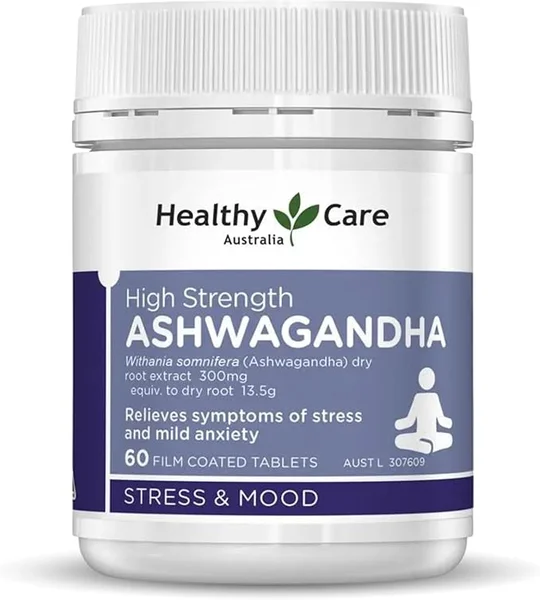
Healthy Care High Strength Ashwagandha 60 Tablets
What it claims:
High strength ashwagandha to support stress and energy levels.
What the evidence says:
No published extract standardisation data available for this product. Clinical sleep evidence (Langade 2019, 2021) is specific to KSM-66 extract. Deshpande A et al. (2020, Sleep Medicine) used Sensoril (a different patented ashwagandha extract combining leaf and root) and found moderate improvement in sleep quality vs placebo — but this still required a named standardised extract, not generic root powder.
scored
Cheapest ashwagandha on Amazon AU at $9.29 — but no standardisation data disclosed, so you cannot confirm extract type or active compound density.
Healthy Care High Strength Ashwagandha 60 Tablets
- 60 tablets for $9.29 AUD — lowest per-tablet cost on this list
- Labels 'high strength' but does not disclose KSM-66 or any named extract
- No withanolide or withanolide percentage disclosed on listing
- Suitable as a low-cost trial to assess tolerance before investing in standardised product
- Healthy Care is an Australian brand with broad Amazon AU availability
- $9.29 for 60 tablets — most affordable ashwagandha on Amazon AU
- Australian brand — wide availability and straightforward reordering
- Low-cost way to assess ashwagandha tolerance before committing to a premium extract
- 60-tablet count matches the other products for direct price comparison
- No KSM-66 or named extract disclosed — cannot confirm clinical equivalence to Langade trial material
- No withanolide percentage listed — active compound density unknown
- 'High strength' refers to mg dose only, not standardisation quality
- Cannot replicate the 300mg BID KSM-66 protocol with confidence
- Sleep benefit is unconfirmed for unstandardised ashwagandha root powder
We've researched this product using publicly available brand specifications, published research on its active ingredients, and verified Amazon AU listing data. Physical testing is in progress and scored criteria will follow.
Score pending · Research-based analysis.
Swisse Ashwagandha Calm+ 60 Tablets
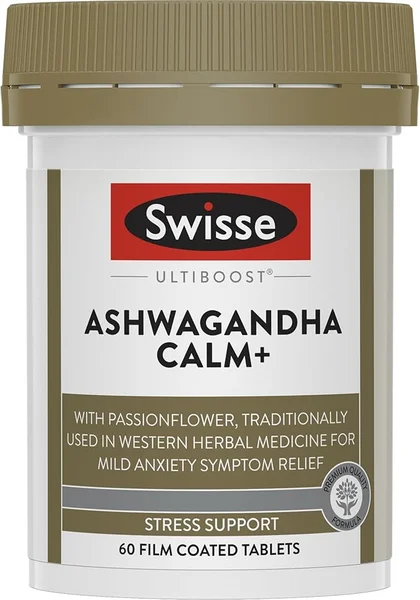
Swisse Ashwagandha Calm+ 60 Tablets
What it claims:
Swisse Ashwagandha Calm+ supports stress relief, calm and relaxation, and healthy sleep.
What the evidence says:
Clinical sleep evidence is specific to KSM-66 (Langade 2019, 2021) and Sensoril (Deshpande 2020). Without confirmed extract type for this product, sleep-specific clinical data cannot be directly applied. General ashwagandha stress and anxiety reduction is supported across multiple extracts, but PSQI-level sleep improvement in clinical trials requires standardised extract confirmation.
scored
Swisse's dedicated calm/sleep formula at $16.24 — but confirm the extract type before assuming it matches the Langade trial protocol.
Swisse Ashwagandha Calm+ 60 Tablets
- 60 tablets for $16.24 AUD — highest price on this list
- Swisse Calm+ formulation targets stress and sleep specifically
- Extract standardisation not confirmed as KSM-66 on Amazon AU listing — verify before purchasing
- Swisse is a well-established Australian wellness brand
- Calm+ formulation may include complementary botanicals — check label for full ingredient list
- Sleep-specific Calm+ formulation from an established Australian brand
- 60 tablets is sufficient for a full 4-week trial at 2/day
- Swisse products are widely available and consistently formulated
- Higher price point typically indicates better extract quality — though this must be verified
- KSM-66 extract type not confirmed on Amazon AU listing — verify supplement facts before purchasing
- $16.24 is the highest price on this list — premium is not justified without confirmed extract standardisation
- Calm+ additional ingredients may include other botanicals not relevant to the Langade sleep protocol
- Sleep improvement timeline remains 4–10 weeks regardless of brand
We've researched this product using publicly available brand specifications, published research on its active ingredients, and verified Amazon AU listing data. Physical testing is in progress and scored criteria will follow.
Score pending · Research-based analysis.
| Factor | Metric | KSM-66 300mg BID | Placebo | Effect size | Timeframe |
|---|---|---|---|---|---|
| PSQI score improvement | 72% improvement (Langade 2019) | 29% improvement | Significant (p<0.05) | 10 weeks | |
| Sleep efficiency | 83.49% (Langade 2021) | 79.68% | Statistically significant | 8 weeks | |
| Sleep onset latency | -9.38 minutes (Langade 2021) | -3.69 minutes | Significant reduction | 8 weeks | |
| Total sleep time | Significantly increased | Minimal change | Moderate effect | 8 weeks | |
| Morning alertness on rising | Significantly improved | No significant change | Significant (p<0.05) | 10 weeks |
The Sleep Mechanism: GABA-A Receptors and Triethylene Glycol
The most specific mechanistic explanation for ashwagandha's sleep effect comes from a 2017 study by Kaushik et al. (PLoS ONE) identifying triethylene glycol (TEG) as the primary sleep-inducing fraction of ashwagandha leaf. Mice administered TEG showed a dose-dependent increase in non-rapid eye movement (NREM) sleep — the deep, slow-wave phase associated with physical restoration and memory consolidation — without significantly altering REM sleep architecture. This is a meaningful distinction: ashwagandha's effect appears to increase the depth and efficiency of sleep rather than inducing sedation.
The proposed pathway involves GABA-A receptor modulation. GABA (gamma-aminobutyric acid) is the brain's primary inhibitory neurotransmitter; GABA-A receptors are the molecular target of benzodiazepines and non-benzodiazepine sleep medications like zolpidem. Ashwagandha's active fractions appear to bind allosterically to GABA-A receptors — enhancing their activity without fully occupying the same binding site as pharmaceutical sedatives. This partial modulation may explain why ashwagandha does not produce the dependency, rebound insomnia, or next-day cognitive impairment associated with benzodiazepine receptor agonists.
The withanolide fraction — which KSM-66 standardises to a minimum of 5% — also modulates the hypothalamic-pituitary-adrenal (HPA) axis, reducing cortisol output under stress. Since elevated evening cortisol is a known driver of sleep onset difficulties and poor sleep continuity, the cortisol-lowering effect provides a second independent mechanism converging on the same outcome: better sleep. The Langade 2019 trial measured both Hamilton Anxiety Scale scores and sleep quality; both improved significantly, consistent with a stress-cortisol pathway running in parallel with the GABA-A mechanism.
One important caveat: the TEG GABA-A mechanism is established primarily in animal models. Human neuroimaging or receptor-binding studies confirming the same mechanism in vivo do not yet exist. The clinical sleep improvements in the Langade trials are well-documented, but the mechanistic explanation remains partially inferential. This does not undermine the clinical evidence — it simply means the mechanism is better understood than in many supplements, but not fully mapped.
What the Langade Trials Actually Found — and Their Limits
The Langade 2019 trial (published in Medicine) is the most cited human RCT for ashwagandha and sleep. Sixty healthy adults — not clinically diagnosed with insomnia — who self-reported sleep difficulties were randomised to KSM-66 300mg twice daily or placebo in a double-blind crossover design over 10 weeks. The Pittsburgh Sleep Quality Index (PSQI) improved 72% in the treatment arm versus 29% in placebo. Secondary outcomes included sleep efficiency (tracked via actigraphy), Hamilton Anxiety Scale, and morning mental alertness — all significantly improved in the treatment group. The crossover design strengthens the result by using each participant as their own control.
The Langade 2021 trial (Advances in Therapy) extended the work to a different population: 150 adults with clinically diagnosed insomnia. KSM-66 300mg BID over 8 weeks reduced sleep onset latency by 9.38 minutes versus 3.69 minutes for placebo. Sleep efficiency reached 83.49% in the treatment group versus 79.68% for placebo. Total sleep time increased. Anxiety improved as a secondary outcome. This replication in a clinically diagnosed insomnia population substantially strengthens the evidence base compared to the 2019 healthy-adult trial.
The honest limitations are these: both trials used KSM-66 specifically — a patented, standardised extract. Neither result can be extrapolated to unstandardised ashwagandha root powder, whole herb capsules, or other proprietary extracts. Sample sizes of 60 and 150 are adequate for detecting moderate effects but insufficient to establish rare adverse events or to identify which subpopulations respond best. The 2021 trial did not include a long-term follow-up — we do not know whether 6 or 12 months of continuous use maintains the same sleep benefit or whether tolerance develops.
A third study worth noting: Deshpande A et al. (2020, Sleep Medicine) used Sensoril — a different patented ashwagandha extract combining leaf and root — and found moderate improvement in sleep quality versus placebo. This suggests the sleep benefit is not uniquely confined to KSM-66, but Sensoril-specific evidence is less robust than the two Langade trials. Do not treat Sensoril and KSM-66 as interchangeable without independent evidence for the specific product you are using.
Ashwagandha for Sleep: Protocol, Timing, and What to Stack It With
The evidence-based protocol derived directly from the Langade trials is: KSM-66 ashwagandha root extract, 300mg twice daily (morning and evening), taken with food, for a minimum of 10 weeks. The 10-week timeframe is not arbitrary — it is the duration used in the primary crossover trial, and the 2021 insomnia trial showed meaningful results at 8 weeks. Stopping at 4 weeks is a common mistake; the mechanism is slow-onset and results are cumulative.
Timing flexibility: the Langade protocols used split dosing with meals rather than a single pre-bed dose. If daytime drowsiness is a concern, shifting the morning dose to lunchtime is a reasonable adjustment without departing meaningfully from the studied protocol. The evening dose taken with dinner 1–2 hours before bed aligns the pharmacological window with sleep onset. There is no evidence that a single 600mg bedtime dose outperforms split dosing, and the cortisol-modulating effect is arguably better distributed with twice-daily administration.
The most evidence-adjacent stack for sleep is magnesium glycinate (200–400mg elemental magnesium taken 30–60 minutes before bed). Magnesium supports GABA-A receptor function independently of ashwagandha, and deficiency — common in Australian adults consuming insufficient leafy greens and legumes — is a documented contributor to poor sleep quality. The glycinate chelate form avoids the laxative effect of magnesium oxide or citrate at therapeutic doses. This combination targets the HPA cortisol axis (ashwagandha) and the GABAergic sleep architecture (magnesium glycinate) through complementary pathways.
What ashwagandha is not: it is not an acute sleep aid. It does not sedate you or shorten sleep onset on the first night. It is not a substitute for addressing the root causes of insomnia — sleep schedule inconsistency, excessive blue light exposure after sunset, high caffeine intake, or unmanaged anxiety disorders. The clinical trials enrolled participants who self-reported sleep difficulties or met criteria for insomnia; they did not enrol people with sleep apnoea, restless legs syndrome, or circadian rhythm disorders. If your sleep problem has a structural or circadian component, ashwagandha is unlikely to resolve it. Use it as one layer of a broader sleep hygiene strategy, not as a standalone fix.
Further Reading
Frequently Asked Questions
8 questionsDoes ashwagandha help with sleep?
Yes — two randomised controlled trials using KSM-66 ashwagandha root extract (300mg twice daily) found statistically significant improvements in sleep quality versus placebo. Langade et al. (2019) showed a 72% improvement in Pittsburgh Sleep Quality Index scores over 10 weeks in healthy adults with sleep difficulties. Langade et al. (2021) found a 9.38-minute reduction in sleep onset latency in clinically diagnosed insomnia patients over 8 weeks. These results are specific to KSM-66 standardised extract — generic ashwagandha powders have not been tested in equivalent sleep trials.
How long does ashwagandha take to improve sleep?
Four to eight weeks is the minimum timeframe based on clinical trial data. The Langade 2021 trial showed statistically significant sleep improvements at the 8-week endpoint using KSM-66 300mg BID. The 2019 crossover trial used a 10-week protocol. Ashwagandha is not an acute sleep aid — it does not work the night you take it. The mechanism involves modulating stress hormones and GABA-A receptor activity over time. If you reach week 10 at the correct dose using a standardised KSM-66 product and notice no change, ashwagandha may not be an effective intervention for you.
When should I take ashwagandha for sleep?
The Langade sleep trials used 300mg twice daily — once in the morning and once at night, both with food. This split-dose protocol distributes the adaptogenic effect across the day rather than concentrating it at bedtime. Some practitioners recommend taking the second dose 1–2 hours before bed to align the calming effect with the sleep window, but no clinical trial has directly compared split-dose timing against a single bedtime dose. If you experience drowsiness during the day, shifting the morning dose to lunchtime is a reasonable adjustment.
Ashwagandha vs melatonin for sleep — which is better?
Neither is universally superior — they work through different mechanisms for different problems. Melatonin addresses circadian rhythm disruption (jet lag, shift work, delayed sleep phase) and works acutely — effective the first night at 0.5–5mg. Ashwagandha addresses stress-related sleep dysfunction and requires 4–10 weeks to show benefit. If your sleep issue is driven by elevated cortisol, anxiety, or racing thoughts, ashwagandha has direct clinical evidence. If your issue is falling asleep at the wrong time or recovering from jet lag, melatonin is the more targeted tool. They can be used together safely — they do not share a mechanism.
Can ashwagandha cause vivid dreams?
No consistent evidence in clinical trials links ashwagandha to vivid dreams, but anecdotal reports exist. The proposed mechanism — increasing NREM (deep, slow-wave) sleep via triethylene glycol and GABA-A receptor activity — would theoretically reduce REM-dominant vivid dreaming rather than increase it. If you experience vivid or disturbing dreams after starting ashwagandha, consider whether other lifestyle changes (alcohol reduction, new medications, increased fatigue) coincide with the onset before attributing it to the supplement.
What is KSM-66 ashwagandha and why does it matter for sleep?
KSM-66 is a patented, standardised ashwagandha root extract manufactured by Ixoreal Biomed, standardised to a minimum of 5% withanolides using a milk-based extraction process. It matters for sleep because both Langade sleep trials — the two most cited human RCTs for ashwagandha and sleep — used KSM-66 specifically at 300mg twice daily. Results from those trials cannot be reliably extrapolated to unstandardised ashwagandha powders, mycelium-on-grain products, or other proprietary extracts like Sensoril. When purchasing, confirm KSM-66 appears in the supplement facts panel, not just the marketing copy.
Is ashwagandha safe to take every night long-term?
Yes, based on available safety data, ashwagandha at doses up to 600mg/day of standardised extract appears well-tolerated in trials up to 10 weeks. The Langade 2021 trial (n=150, 8 weeks) reported no serious adverse events. Rare cases of hepatotoxicity have been reported in the literature — typically at higher doses or with unregulated products — so sticking to TGA-listed products at the studied dose is prudent. Persistent use beyond 12 weeks without any observable benefit suggests ashwagandha is not an effective intervention for you specifically. Consult your GP before starting if you take thyroid medication, sedatives, or immunosuppressants.
Can I stack ashwagandha with magnesium glycinate for sleep?
Yes — this is a well-reasoned combination with complementary mechanisms. Magnesium glycinate (200–400mg elemental magnesium at night) supports GABA-A receptor activity and has independent evidence for reducing sleep onset latency and subjective sleep quality in adults with insufficient magnesium intake. Ashwagandha addresses the cortisol and stress axis. The two do not compete or interact — magnesium glycinate is the gentlest magnesium form for GI tolerance. Take magnesium glycinate 30–60 minutes before bed; take ashwagandha with the evening meal as the second dose of the day.
Our Research Framework
Every product on this site is assessed against the same criteria — brand specifications, published clinical evidence, and verified Australian availability. We don't accept free products. Full methodology →