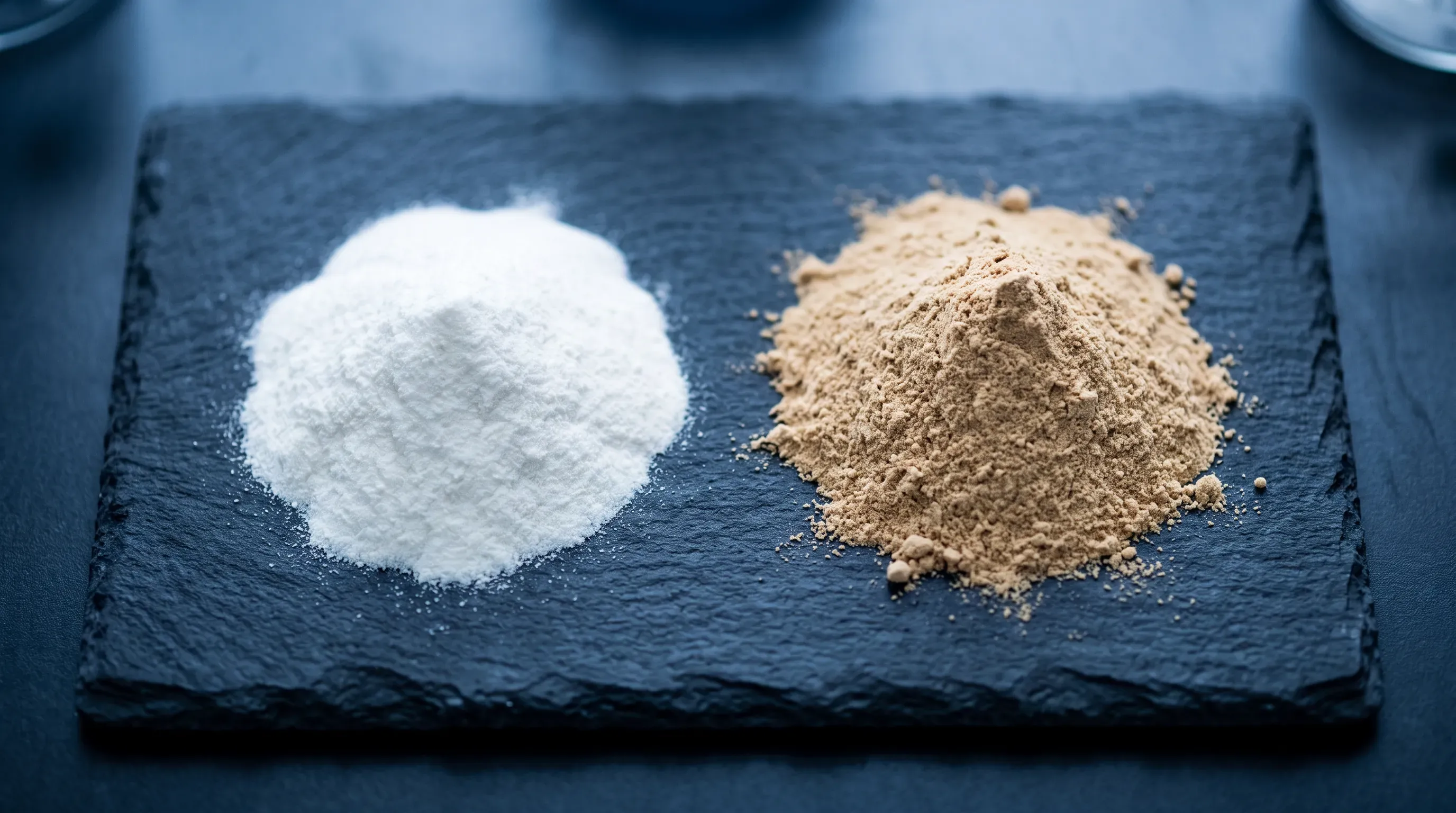
For skin, hair, and nails: choose collagen peptides. For muscle protein synthesis and post-workout recovery: choose whey or plant protein powder. The core reason is amino acid profile — collagen is high in glycine and proline (connective tissue-building), but low in leucine. Leucine is the branched-chain amino acid that triggers muscle protein synthesis, and collagen contains approximately 2–3% leucine versus 10–11% in whey. The Proksch et al. (2014) trial found 2.5g of hydrolysed collagen peptides daily improved skin elasticity by 15% in 8 weeks — evidence that is specific to skin structure, not muscle mass. The honest caveat: if your goals span both skin and muscle, you can take both — they are complementary, not competing. Collagen at 2.5g per day adds relatively little additional cost alongside a standard protein powder routine.
We research every product we recommend. Some links on this page are affiliate links. If you buy through them, we earn a small commission at no extra cost to you. This doesn't affect our recommendations.
Collagen vs Protein Powder: Head-to-Head
| Factor | Collagen Peptides | Whey Protein | Plant Protein (Pea-Rice) |
|---|---|---|---|
| Primary protein type | Collagen (Type I/III) | Complete (all amino acids) | Near-complete (blends) |
| Leucine content | ~2–3% | ~10–11% | ~7–8% |
| Glycine content | ~27% | ~2% | ~4% |
| Skin, hair & nail support | Strong clinical evidence | No specific evidence | No specific evidence |
| Muscle protein synthesis | Poor (low leucine) | Best (high leucine + complete) | Good (at adequate dose) |
| Joint & connective tissue | Moderate evidence | Minimal evidence | Minimal evidence |
| Clinical skin dose | 2.5g/day (Proksch 2014) | N/A | N/A |
| Clinical muscle dose | N/A | 20–40g post-exercise | 30–40g (to match whey) |
| Suitable for vegans | No (marine or bovine) | No (dairy) | Yes |
| Cost per day (typical use) | ~$0.80–$1.50 at 2.5g | ~$1.50–$3.00 at 30g | ~$1.50–$3.50 at 30g |
The Key Differences That Actually Matter
Collagen and protein powder are both classified as protein supplements, but the amino acid differences are substantial enough that they serve almost entirely different physiological roles.
Leucine: the muscle trigger
Leucine is the most important amino acid for activating muscle protein synthesis via the mTOR pathway. Whey protein contains 10–11% leucine by weight. Collagen contains approximately 2–3%. This is why collagen peptides cannot substitute whey for post-workout muscle recovery — they simply don't contain enough leucine to trigger meaningful muscle protein synthesis at typical doses.
Whey: ~10–11% leucine · Collagen: ~2–3% leucineGlycine: the connective tissue substrate
Glycine is the most abundant amino acid in collagen — approximately 27% of total amino acids. It is a structural building block of the collagen triple-helix. Whey protein contains only about 2% glycine. This is why collagen supplementation specifically supports collagen synthesis in skin, tendons, and joints — the amino acid substrate profile matches what connective tissue needs.
Collagen: ~27% glycine · Whey: ~2% glycineClinical evidence by goal
The clinical trial evidence is clearly goal-specific. Proksch et al. (2014) found skin elasticity improved 15% at 2.5g collagen peptides daily — but whey protein has never been studied for skin elasticity. Conversely, multiple meta-analyses confirm whey protein outperforms placebo for lean mass gains post-resistance training. Each has strong evidence — but only in its own domain.
Skin: collagen (2014 RCT, n=114) · Muscle: whey (multiple meta-analyses)Dose scale: why collagen is cheaper
The clinical skin dose for collagen is 2.5g per day. The clinical post-workout dose for whey protein is 20–40g per serve. This 10–16× dose difference explains why collagen costs less per day for skin goals than whey does for muscle goals. A 284g collagen tub at 2.5g/day provides 113 days. The same weight in whey protein at 30g/day provides just 9 days.
Collagen skin dose: 2.5g/day · Whey muscle dose: 20–40g/dayFor Skin Goals: Choose Collagen
The case for collagen over protein powder for skin is straightforward: collagen has direct, peer-reviewed evidence for skin outcomes; protein powder does not. The Proksch et al. (2014) study (n=114, 8 weeks, double-blind placebo-controlled) found a 15% improvement in skin elasticity and significant improvement in skin hydration at 2.5g of hydrolysed collagen peptides per day. The Czajka et al. (2018) marine collagen trial (n=39) found improved skin hydration and reduced roughness at 8 weeks.
Whey protein does not contain the glycine and hydroxyproline substrates needed for endogenous collagen synthesis, and no significant human clinical trial has found whey protein to improve skin elasticity or hydration. If your goal is skin health, collagen peptides are the evidence-backed choice. Vital Proteins Marine Collagen Peptides (unflavoured, 284g) is the most available marine collagen option on Amazon AU that aligns with the 2.5g clinical dose range.
What collagen claims
What the evidence says
For Muscle Goals: Choose Protein Powder
Post-resistance training muscle protein synthesis requires adequate leucine — the branched-chain amino acid that activates mTOR, the key regulator of muscle growth. Whey protein isolate typically contains 10–11% leucine, making a 30g serve deliver approximately 3g of leucine — a commonly cited threshold for maximal anabolic signalling. Collagen at the same 30g dose would provide only 0.6–0.9g of leucine — far below the effective threshold.
Multiple meta-analyses have confirmed whey protein supplementation, when combined with resistance training, leads to significantly greater increases in lean body mass and strength versus placebo. For vegans and people avoiding dairy, pea-rice blend proteins have been shown to produce comparable lean mass outcomes to whey when total protein and leucine are matched. If muscle building or post-workout recovery is your primary goal, whey (or a high-quality plant blend) is the correct choice — not collagen.
Should You Take Collagen, Protein Powder, or Both?
| Your situation | Best pick | Why |
|---|---|---|
| Skin elasticity and hydration as primary goal | Collagen peptides | Proksch 2014 and Czajka 2018 show skin-specific outcomes. Whey has no equivalent skin evidence. |
| Muscle building and post-workout recovery | Whey or plant protein | High leucine triggers muscle protein synthesis. Collagen's ~2% leucine is insufficient at standard doses. |
| Both skin and muscle goals | Both (complementary) | Collagen at 2.5g for skin + whey at 20–30g post-workout. They don't compete — different amino acid profiles. |
| Vegan — skin goals | Plant-based collagen support stack | No plant collagen exists. Supplement vitamin C + glycine + proline to support endogenous collagen synthesis. |
| Vegan — muscle goals | Pea-rice protein blend | Matched for leucine and total protein, pea-rice blends produce comparable lean mass gains to whey. |
| Budget-conscious, single supplement | Depends on primary goal | Collagen at 2.5g/day is cheaper per day (~$0.80–$1.50) than whey at 30g (~$1.50–$3.00). Pick by goal. |
| Joint and tendon support alongside exercise | Collagen + vitamin C | Shaw 2017: Collagen + vitamin C before exercise improved collagen synthesis markers in tendons (n=53). |
| Hair and nail health | Collagen peptides | Hair and nails are predominantly Type I collagen. Clinical evidence on collagen supplementation is relevant; whey evidence is not. |
5-Year Cost Comparison
The cost difference between collagen and protein powder is driven almost entirely by dose — not price per gram. At the clinical skin dose (2.5g collagen/day) vs the clinical muscle dose (30g whey/day), the comparison looks very different from what the retail price alone suggests.
Skin Goal
Collagen peptides at 2.5g/day
~$0.80–1.50/day
284g tub provides 113 days at 2.5g/day
Assumption: 2.5g/day per Proksch 2014 clinical dose. Retail price only.
Muscle Goal
Whey protein at 30g/day
~$1.50–3.00/day
1kg tub (30+ serves) provides ~30 days at 30g/day
Assumption: 30g/day post-workout. Retail price only. Quality varies by brand.
Both Goals Combined
Collagen 2.5g + Whey 30g/day
~$2.30–4.50/day
Combined daily cost of both supplements
The collagen increment adds relatively little to a whey routine — $0.80–$1.50/day for skin benefits on top of muscle-focused spend.
Our Collagen Recommendation for Skin in Australia
If you've decided collagen is right for your goals, Vital Proteins Collagen Peptides is our research-based pick for Australia. Marine-sourced, unflavoured, and available on Amazon AU at a serving size that aligns with the clinical dose range studied for skin outcomes.
Frequently Asked Questions
Is collagen better than protein powder for skin?
For skin specifically, collagen peptides have more targeted clinical evidence than standard protein powder. Proksch et al. (2014) found 2.5g of hydrolysed collagen peptides daily for 8 weeks improved skin elasticity by 15% versus placebo in 114 women. Whey protein and pea protein have not been studied for skin elasticity outcomes in comparable trials. Collagen is predominantly Type I collagen — the same structural protein comprising 80% of the dermis — which is why the skin-specific mechanism is more direct than general protein supplementation.
Is collagen or protein powder better for building muscle?
Protein powder (whey or plant) is better for muscle protein synthesis than collagen. Collagen peptides are low in leucine — the branched-chain amino acid most important for triggering muscle protein synthesis via the mTOR pathway. Whey protein contains approximately 10–11% leucine; collagen contains approximately 2–3%. For muscle building, a whey or high-quality plant protein source delivering 20–40g complete protein per serve is the evidence-backed choice. Collagen can complement protein powder — but cannot replace it for muscle goals.
Can I take collagen and protein powder together?
Yes. Collagen peptides and protein powder serve different physiological purposes and are complementary. Collagen is high in glycine, hydroxyproline, and proline — amino acids important for connective tissue, skin, and joint support. Protein powder provides a complete amino acid profile for muscle protein synthesis. Taking both together, or collagen in the morning and protein powder post-workout, covers both goals without redundancy. The collagen dose (2.5g) adds minimal cost to a standard protein powder routine.
What is the difference between collagen peptides and whey protein?
Collagen peptides are hydrolysed Type I or III collagen from marine or bovine sources — high in glycine, proline, and hydroxyproline, and low in leucine. They support skin, hair, nails, and connective tissue. Whey protein is derived from cow's milk, is a complete protein high in leucine and branched-chain amino acids, and is optimal for muscle protein synthesis. Collagen is for structural tissue goals; whey is for post-exercise muscle recovery and growth.
Does collagen powder count as protein intake?
Collagen peptides are approximately 90% protein by dry weight, but collagen is not a complete protein — it lacks tryptophan and has very low leucine content. At 2.5g per day (the skin dose), the protein contribution is minimal relative to daily needs. If relying on collagen as a primary protein source, you are likely underdosing for muscle goals. Collagen is best viewed as a targeted supplement for structural tissue, not a protein powder replacement.
Is vegan protein powder as good as whey for muscle building?
High-quality plant protein powders — particularly pea-rice blends — can match whey for muscle protein synthesis outcomes when dose and leucine content are controlled. Pea protein contains approximately 8% leucine, lower than whey's 10–11%, but a higher dose compensates. Recent meta-analyses have found no significant difference in lean mass gains between whey and pea protein when matched for total protein intake. For vegans and those avoiding dairy, pea-rice blends are the evidence-backed alternative.
Can collagen help with joint pain in Australia?
There is moderate evidence for collagen supplementation supporting joint health. Shaw et al. (2017) found collagen combined with vitamin C improved collagen synthesis markers in tendon and joint tissues. Type II collagen has been studied for osteoarthritis with mixed results. Doses studied for joint support are typically higher than for skin — 5–10g of hydrolysed collagen peptides per day. Joint health claims are not TGA-endorsed without substantiation. Australians with joint pain should consult a GP alongside any supplementation.
When should I take collagen — morning or night?
The clinical trials for skin collagen outcomes (Proksch 2014, Czajka 2018) did not specify a time-of-day protocol — the dose was simply taken once daily. There is no strong evidence that morning versus evening timing meaningfully affects skin collagen outcomes. A common practical approach is taking collagen in the morning with coffee or another warm drink, which builds a habitual daily routine. The most important variable is consistency over 8–12 weeks, not the specific time of day.
Related Guides
For our top collagen product pick for skin specifically, see best collagen for skin in Australia. For the full collagen category, visit the Collagen hub. Read about how we evaluate and our editorial process.