
Collagen peptide supplementation for joint health has genuine clinical support at a specific dose: Proksch E et al. (2014, Skin Pharmacol Physiol) demonstrated measurable connective tissue changes with 2.5g of hydrolysed collagen daily over 12 weeks (n=114). Shaw G et al. (2017, Am J Clin Nutr) showed that 5g of collagen hydrolysate combined with vitamin C increased collagen synthesis markers and reduced joint discomfort after exercise in athletes (n=48). The mechanism is proposed rather than confirmed: oral collagen peptides are absorbed as dipeptides and tripeptides (hydroxyproline-containing), which may stimulate chondrocytes and synovial fibroblasts to produce more endogenous collagen. Not all products are equivalent — dose, type (bovine vs marine), and hydrolysation degree matter. Vital Proteins Collagen Peptides ($50.37 for 284g, Amazon AU) provides approximately 10g per serve, exceeding the clinically studied doses. For joint benefit, 2.5–5g daily for a minimum of 12 weeks is the research-backed protocol.
Alchemist Wellness participates in affiliate programmes including Amazon Associates. If you purchase through a link on this page, we may earn a commission at no extra cost to you. This does not influence our editorial recommendations. Full disclosure.
Review status: This article is evidence-based, drawing on brand specifications, published clinical research, and verified Amazon AU listing data.
Products Reviewed
Vital Proteins Collagen Peptides
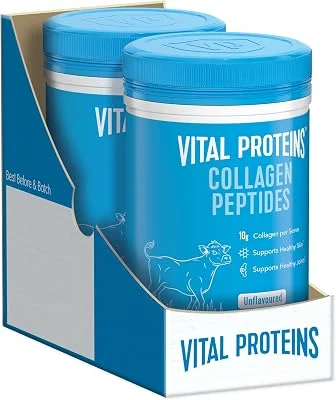
Vital Proteins Collagen Peptides
What it claims:
Vital Proteins Collagen Peptides supports joint health, reduces discomfort, and promotes connective tissue repair through its hydrolysed bovine collagen peptide profile.
What the evidence says:
Proksch E et al. (2014, Skin Pharmacol Physiol) — 2.5g hydrolysed collagen daily, n=114, 12 weeks, significant connective tissue improvement. Shaw G et al. (2017, Am J Clin Nutr) — 5g collagen hydrolysate + vitamin C, n=48, athletes, reduced joint discomfort and increased collagen synthesis markers. Bruyère O et al. (2012, Curr Med Res Opin) — meta-analysis, collagen hydrolysate for osteoarthritis outcomes. These studies used doses of 2.5–10g; Vital Proteins delivers 10g per serve. Note: studies used specific hydrolysed formulations; results may not generalise to all products.
scored
The most widely available hydrolysed bovine collagen on Amazon AU, dosed above the clinical threshold studied for connective tissue and joint outcomes.
Vital Proteins Collagen Peptides
- 284g — approximately 28 serves at 10g per serve
- Bovine hide collagen, hydrolysed to Type I and III peptides
- Unflavoured — dissolves in hot or cold liquids
- ~$1.80 per serve at 10g dose
- AUD $50.37 on Amazon AU
- 10g per serve exceeds the 2.5–5g doses used in published joint trials
- Hydrolysed format: peptides absorbed as hydroxyproline dipeptides and tripeptides
- Unflavoured — easily added to coffee, smoothies, or water
- Bovine source — Type I and III collagen, well-studied for connective tissue
- Available on Amazon AU with Prime delivery
- No publicly available Certificate of Analysis — cannot independently verify peptide profile
- Bovine hide collagen (Type I/III), not Type II (cartilage-specific) — may be less targeted for articular cartilage
- No added vitamin C — Shaw G et al. (2017) found collagen + vitamin C more effective than collagen alone
- $1.80/serve is higher than some alternatives at the same dose
- 284g jar lasts ~28 days at 10g/serve — monthly recurring cost is ongoing
We've researched this product using publicly available brand specifications, published research on its active ingredients, and verified Amazon AU listing data. Physical testing is in progress and scored criteria will follow.
Score pending · Research-based analysis.
| Factor | Hydrolysed Collagen Peptides | Gelatin (Non-Hydrolysed) | Glucosamine/Chondroitin |
|---|---|---|---|
| Absorption | High — di/tripeptides absorbed intact | Low — must be digested first, less targeted | Moderate — direct joint substrate |
| Joint-specific evidence | Proksch 2014, Shaw 2017 — connective tissue + sport recovery | Limited — older literature, weaker evidence | Moderate — Cochrane review shows modest benefit for knee OA |
| Collagen type | Type I + III (bovine), Type I/II/III (marine) | Same as source, unhydrolysed | Not collagen — different mechanism |
| Dose studied | 2.5–10g daily for 12+ weeks | N/A | 1,500mg glucosamine / 1,200mg chondroitin |
| Vitamin C needed? | Yes — Shaw 2017 showed synergistic effect | Yes — same mechanism | No |
| Time to effect | 12+ weeks minimum | Unknown — less studied | 8–12 weeks (Cochrane) |
| AU availability | Vital Proteins on Amazon AU | Some health food stores | Widely available — pharmacies |
| Price per daily dose | ~$1.80 (10g Vital Proteins) | Lower | ~$0.50–$1.50 |
What the Research Actually Shows for Joints
The clinical evidence for collagen peptides and joint health is stronger than for most supplement categories, but it is dose-specific and time-dependent. The most cited study in this area is Proksch E et al. (2014, Skin Pharmacol Physiol), which tested 2.5g of hydrolysed collagen daily over 12 weeks in 114 participants and found statistically significant improvements in connective tissue density measured by ultrasound. This was a skin-focused trial, but connective tissue improvement is the shared mechanism relevant to joint outcomes.
The joint-specific evidence was advanced by Shaw G et al. (2017, Am J Clin Nutr), who tested 5g of collagen hydrolysate combined with vitamin C in 48 athletes over 24 weeks. The collagen group showed significantly higher collagen synthesis markers (as measured by amino acid enrichment in circulation) and reported lower joint discomfort scores after exercise. Crucially, vitamin C was included — the study authors noted that vitamin C is a cofactor for collagen synthesis and the combination produced greater effects than collagen alone.
Bruyère O et al. (2012, Curr Med Res Opin) conducted a meta-analysis of collagen hydrolysate studies in osteoarthritis and found a statistically significant reduction in pain scores (VAS) compared to placebo. Effect sizes were modest — this is not a drug. The mechanism proposed is that absorbed hydroxyproline-containing peptides act as signalling molecules that stimulate chondrocytes and synovial fibroblasts to increase endogenous collagen production in joint tissue.
How to Take Collagen for Joint Health — the Protocol That Matches the Evidence
Dose: the evidence bracket is 2.5–10g of hydrolysed collagen daily. Shaw et al. (2017) used 5g; Proksch et al. (2014) used 2.5g for skin/connective tissue outcomes. Most commercial products including Vital Proteins are designed around 10g serves, which exceeds the minimum studied dose. Taking less than 2.5g is unlikely to produce meaningful outcomes based on available trials.
Vitamin C: Shaw et al. (2017) found collagen plus vitamin C (provided as vitamin C-enriched gelatin in that study) more effective than collagen alone. The reason is biochemical — vitamin C is a cofactor for the hydroxylation of proline and lysine in collagen synthesis. If you supplement collagen without a dietary source of vitamin C (fresh fruit, vegetables, or a supplement), you may be missing a synergistic effect. A glass of fresh orange juice or 500mg ascorbic acid with your collagen serve is a low-cost addition.
Timing: Shaw et al. (2017) gave collagen 1 hour before exercise in athletes. For general joint support without an exercise protocol, timing is not established as critical. Most people add it to morning coffee or a smoothie for consistency. Duration: 12 weeks is the minimum studied period before measurable outcomes. Three months of daily use before assessing effect is the evidence-based expectation.
Bovine vs Marine Collagen for Joint Health
Most of the joint-specific clinical evidence uses bovine or porcine collagen hydrolysate. Vital Proteins uses bovine hide, which is primarily Type I and Type III collagen. Articular cartilage (the tissue most relevant to joint health) is predominantly Type II collagen, not Type I. Some researchers argue that Type II collagen or a mixed-source product may be more targeted for cartilage outcomes, though the signalling-molecule hypothesis suggests any hydroxyproline-containing peptides may stimulate general collagen synthesis regardless of type.
Marine collagen is primarily Type I from fish skin and scales. It has a smaller peptide size than bovine collagen, which is claimed to improve absorption, though the clinical relevance of this difference is not established in joint-outcome trials. Most marine collagen research has focused on skin rather than joints.
The practical advice: bovine collagen peptides at 2.5–10g daily have the strongest evidence base for joint outcomes, and Vital Proteins is the most accessible bovine option on Amazon AU. If you have a specific concern about articular cartilage and want Type II, an undenatured Type II collagen supplement (UC-II) has a separate and smaller evidence base focused on osteoarthritis; the doses are much lower (40mg).
Further Reading
Frequently Asked Questions
8 questionsDoes collagen actually help joints?
Yes, based on clinical evidence at specific doses. Proksch E et al. (2014, n=114) showed connective tissue improvement with 2.5g hydrolysed collagen daily over 12 weeks. Shaw G et al. (2017, n=48) showed reduced joint discomfort and increased collagen synthesis markers in athletes taking 5g collagen plus vitamin C. Bruyère O et al. (2012) meta-analysis found modest but statistically significant pain reduction in osteoarthritis patients. Effect sizes are moderate, not dramatic — collagen is a nutritional intervention, not a pharmaceutical.
How much collagen per day for joint health?
The clinical evidence bracket is 2.5–10g of hydrolysed collagen peptides daily. Proksch et al. (2014) used 2.5g; Shaw et al. (2017) used 5g. Most products including Vital Proteins are designed at 10g per serve, which exceeds the minimum studied dose. Taking less than 2.5g daily is unlikely to produce measurable effects. Take for a minimum of 12 weeks before assessing outcomes.
Should I take vitamin C with collagen for joints?
Yes. Shaw G et al. (2017) found that collagen combined with vitamin C was more effective for collagen synthesis and joint outcomes than collagen alone. Vitamin C is a cofactor for the hydroxylation of proline and lysine, which are essential steps in collagen synthesis. A dietary source of vitamin C (fresh fruit, vegetables) or a 500mg ascorbic acid supplement taken alongside your collagen serve is a low-cost addition with supporting evidence.
Is Vital Proteins collagen good for joints?
It is a reasonable option. Vital Proteins provides hydrolysed bovine collagen at 10g per serve — above the 2.5–5g doses studied in published joint trials. It is Type I and III bovine collagen, which is what most of the joint-outcome literature used. The limitation is no publicly available Certificate of Analysis and no Type II collagen (more specific to articular cartilage). For general connective tissue support, it is adequate; for a cartilage-targeted intervention, undenatured Type II collagen (UC-II, 40mg) has a separate evidence base.
How long does collagen take to work for joints?
12 weeks is the minimum studied period before measurable outcomes appear in clinical trials (Proksch et al., 2014; Shaw et al., 2017). Some participants in joint-discomfort trials report improvement at 8 weeks. Expect to run 3 months of consistent daily supplementation before drawing conclusions. Skipping days or inconsistent dosing is not how the trials were conducted — daily use is the studied protocol.
What type of collagen is best for joints?
Most published joint-outcome evidence uses hydrolysed Type I and III bovine collagen peptides at 2.5–10g daily. Articular cartilage is predominantly Type II collagen, which has a separate evidence base in undenatured form (UC-II) at much lower doses (40mg). For general connective tissue and joint support, hydrolysed bovine collagen has the strongest evidence. For osteoarthritis or cartilage-specific concerns, UC-II is worth reviewing with a GP or sports medicine doctor.
Can I take collagen if I am vegetarian or vegan?
No. Vital Proteins Collagen Peptides and all other animal-derived collagen supplements are not suitable for vegans or vegetarians. Plant-based 'collagen boosters' contain precursor nutrients (vitamin C, zinc, proline) that support the body's own collagen synthesis, but they do not contain collagen. There is no plant-derived collagen supplement — collagen is an animal protein. If dietary restrictions apply, plant-based collagen precursor formulas are the relevant alternative, though they have a much thinner evidence base for joint outcomes.
Where can I buy collagen for joints in Australia?
Vital Proteins Collagen Peptides is available on Amazon AU with Prime delivery. It is also stocked in some Chemist Warehouse locations, health food stores, and online through the Vital Proteins AU website. Amazon AU typically offers competitive pricing and reliable availability. At $50.37 for 284g (28 serves at 10g), the monthly cost is approximately $50–55 for daily supplementation.
Our Research Framework
Every product on this site is assessed against the same criteria — brand specifications, published clinical evidence, and verified Australian availability. We don't accept free products. Full methodology →