For most Australians wanting a budget French press under $50, the Bodum Brazil 8-cup (1L) is the best place to start — it costs around $25 on Amazon AU, holds 1 litre, and uses the same press mechanism as Bodum's premium range. If you want to avoid plastic at all contact points, the Secura French Press 1L is a fully stainless double-wall option for around $45 that maintains temperature far better than glass. Bodum's budget range trades borosilicate glass (used in the Chambord) for heat-resistant plastic or polypropylene, which makes it lighter and less fragile but slightly less premium. The Secura's double-wall stainless design keeps coffee hot for 30 minutes or more, which matters if you brew for a table rather than one person. All three options use a standard coarse grind and four-minute steep. The mechanism is identical across price points. Budget French presses perform identically to expensive ones — the main differences are materials, aesthetics, and durability over years of daily use.
Alchemist Wellness participates in affiliate programmes including Amazon Associates. If you purchase through a link on this page, we may earn a commission at no extra cost to you. This does not influence our editorial recommendations. Full disclosure.
Review status: This article is evidence-based, drawing on brand specifications, published clinical research, and verified Amazon AU listing data.
Products Reviewed
Bodum Brazil French Press 8-cup (1L)

Bodum Brazil French Press 8-cup (1L)
What it claims:
Bodum markets the Brazil as a practical, affordable French press using the same press mechanism as their flagship models, in a durable lightweight plastic frame.
What the evidence says:
The press mechanism is genuinely identical to Bodum's premium range. Heat-resistant plastic is safe for hot liquids and does not impart flavour in normal use. Temperature retention is lower than glass or stainless — coffee cools noticeably faster in plastic-framed carafes.
scored
The Brazil's 1-litre capacity and Bodum's proven press mechanism deliver the lowest cost-per-cup of any French press on Amazon AU.
Bodum Brazil French Press 8-cup (1L)
- 1 litre / 8-cup capacity
- Heat-resistant plastic frame — lighter and drop-resistant
- Bodum standard press mechanism — same as the premium Chambord
- Requires coarse grind (4-minute steep)
- Available in multiple colours
- Best price-per-litre of any French press under $50 on Amazon AU
- 1L capacity serves 3-4 cups in one brew — practical for households
- Lightweight and drop-resistant plastic construction
- Bodum quality control and widely available replacement parts
- Plastic body — some users prefer no plastic contact with hot brew water
- Less elegant than glass and stainless alternatives
- Does not retain heat as well as insulated stainless options
We've researched this product using publicly available brand specifications, published research on its active ingredients, and verified Amazon AU listing data. We haven't tested it hands-on.
Score pending · Research-based analysis.
Secura French Press 1L Double Wall Stainless

Secura French Press 1L Double Wall Stainless
What it claims:
Secura markets the double-wall stainless French Press for temperature retention and durability, with an all-stainless design claimed to outperform glass alternatives in heat retention.
What the evidence says:
Double-wall vacuum insulation genuinely slows heat loss — this is well-established physics. Glass French presses lose temperature faster because glass conducts heat more readily than vacuum-insulated stainless. The stainless brew path eliminates plastic contact with hot brew water.
scored
Double-wall stainless construction keeps coffee genuinely hot for 30+ minutes — the right choice if you brew for a table rather than a single cup.
Secura French Press 1L Double Wall Stainless
- 1 litre capacity with double-wall vacuum insulation
- Stainless steel throughout — no glass, no plastic in brew path
- Keeps coffee hot for 30+ minutes
- Fine mesh filter with outer coarse screen
- Dishwasher safe
- Keeps coffee hot significantly longer than glass or plastic-framed alternatives
- All-stainless — zero plastic in the brew path
- Robust and drop-resistant construction
- Clean aesthetic works at a dining table, not just a kitchen bench
- Can't see how much coffee remains without lifting the lid
- Slightly heavier than plastic-body options
- At ~$45 it's near the top of the under-$50 budget range
We've researched this product using publicly available brand specifications, published research on its active ingredients, and verified Amazon AU listing data. We haven't tested it hands-on.
Score pending · Research-based analysis.
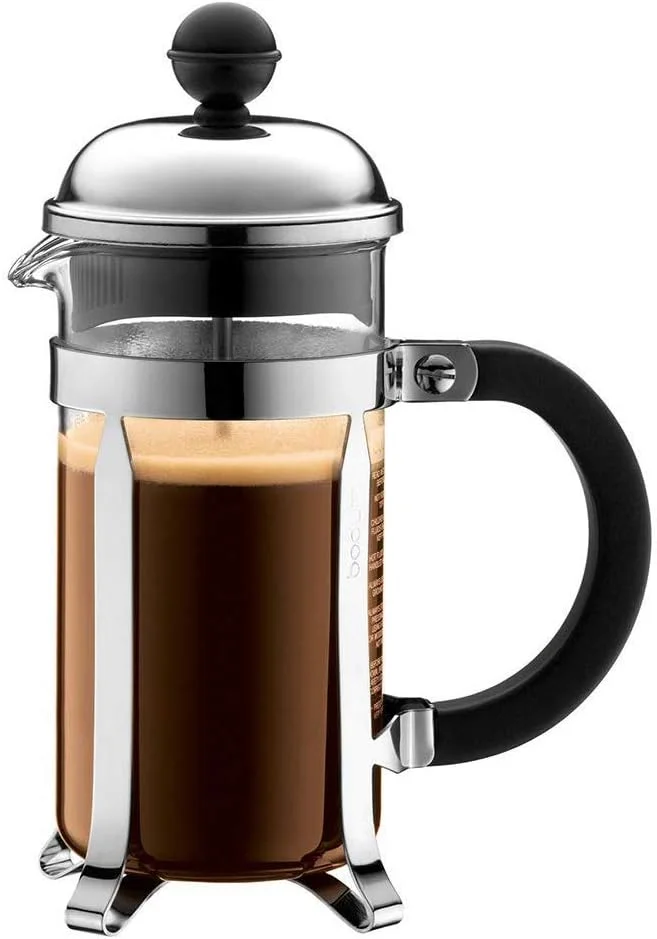
Bodum Chambord French Press 3-cup (350ml)
Bodum Chambord French Press 3-cup (350ml)
What it claims:
Bodum markets the Chambord as a premium, design-forward French Press with borosilicate glass and stainless steel construction at accessible price points.
What the evidence says:
Borosilicate glass has better thermal shock resistance than soda-lime glass. The stainless frame eliminates plastic from the brew path. At the 350ml size, the single-serve limitation is real and worth communicating — it is not a flaw but a functional constraint that buyers should understand before purchasing.
scored
The 350ml Chambord is the entry point to Bodum's glass-and-stainless flagship line for solo brewers — premium construction at the budget size.
Bodum Chambord French Press 3-cup (350ml)
- 350ml / 3-cup capacity (1-2 standard serves)
- Borosilicate glass carafe — heat-resistant and odour-neutral
- Stainless steel frame and plunger — no plastic in brew path
- Same mechanism as the larger Chambord 500ml and 1L
- Classic Bodum aesthetic
- Borosilicate glass and stainless construction — no plastic in brew path
- Premium aesthetics that look at home on any kitchen bench
- Widely stocked for easy replacement if the glass breaks
- Ideal size for a single-person household
- 350ml is only sufficient for 1-2 cups — too small for households of 3+
- Glass carafe breaks if dropped — less practical than plastic or stainless alternatives
- The 500ml Chambord is only marginally more expensive and much more practical for most buyers
We've researched this product using publicly available brand specifications, published research on its active ingredients, and verified Amazon AU listing data. We haven't tested it hands-on.
Score pending · Research-based analysis.
What Actually Differs Between Cheap and Expensive French Presses
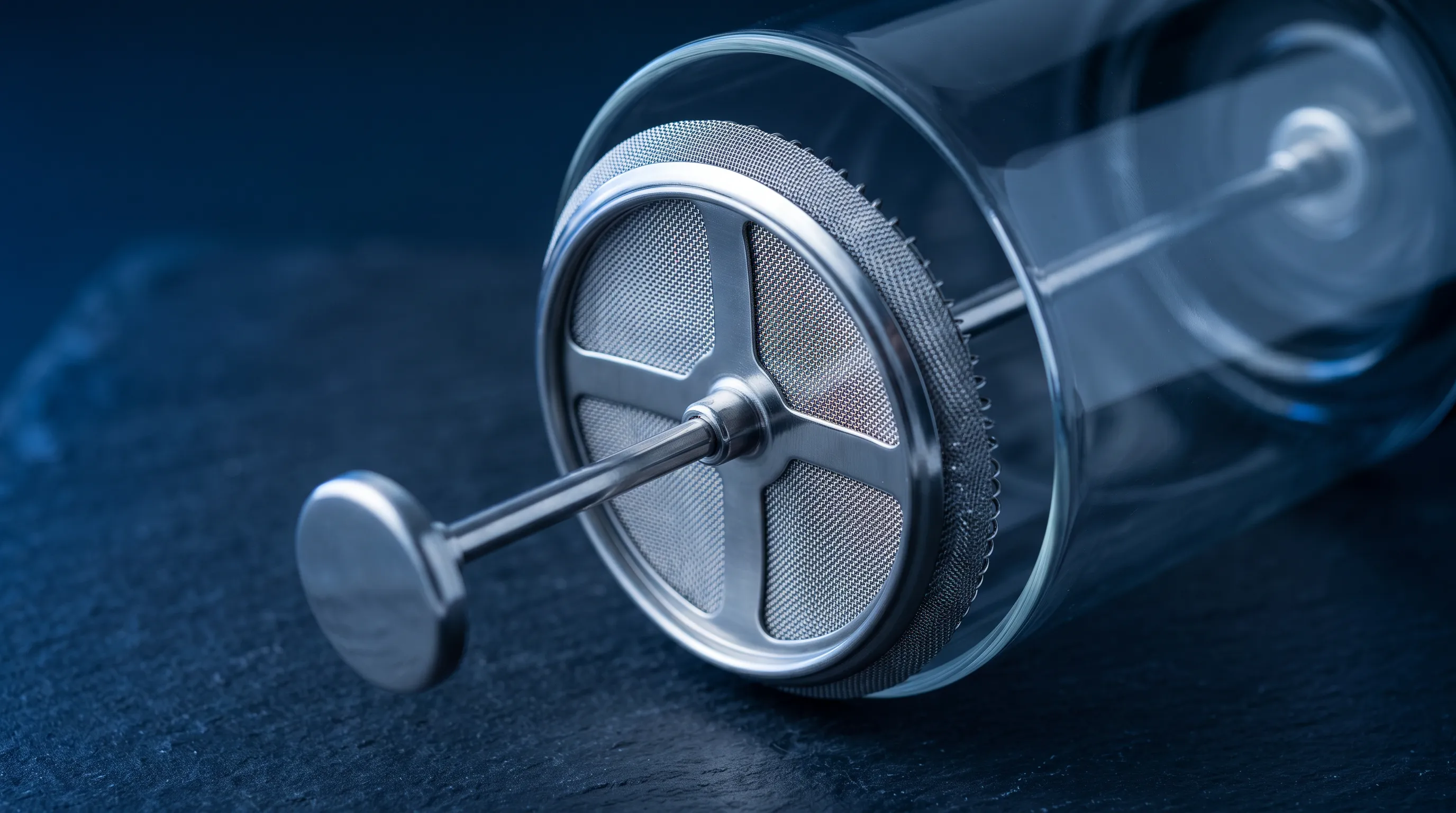
The core press mechanism — a mesh filter on a rod that pushes through a carafe — is functionally identical across every price point from $20 to $200. A more expensive French press does not extract coffee differently or more efficiently. The differences are materials, aesthetics, and how the device holds up after years of daily use.
At the budget end, the carafe is often heat-resistant plastic or thinner glass, the frame may include plastic components, and the mesh quality varies by manufacturer. At the premium end, borosilicate glass and stainless steel dominate, and double-wall vacuum insulation appears in the best stainless models. These material choices affect heat retention, durability if dropped, and whether any plastic contacts hot brew water.
For daily home brewing, a well-maintained $25 French press does the same job as a $120 one. The case for spending more is primarily longevity — premium materials hold up better over three to five years of daily use — and aesthetics, if that matters for your bench. It does not produce a better cup.
Heat Retention: Why Stainless Beats Glass on a Budget
Glass French presses lose heat quickly — most glass carafes drop coffee from 90°C to below 70°C within 10-15 minutes of brewing. This is inherent to the material, not a defect. If you drink your coffee immediately, it makes no difference. If you brew for a group, pour a first cup and return for seconds ten minutes later, the temperature drop is noticeable.
Double-wall vacuum-insulated stainless presses address this directly. The Secura 1L is the clearest example in the under-$50 bracket — it maintains brew temperature for 30 minutes or more through the same physics that keeps a thermos hot. For household brewing where the press sits on the table through a slow breakfast, this is a genuine practical advantage.
Single-wall stainless presses — which look like stainless but lack the vacuum gap — perform similarly to glass on heat retention. Double-wall is what makes the difference. When comparing stainless options, verify whether the wall is single or double before purchasing based on heat retention claims.
Buying a Budget French Press in Australia: What to Look For
Capacity first: a 350ml press serves one, a 500ml press serves two, and a 1-litre press serves three to four. Buying the wrong size is the most common buyer regret. If you brew solo, 350ml is sufficient and often cheaper. If you share morning coffee with a partner or occasionally host guests, 1L is more practical.
Material preference second: if plastic contact with hot brew water concerns you, eliminate all plastic-framed options and choose glass-with-stainless-frame (Chambord) or all-stainless (Secura). If you use your press outdoors or have children, the stainless or plastic-body options are more drop-resistant than any glass carafe.
Avoid purchasing unbranded French presses under $15 on Amazon AU. The mesh quality varies significantly, replacement filters are difficult to source, and the plunger mechanisms on the cheapest options often fail to seal against the carafe walls cleanly, allowing grounds to bypass the filter. The Bodum Brazil at $25 is the practical lower limit for a reliable press in Australia.
Frequently Asked Questions
8 questionsWhat is the cheapest French press worth buying in Australia?
Around $25 — the Bodum Brazil 8-cup (1L) on Amazon AU is the cheapest French press that uses a reliable mechanism and holds a useful volume. Going below $20 generally means unbranded presses with inconsistent mesh quality and no replacement parts. The Brazil uses the same press mechanism as Bodum's premium range, which is why it holds up as the budget benchmark.
Does a cheap French press make worse coffee than an expensive one?
No — the quality of the brew depends almost entirely on grind consistency, water temperature, and timing. A $25 Bodum Brazil using a good burr grinder will outperform a $150 glass press used with pre-ground supermarket coffee. The mechanism is functionally identical across price points. Differences at higher prices are materials, aesthetics, and longevity over years of use.
Is stainless or glass better for a budget French press?
It depends on your priorities. Glass lets you see exactly how much coffee you have and confirms visual cleanliness after washing. Stainless retains heat significantly longer — 30+ minutes versus 10-15 minutes for glass — and does not break if dropped. For kitchen bench use, glass is fine. For travel, camping, or brewing for a group, stainless is the more practical choice.
How much coffee does a 1-litre French press make?
Approximately 5-6 standard 150ml serves, or 3-4 larger 250ml cups. At a standard dose of 75g of coffee per litre of water, a full 1L press uses around 75g of ground coffee. Most people find a 1-litre press is ideal for 2-4 people drinking one cup each, or one person who drinks two to three cups in a sitting.
What grind size should I use for a budget French press?
Coarse — roughly the texture of raw sugar or coarse sea salt. Most budget French presses use a standard mesh plunger that allows medium and fine grounds to pass through, creating a muddy cup and sediment. If your press is producing muddy coffee or the plunger is hard to push, your grind is too fine. A burr grinder set to the coarser end of its range is the single biggest quality improvement you can make.
Are Bodum French presses dishwasher safe?
Yes — Bodum states both the Brazil and the Chambord's components are dishwasher safe. Hand-washing the glass carafe is recommended for longevity because repeated dishwasher cycling can stress the gasket seal over time. The stainless plunger mechanism disassembles easily for rinsing and rarely needs more than a quick rinse under the tap after each use.
How long should I steep coffee in a French press?
Four minutes is the standard recommendation for most French press recipes at the coarse grind used with budget presses. Steeping longer than five minutes with a typical dose tends to over-extract and add bitterness without additional flavour complexity. If you want a stronger cup, increase the dose rather than extending the steep time — more grounds at four minutes beats fewer grounds at eight minutes.
What is the difference between the Bodum Brazil and the Bodum Chambord?
Two things: materials and price. The Chambord uses borosilicate glass for the carafe and stainless steel for the frame, with no plastic in the brew path. The Brazil uses heat-resistant plastic for the frame with glass or plastic carafe options depending on the variant. The press mechanism is identical in both. If you want zero plastic contact with hot brew water, the Chambord is worth the extra $15-20. If budget is the only constraint, the Brazil is functionally equivalent.
Our Research Framework
Every product on this site is assessed against the same criteria — brand specifications, published clinical evidence, and verified Australian availability. We don't accept free products. Full methodology →